
Managing electronics inventory feels like wrestling a living, breathing organism. Component shortages strike without warning. Last-minute design changes scramble your bill of materials. Warehouse space disappears under growing stock piles. Meanwhile, customers expect faster delivery and tighter pricing.
Modern PCB manufacturers understand these pressures intimately. Many now offer inventory management and kitting services that transform component chaos into organized, predictable production flow. If you're still handling component procurement entirely in-house, you might be leaving significant efficiency—and money—on the table.
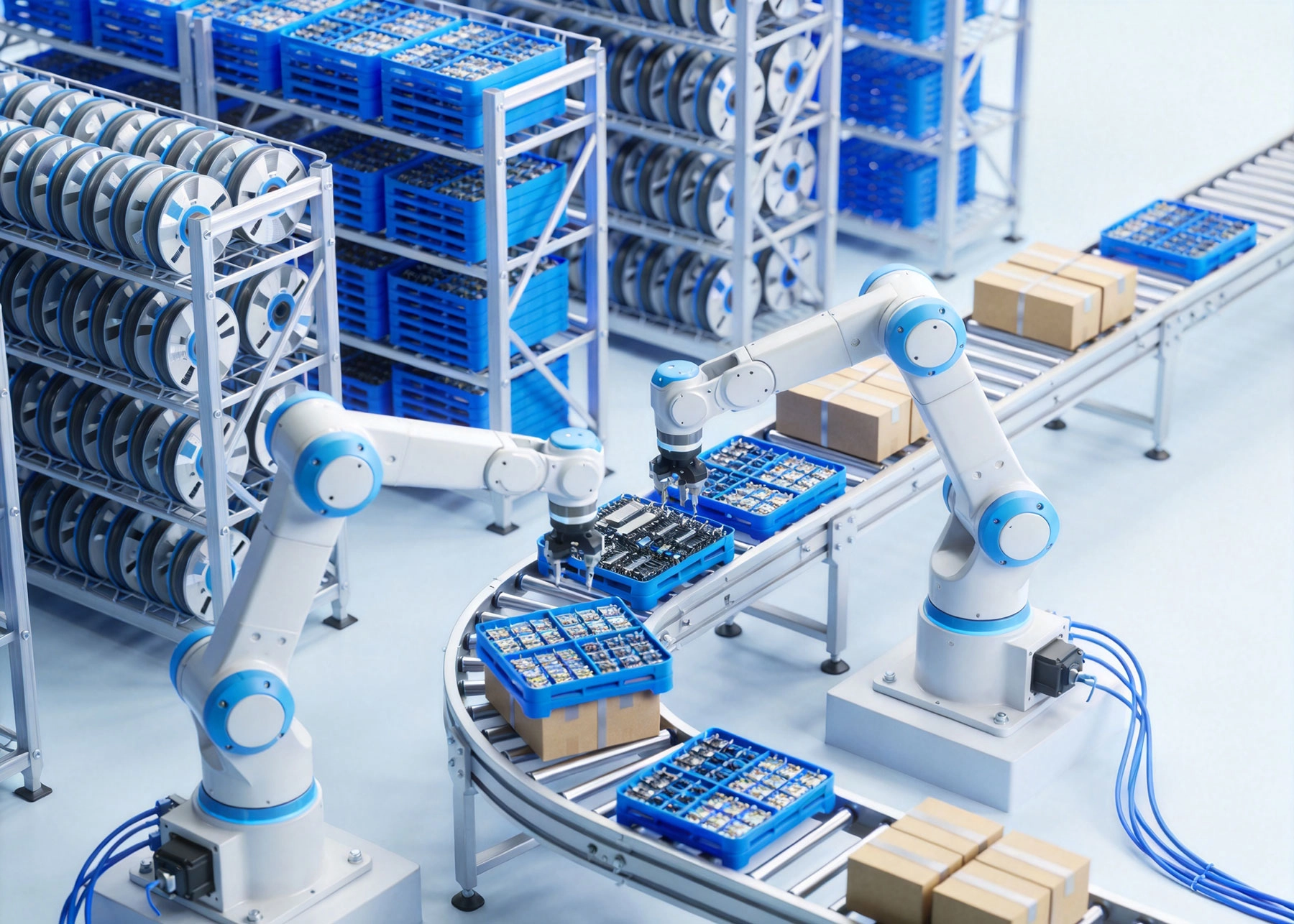
PCB manufacturers offering inventory management services hold components on your behalf. Instead of receiving bare boards and sourcing everything yourself, you provide a forecast, and the manufacturer stocks the specific components your products need.
Kitting takes this further. Rather than receiving loose components in separate packages, your manufacturer pre-assembles everything into "kits"—organized sets containing all parts needed for a specific build. When production runs, the kit arrives ready for the assembly line with zero time spent sorting and staging components.
In a typical arrangement, you share your bill of materials with a Pcb Assembly partner. They review component availability, negotiate pricing with distributors, and stock items in their warehouse. You pay for components as they're consumed, or maintain a minimum inventory balance for quick replenishment.
This shifts working capital from your balance sheet to theirs. Your cash flow improves while maintaining the same component availability—or better.
Kitting creates production-ready packages customized to your needs. Your assembly partner receives components from multiple suppliers, inspects them for quality, then groups everything into complete kits labeled for specific products or production runs.
When your production schedule calls for 500 assemblies, the kit arrives with exactly 500 of each component, organized in the sequence your assembly line needs. No searching for the right reel, no discovering empty stock at the worst moment.
Inventory management and kitting services deliver concrete advantages that appear directly on your financial statements.
When components sit in your manufacturer's warehouse rather than in transit from distributors, lead times shrink dramatically. Standard lead times measured in weeks become days. For time-sensitive products or rapid-response production runs, this speed advantage opens opportunities that weren't previously viable.
Imagine a customer requesting a quick-turn order with a two-week deadline. With kitted inventory, you can accept the job knowing components are already staged and ready. Without it, you'd likely decline or miss the deadline.
Inventory carrying costs typically consume 20% to 30% of inventory value annually. This includes warehouse space, insurance, taxes, obsolescence reserves, and the opportunity cost of capital tied up in stock.
Transferring inventory to your PCB partner shifts these costs. Their specialized facilities and purchasing leverage reduce per-unit carrying costs. You pay for components when consumed rather than months in advance.
Component shortages disrupt production schedules and inflate component costs. When shortages hit popular parts, manufacturers with strong distributor relationships and stocked inventory fare better than those scrambling to find alternatives.
Your PCB service partner monitors market conditions and may stock buffer quantities of critical or shortage-prone components. This proactive approach prevents production line shutdowns that cost far more than the extra inventory investment.
Kitting improves more than logistics—it enhances Quality Assurance.
When components arrive from multiple distributors, each shipment needs inspection. Kitting consolidates this function. Your manufacturer receives components, performs incoming quality checks, and provides documentation proving component authenticity and condition.
This matters especially for components from multiple sources. Subtle differences between manufacturers—even with identical part numbers—can affect assembly performance. A kitting service standardizes this process and maintains consistent quality baselines.
Excessive component handling increases the risk of damage. Reels get crushed, moisture-sensitive devices suffer exposure, and electrostatic discharge can silently destroy sensitive ICs. Professional kitting services minimize handling through automated processes and proper ESD protection throughout the workflow.
Manufacturing regulations increasingly demand component traceability. Kitting services maintain lot-by-lot records linking specific components to specific assemblies. When quality issues arise, you can trace backward to identify affected units and isolate problems faster.
For industries like automotive, medical, and aerospace, traceability isn't optional—it's mandatory. Kitting services make compliance straightforward rather than an afterthought.
Beyond financial benefits, kitting transforms how your production floor operates.
Switching between different products on an assembly line wastes time. With kitting, each product has a prepared kit. Changeovers involve removing one kit and loading the next, rather than hunting through stockrooms for the right components. This alone can recover hours of productive time daily.
Accurate inventory visibility enables better production planning. You know exactly what's available and when. This lets you commit to realistic delivery dates, avoid overpromising, and optimize production scheduling across multiple orders.
Eliminating dozens of incoming component shipments simplifies receiving operations. One organized kit replaces dozens of separate deliveries. Your warehouse staff spends less time processing, organizing, and searching for parts. Floor space previously dedicated to component storage becomes available for productive use.
Not all kitting services deliver equal value. Evaluate potential partners carefully.
Your kitting partner must understand the components they're handling. Moisture-sensitive devices require dry storage and controlled exposure times. Temperature-sensitive parts need climate-controlled facilities. Fine-pitch components demand careful handling. Ask about their quality systems and any industry certifications—ISO 9001, AS9100, or Iatf 16949 demonstrate commitment to systematic quality processes.
Components go obsolete. Your partner should proactively alert you to discontinued parts, suggest replacements, and help manage last-time-buy decisions. A passive kitting service waits for problems; an active partner prevents them.
You need real-time visibility into inventory status. Ask about their reporting systems—can you see current stock levels, consumption rates, and projected shortages? Portals that provide 24/7 access to inventory data enable better decision-making and prevent surprises.
Your business will change. Volume growth, new products, seasonal fluctuations—all require adaptable support. Discuss how your partner handles demand spikes, product line extensions, and component changes. Inflexible systems create bottlenecks just when you need agility most.
Smooth kitting implementation requires attention to several potential friction points.
Kitting services require upfront investment in inventory staging and system configuration. Some manufacturers charge setup fees to establish kitting programs. Expect to absorb some initial costs before realizing ongoing benefits. Frame this as an investment that pays returns through improved efficiency and reduced risk.
Kitting works best with reasonable demand forecasting. Inaccurate forecasts lead to either excess inventory (tied-up capital and obsolescence risk) or shortages (missed delivery commitments). Work with your partner to establish realistic forecasts and build in appropriate safety stock levels.
Ambiguous part specifications cause expensive mistakes. A single part number might reference multiple manufacturers with slightly different specifications. Be precise about approved manufacturer lists, alternative part approvals, and any tolerance variations your products can accept.
Kitting requires close coordination between your planning team and your manufacturing partner. Establish clear communication channels, escalation procedures, and decision-making authority. When supply issues arise, fast communication prevents production disruptions.
Understanding the full cost picture helps evaluate kitting service value.
Kitting services typically charge fees for staging, handling, and inventory management. These fees must be weighed against savings from reduced procurement effort, lower carrying costs, and decreased shortage risk. For most operations, the net benefit is positive—often significantly so.
Some kitting arrangements include unfavorable terms: long minimum commitment periods, restrictive cancellation clauses, or opaque pricing structures. Read contracts carefully. Watch for exclusivity requirements that prevent sourcing flexibility or hidden charges for standard services.
Kitting services use various pricing models:
Each model has advantages depending on your volume stability and capital availability.
While any company can benefit from kitting services, certain industries see particularly strong returns.
Contract manufacturers building multiple products for various customers find kitting essential. Each customer's products need separate component pools and quality documentation. A kitting service handles this complexity while keeping operations organized.
Medical device manufacturing demands rigorous traceability, controlled storage conditions, and regulatory compliance. Kitting services with appropriate certifications simplify FDA submissions and audit preparation.
Industrial equipment often combines standard components with custom assemblies in relatively low volumes. This combination makes kitting particularly valuable—you gain component procurement expertise without maintaining a large purchasing organization.
Long product lifecycles and stringent quality requirements characterize aerospace electronics. Kitting services provide the component consistency and traceability that defense and aerospace programs demand.
Transitioning to kitted inventory doesn't happen overnight, but the path is straightforward.
Document your current component procurement, storage, and assembly processes. Identify pain points, bottlenecks, and unnecessary costs. This baseline helps you evaluate kitting proposals and measure future improvements.
List the products you want to include in kitting programs. Document component specifications, approved manufacturers, quality requirements, and any special handling needs. Clear requirements make partner evaluation easier and implementation smoother.
Request proposals from multiple PCB manufacturers offering kitting services. Compare not just pricing but also capabilities, capacity, certifications, and cultural fit. The lowest-cost provider isn't always the best value when reliability and quality matter.
Before committing your entire product line, pilot kitting with one or two products. This tests the partner's capabilities, reveals process gaps, and builds confidence before scaling. Pilot results also provide concrete data for evaluating program performance.
Inventory management and kitting services represent more than a procurement convenience—they're a strategic capability that transforms Supply Chain operations. When implemented thoughtfully, these services reduce costs, improve quality, shorten lead times, and free your team to focus on core business activities.
The Electronics Manufacturing landscape continues evolving. Component complexity increases while product life cycles shorten. Traditional inventory approaches struggle under these pressures. Kitting services provide the flexibility and efficiency modern electronics businesses require.
If you're still managing component procurement entirely in-house, you're absorbing costs and risks that specialized partners could handle more efficiently. A conversation with a Pcb Manufacturer offering kitting services might reveal opportunities you hadn't considered.
Volume requirements vary by manufacturer, but kitting becomes economical typically when you need at least 50 to 100 assemblies per month of a given product. Below this threshold, setup costs may exceed logistics savings. Discuss your specific situation with potential partners—they often find creative solutions for lower-volume programs.
Reputable kitting partners won't substitute components without explicit approval. Your quality requirements should specify approved alternatives, and any substitutions should go through formal change control. Document your substitution policy clearly when establishing kitting programs.
This depends on your agreement terms. Some arrangements allow returning unused components; others require purchase regardless of use. Negotiate these terms upfront. Good partners help manage end-of-life transitions, offering alternatives or buffer-time purchases that minimize waste.
Kitting should strengthen rather than complicate your quality systems. Your partner provides documentation supporting your traceability requirements. Ensure their quality processes align with yours and that audit rights allow verification of their operations.
Yes, most kitting arrangements allow hybrid approaches. You might kit standard components while purchasing specialized parts directly. Discuss your preferences upfront and ensure your agreement supports the flexibility you need.
Simple kitting programs can be operational within 2 to 4 weeks for basic components. Complex programs with numerous parts, special handling requirements, or extensive quality documentation may take 2 to 3 months. Plan accordingly when launching new products or transitioning existing ones.
This article is intended for informational purposes. Consult with qualified Supply Chain professionals and Pcb Manufacturing partners to evaluate kitting services for your specific situation.
How to Find the Right PCB Fabrication Partner in ChinaJune/02/2026

Conformal Coating and Box Build: Extending the Scope of PCB ServicesSeptember/10/2026
Value-Added PCB Fabrication Services: Beyond Just Making the BoardJune/12/2026

Customer Support in PCB Manufacturing: Why Communication is KeyAugust/06/2026

Intellectual Property Protection: Safeguarding Your Designs When Using External ServicesSeptember/21/2026

Engineering Support: How Good Service Providers Help Optimize Your DesignJuly/02/2026

Building Long-Term Partnerships: What to Look for in a Service-Oriented PCB VendorOctober/10/2026
The Role of CAM Engineering in Preventing Manufacturing ErrorsJuly/03/2026