Open Nav

For decades, China has been the global hub for Electronics Manufacturing, producing everything from simple consumer gadgets to sophisticated aerospace components. When it comes to PCB Fabrication, the country offers an unparalleled combination of capabilities, capacity, and competitive pricing. Yet navigating this vast landscape to find the right fabrication partner remains one of the most challenging decisions facing electronics companies worldwide.
The tension between cost and quality sits at the heart of this challenge. On one hand, aggressive cost cutting can lead to reliability issues, production delays, and ultimately higher total costs when failures occur. On the other hand, overpaying for quality beyond your actual requirements wastes resources that could be invested elsewhere in your business.
This guide provides a comprehensive framework for evaluating and selecting PCB Fabrication partners in China, helping you strike the optimal balance between cost efficiency and Quality Assurance for your specific needs.
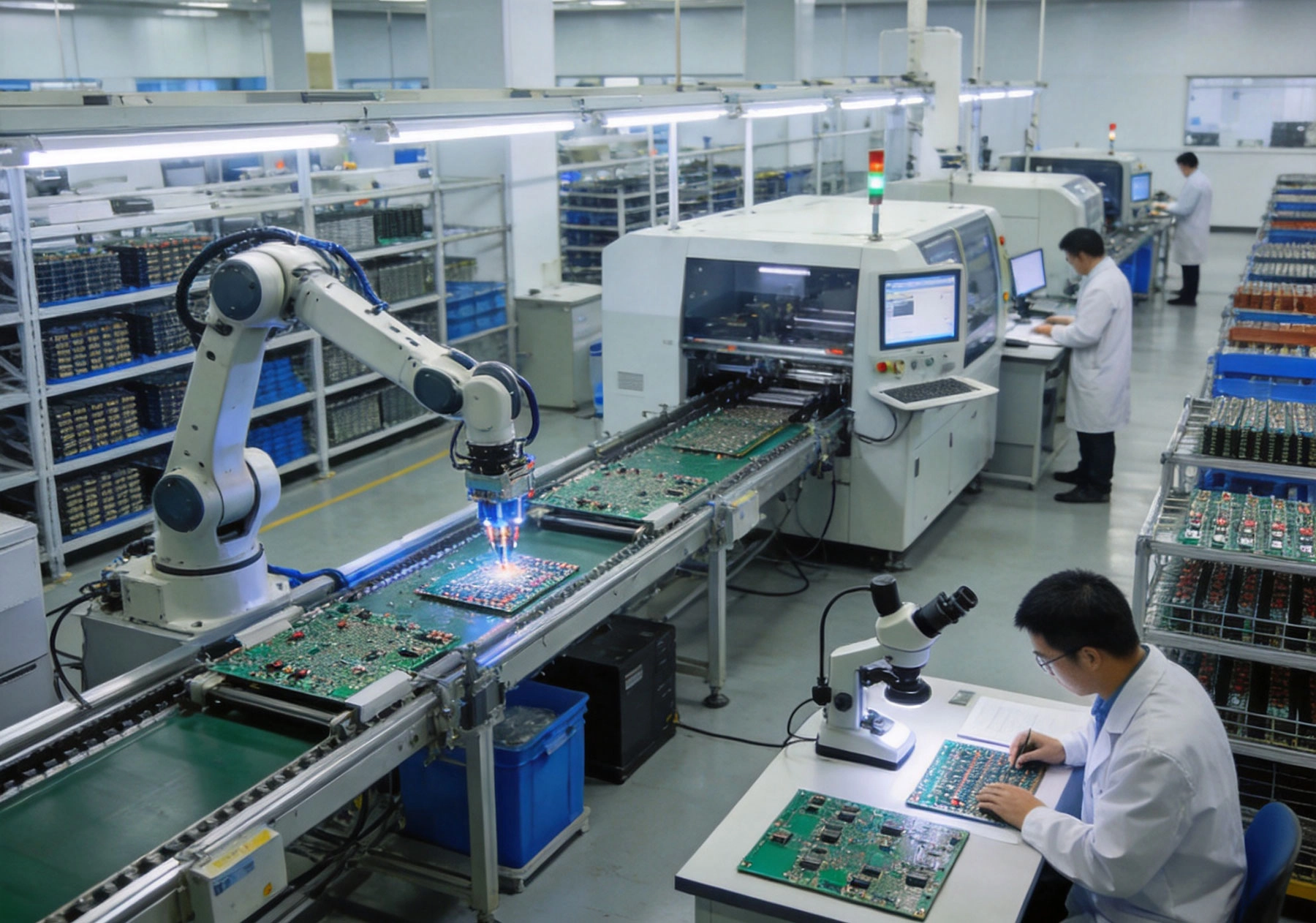
The Chinese PCB industry is remarkably diverse, ranging from small workshops handling basic single and double-sided boards to massive facilities producing advanced multi-layer, HDI, and flex circuits for the world's most demanding applications. Understanding this landscape is essential for making informed sourcing decisions.
China produces approximately 50-60% of the world's PCBs, with thousands of fabrication facilities operating across the country. Major manufacturing clusters have developed in regions including:
This geographic distribution means that virtually any PCB requirement can be met somewhere in China, but finding the right match for your specific needs requires careful evaluation.
Chinese PCB manufacturers typically segment into tiers based on capabilities and target markets:
Tier 1: Premium Manufacturers
These facilities serve global brands and high-reliability industries with advanced capabilities including ultra-fine lines, advanced materials, and comprehensive quality systems. They often hold certifications such as ISO 9001, AS9100, and Iatf 16949, and compete directly with Japanese and European manufacturers.
Tier 2: Mid-Market Specialists
These manufacturers offer good quality at moderate prices, serving customers who need reliable production without premium certification requirements. They often specialize in specific PCB types or industry segments.
Tier 3: Cost-Competitive Producers
These facilities focus on price-sensitive applications where basic functionality matters more than advanced performance or rigorous Quality Control. They may serve as subcontractors for larger assembly operations.
Before pursuing the lowest possible price, it's crucial to understand what you're actually comparing. The purchase price of a PCB is only one component of total cost of ownership, and in many cases, the cheapest option proves to be the most expensive over time.
Low-cost Pcb Fabrication often cuts corners in ways that increase downstream costs:
Consider this simplified example: A board with a 5% defect rate versus one with 0.5% defect rate. If each assembly station costs $50/hour and rework takes 15 minutes per defective board, the true cost difference becomes significant. Add in potential field failures, customer returns, and reputation damage, and the apparent price advantage of cheaper PCBs can evaporate entirely.
When assessing potential Pcb Fabrication partners in China, evaluate each candidate across multiple dimensions to ensure the best fit for your requirements.
Start by confirming that the manufacturer can actually produce what you need:
Quality certification levels indicate the manufacturer's commitment to consistent processes:
Your chosen partner must be able to meet your current and future needs:
Effective communication bridges the geographic distance:
During your evaluation, certain warning signs should prompt additional scrutiny or cause you to move on to other candidates.
If a quote seems too good to be true, it probably is. Prices significantly below market norms suggest:
Be especially cautious of quotes that are 30-40% lower than other competitors. While some cost advantage exists in China manufacturing, such dramatic differences typically indicate compromises that will affect your product.
Quality manufacturers are transparent about their processes and capabilities. Warning signs include:
Poor quality operations often show these characteristics:
Early warning signs of future problems:
Effective partner selection requires a systematic approach that balances thorough evaluation with practical time constraints.
Before approaching any manufacturer, document your specific needs:
Clear requirements allow you to quickly eliminate unsuitable candidates and focus evaluation efforts on qualified partners.
Several resources can help identify and screen potential partners:
Never commit to production without evaluating actual samples. A good evaluation process includes:
For significant sourcing decisions, facility audits provide invaluable insights:
Video tours have become increasingly practical and can provide meaningful insight when in-person visits aren't feasible.
Finding the optimal balance between cost and quality requires moving beyond simple price comparison to a more sophisticated evaluation framework.
Consider all cost factors when comparing quotes:
Not all PCBs in your product portfolio require the same quality level:
Match your quality investment to the actual requirements of each application.
The lowest-cost supplier for a single order may not be the best partner over time. Consider:
Success with Chinese PCB partners requires understanding cultural differences and adapting your approach accordingly.
Set realistic expectations based on manufacturer capabilities:
Invest in the relationship beyond transactional exchanges:
Regardless of which partner you select, implement appropriate Quality Assurance measures to protect your products.
Even with trusted partners, incoming inspection catches problems before they affect production:
Ongoing monitoring maintains quality standards:
Protect your Supply Chain against disruption:
Finding the right PCB fabrication partner in China requires balancing multiple factors—cost, quality, capability, reliability, and relationship quality. There is no single answer that works for every situation, and the optimal choice depends on your specific requirements, risk tolerance, and business context.
The key is moving beyond simple price comparison to understand true cost of ownership, matching quality investment to actual application requirements, and building relationships that create mutual value over time. By following the evaluation framework outlined in this guide, you can identify partners who will contribute to your success rather than create ongoing challenges.
Whether you need mission-critical boards for aerospace applications, high-volume consumer products, or somewhere in between, China offers Manufacturing Capabilities that can meet your needs. The difference between success and frustration lies in the rigor of your selection process and the investment you make in building the relationship.
Start your evaluation today by clearly defining your requirements, then systematically assess candidates against those requirements. The effort invested in finding the right partner will pay dividends throughout your entire product lifecycle.
Savings vary significantly based on board complexity, volume, and quality requirements. In general, you can expect to save 20-50% compared to North American or European pricing for comparable quality levels. However, the total savings may be smaller when accounting for shipping, duties, communication time, and quality management overhead. Focus on total cost of ownership rather than unit price alone.
Verification requires multiple approaches: request samples and conduct your own testing, ask for customer references you can contact directly, verify certifications through the issuing organizations, conduct virtual or in-person facility audits, and start with small orders to validate performance before committing to larger volumes. No single method is foolproof, but layering multiple verification approaches provides confidence.
At minimum, require ISO 9001 certification. For automotive applications, require IATF 16949. For aerospace, require AS9100. Regardless of certifications, verify that the manufacturer actually implements and follows the quality system processes. IPC workmanship certifications (IPC-A-600, IPC-6012) indicate adherence to industry quality standards for board acceptability.
Protection requires multiple measures: work with manufacturers who have established IP protection programs, use non-disclosure agreements, register your intellectual property in China (which provides legal protections domestic registration doesn't), minimize the technical information shared beyond what's necessary for production, and consider strategic splitting of designs across multiple suppliers for highly sensitive applications.
Standard lead times typically range from 5-15 business days for simple boards, 15-25 days for multi-layer or specialized materials, and 25-40 days for complex high-technology boards. These are general ranges—actual times depend on manufacturer workload, your relationship priority, and order size. Planning ahead and building adequate lead time into your Product Development schedule prevents costly expedited charges.

Building Long-Term Partnerships: What to Look for in a Service-Oriented PCB VendorOctober/10/2026

The Role of CAM Engineering in Preventing Manufacturing ErrorsJuly/03/2026

Intellectual Property Protection: Safeguarding Your Designs When Using External ServicesSeptember/21/2026

Conformal Coating and Box Build: Extending the Scope of PCB ServicesSeptember/10/2026

Inventory Management and Kitting: Streamlining Your Supply Chain with PCB ServicesJuly/15/2026

Engineering Support: How Good Service Providers Help Optimize Your DesignJuly/02/2026
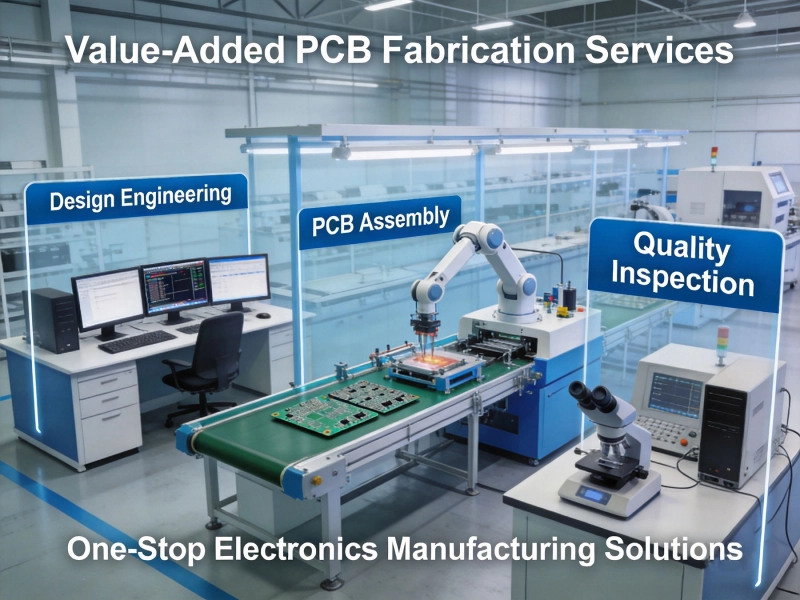
Value-Added PCB Fabrication Services: Beyond Just Making the BoardJune/12/2026

Customer Support in PCB Manufacturing: Why Communication is KeyAugust/06/2026