Open Nav

How fast prototyping transforms the innovation cycle and determines who wins in competitive markets
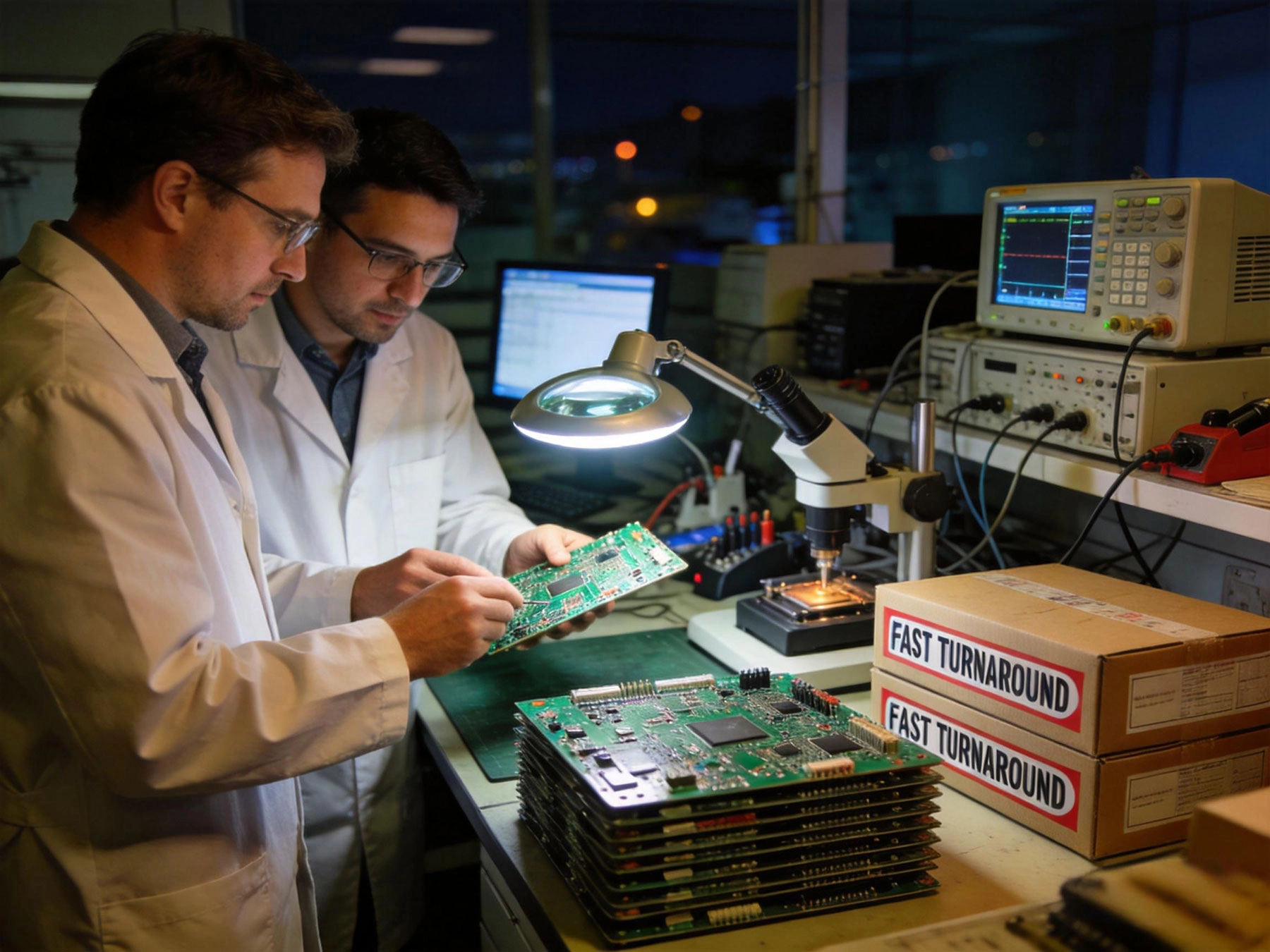
Every R&D team has felt it: the frustrating gap between a promising concept and a working Prototype. When your competitors are moving at startup speed and your Pcb Supplier needs three weeks just to quote a Prototype, that gap becomes a strategic vulnerability. Quick Turn PCB Fabrication is not a convenience. It is a competitive weapon.
In Hardware Development, time is not just money. Time is market position, team morale, investor confidence, and ultimately, survival. A 2024 survey of electronics startups found that companies with fast prototype access launched products 3x more frequently than those constrained by long lead times.
Standard PCB Fabrication lead times exist because of how traditional manufacturers operate: batch processing, scheduled runs, and efficiency optimization for volume production. For prototypes, this model creates several critical problems.
Hardware Development is not linear. You design, you build, you test, you learn, and you iterate. Each iteration reveals new information. With standard lead times, a single iteration cycle takes 6-8 weeks. Four iterations means eight months of waiting for test results before you have validated your design.
| Iteration Cycle | Standard Lead Time | Quick Turn | Time Difference |
|---|---|---|---|
| Design + Build + Test | 6-8 weeks | 1-2 weeks | Saves 5-6 weeks |
| 3 iterations | 18-24 weeks | 3-6 weeks | Saves 15-18 weeks |
| Bug discovery at iteration 3 | 18+ weeks to fix | 3 weeks to fix | Saves 15 weeks |
| Time to production-ready | 6-12 months | 2-4 months | 4-8 months faster |
When engineers wait weeks for prototypes, momentum dies. The exciting problem-solving energy of a new project dissipates into long periods of passive waiting. Engineers who could be solving problems are instead checking order tracking portals.
Consumer electronics markets move in seasons. Industrial markets have trade show deadlines. Medical markets have regulatory submission windows. Standard PCB lead times do not align with any of these. Quick turn does.
You have an idea and need to prove it works. Speed matters because you are testing multiple approaches simultaneously. Fast prototypes let you evaluate 3-4 approaches in the time that slow prototyping would let you evaluate one. Early concept validation prevents expensive pivot mistakes.
With 5-7 day prototypes, you can validate concepts in weeks instead of months. The cost of changing direction early is a fraction of the cost of changing direction after volume production tooling.
You know the concept works, now you need to optimize it. This phase requires multiple iterations testing different component values, trace geometries, and layout approaches. Each design change needs hardware validation.
Design Optimization with fast prototypes means running design-of-experiments that would be impractical with slow turnaround. You can actually explore the design space instead of guessing and hoping.
Your optimized design must be producible at volume. Dfm analysis often reveals issues that require layout changes. Fast prototypes let you validate manufacturing feasibility without schedule slippage.
Dfm issues discovered after moving to production tooling cost 10-100x more to fix than DFM issues discovered during prototype. Speed in this phase prevents expensive tooling changes.
Before committing to volume production, you need to validate that your design performs in the target application environment. Fast prototypes let you do extended field testing that slow prototypes make impractical.
Extended environmental testing, Accelerated Life Testing, and field deployment validation all require hardware in hand. Fast turnaround enables testing programs that would exceed project timelines with slow prototypes.
The term "quick turn" covers a wide range of capabilities. Understanding what your supplier actually offers matters.
| Service Level | Typical Lead Time | Layer Count | Best For |
|---|---|---|---|
| Standard Prototype | 10-15 business days | Any | Low-priority validation |
| Fast Prototype | 5-7 business days | Up to 12 layers | Most R&D applications |
| Express Prototype | 2-3 business days | Up to 8 layers | Critical path items |
| Same Day | 24 hours | Up to 4 layers | Emergency needs only |
| Weekend Special | Saturday delivery | Up to 6 layers | Budget-conscious speed |
Quick turn does not mean rushed or sloppy. Quality quick turn suppliers use the same processes as volume production, just with expedited scheduling. The boards should meet the same quality standards as standard lead time boards. If your quick turn supplier is cutting corners, find a different supplier.
A consumer electronics startup needed to bring a smart home device to market before a major competitor launched a similar product. With standard lead times, their projected launch was 8 months after the competitor. Using Quick Turn Pcb fabrication, they compressed their prototype cycle to 6 weeks and launched 3 weeks before the competitor. They captured market leadership in that category for 18 months.
Lesson: Speed can overcome resource disadvantages. Startups cannot outspend giants, but they can outmaneuver them.
A medical device company discovered a critical safety issue during pre-production testing of their patient monitoring system. The issue required a board redesign. With standard lead times, the fix would have delayed their FDA submission by 4 months, forcing them to redo clinical trials at a cost exceeding $2 million. Using quick turn, they completed the redesign and resubmitted within their original timeline.
Lesson: Quick turn is insurance against design mistakes. The cost is trivial compared to delayed regulatory submissions.
An industrial Automation company had a standard development cycle of 14 months from concept to production. By implementing quick turn Pcb Prototyping and parallel development processes, they reduced their cycle to 7 months. They used the recovered time to develop a second product line, effectively doubling their innovation output.
Lesson: Speed compounds. Faster development enables more development.
Not all quick turn suppliers are equal. Here is what to look for.
Fast prototypes are only as valuable as your ability to use them effectively. Here is how to get maximum value from quick turn services.
While waiting for boards, prepare everything else: firmware development, test fixture construction, documentation, component sourcing for next revision. Many teams lose the speed advantage by not preparing during the wait time.
Quick turn Pcb Fabrication costs more than standard lead time production. This is a fact. The relevant question is whether the speed benefit justifies the cost premium.
| Cost Factor | Standard Lead Time | Quick Turn | Premium |
|---|---|---|---|
| Per board cost (4-layer) | $30-50 | $80-150 | 2-3x |
| Per board cost (8-layer) | $80-150 | $200-400 | 2-3x |
| Engineer time during wait | 6-8 weeks idle | 1-2 weeks | Priceless |
| Delayed launch cost | Market timing lost | On schedule | $50K-$500K |
| Design iteration per year | 3-4 cycles | 8-12 cycles | 3x learning |
For most R&D teams, the quick turn premium is 5-10% of the total project cost. The value of faster market entry, reduced engineering frustration, and increased innovation throughput is 10-100x that premium. Quick turn is not expensive. Slow prototypes are expensive.
The fastest teams do more than use quick turn suppliers. They build their entire development process around speed.
Quick turn Pcb Fabrication is a strategic asset for R&D teams, not just a logistical convenience. The evidence is clear: teams with fast prototype access iterate more, learn faster, and launch products sooner than those constrained by traditional lead times.
Before your next project, identify a quick turn Pcb Supplier and understand their capabilities, pricing, and lead times. When you have a prototype-ready design, you should be able to order that same day. In hardware development, the team that prototypes fastest wins.
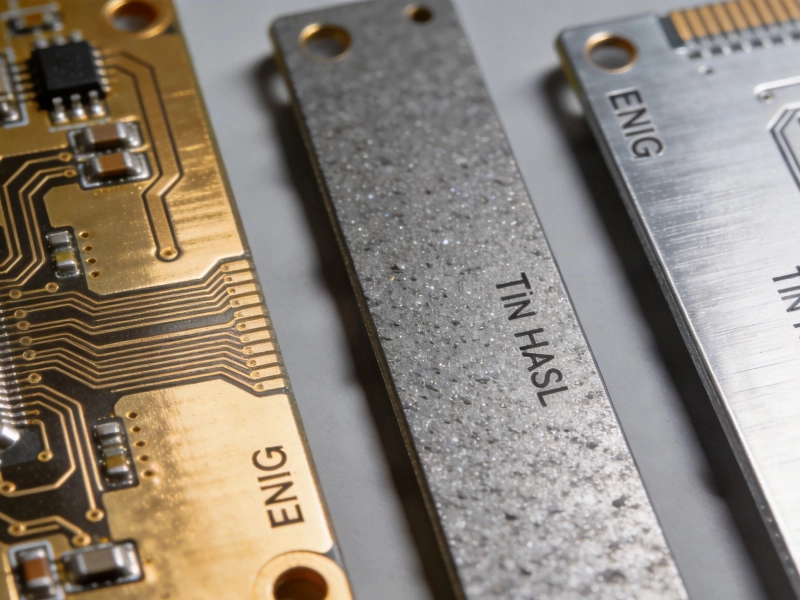
Custom Surface Finishes: Choosing Between ENIG, HASL, OSP, and Immersion SilverSeptember/14/2026
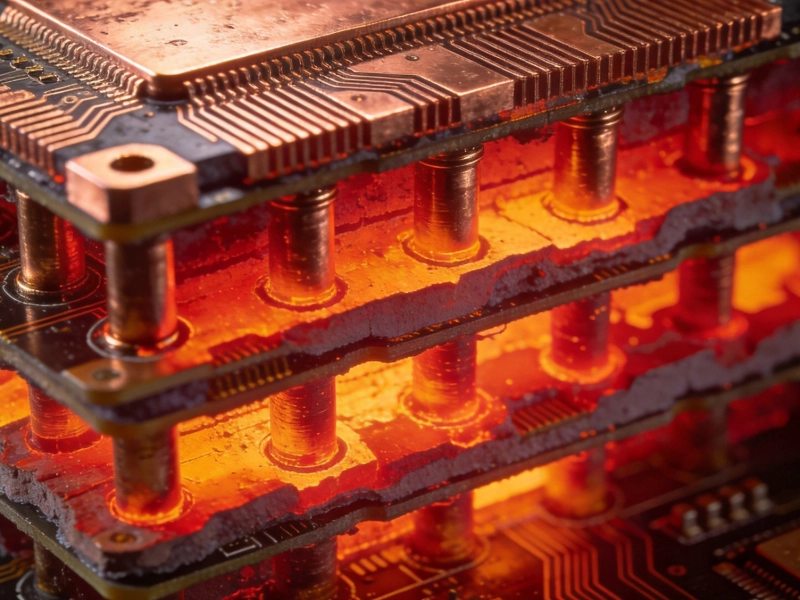
Thermal Management Strategies for Dense Multilayer PCB DesignsJuly/31/2026
How to Specify Tolerances and Stack-ups for High-Precision Custom PCBsJuly/28/2026
Managing Signal Integrity and Impedance Control in High-Speed Multilayer PCBsJuly/21/2026

Questions to Ask Before Placing a Rush Order for PCB FabricationSeptember/15/2026

Comparing Traditional vs. Digital Quick Turn PCB ServicesJuly/18/2026
Microvias and Blind/Buried Vias: Key Technologies in HDI FabricationAugust/11/2026
The Logistics of Speed: Shipping and Handling for Urgent PCB DeliveriesSeptember/03/2026