Open Nav

Rapid Pcb Prototyping sits at the intersection of speed and reliability—engineers need boards fast, but prototypes that fail or arrive late provide no value at all. Traditional scheduling approaches treat Prototype facilities like job shops, moving work through固定的工序 based on simple rules that cannot adapt to real-world variability. Equipment maintenance windows, unexpected rush orders, material availability fluctuations, and operator schedule variations create chaos that overwhelms rule-based scheduling systems. Artificial intelligence changes this equation fundamentally, bringing machine learning capabilities to Prototype scheduling that transform unreliable processes into predictable manufacturing workflows.
Chinese prototype facilities have been early adopters of AI scheduling technology, driven by competitive pressure to deliver faster and more reliably than neighboring manufacturers. Shenzhen and surrounding regions host prototype operations using AI systems that would have seemed like science fiction a decade ago. These systems learn from historical data, adapt to current conditions, and make scheduling decisions that optimize outcomes across multiple competing objectives simultaneously. The results speak for themselves: shorter lead times, more consistent delivery performance, and fewer quality escapes that waste engineering time.
This exploration of AI-driven scheduling in rapid Pcb Prototyping covers both the technology behind these systems and the practical outcomes they enable. Whether you're sending prototypes to Chinese manufacturers or building internal prototyping capabilities, understanding AI scheduling helps you evaluate where these technologies add value—and where traditional approaches remain adequate.
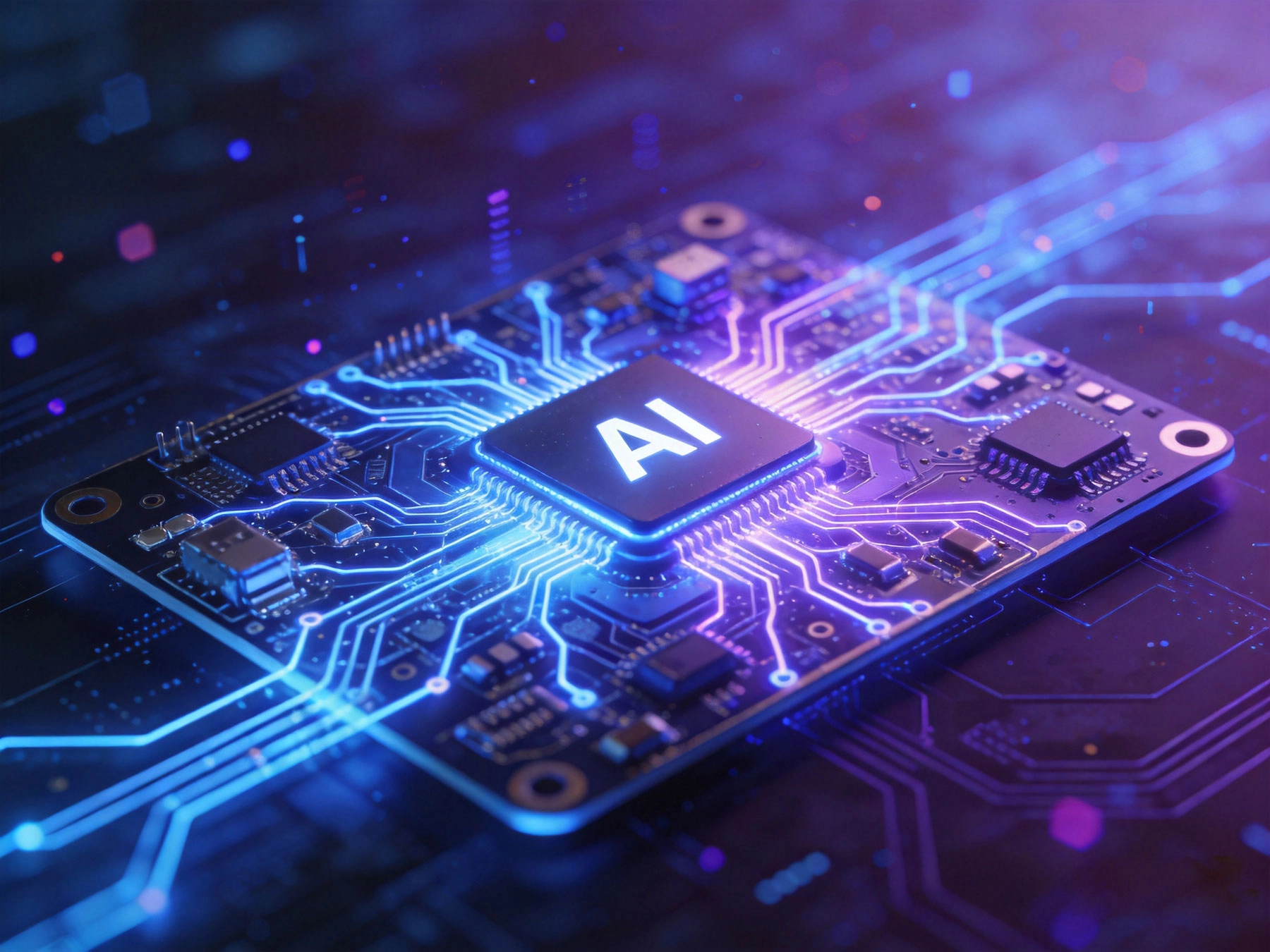
PCB prototype facilities face scheduling complexity that manufacturing operations rarely encounter. Every prototype represents unique work—a different layer count, different materials, different surface finishes, different testing requirements. This variability makes scheduling intellectually demanding while simultaneously creating conditions where simple rules break down. A scheduling system optimized for eight-layer boards performs poorly when six-layer boards flood the queue; a system prioritizing quick-turn work starves longer-lead prototype orders.
Resource constraints compound this variability. Drilling machines require specific bit configurations; plating tanks accept only boards within certain size ranges; Aoi equipment handles only boards up to defined dimensions. Matching prototype requirements to available equipment capabilities creates a multidimensional assignment problem that overwhelms human schedulers and rule-based systems alike. When prototype complexity increases—as it does when boards incorporate Blind Vias, heavy copper, or specialty materials—the scheduling challenge grows nonlinearly.
Dynamic disruptions challenge static schedules constantly. An equipment malfunction removes a critical resource mid-shift. A rush order arrives demanding immediate attention. Material delivery delays leave work waiting for inputs. Human schedulers adapt to these disruptions through experience and intuition, but the mental models guiding these adaptations remain tacit and inconsistent. AI systems encode adaptation logic explicitly, making scheduling decisions that reflect accumulated wisdom rather than individual judgment calls.
Machine learning algorithms power AI scheduling systems by learning patterns invisible to human observation. These systems analyze historical data identifying relationships between prototype characteristics, resource availability, and outcome metrics like cycle time and quality. When similar prototypes arrive in the future, the AI draws on learned patterns to predict optimal scheduling decisions—decisions that reflect thousands of historical examples rather than single-engineer experience.
Reinforcement learning enables AI scheduling systems to improve continuously. As prototypes flow through facilities, AI systems receive feedback on scheduling decisions—did boards flow smoothly, or did bottlenecks form? Did quality issues correlate with specific scheduling choices? This feedback refines scheduling algorithms, gradually improving performance without explicit programming changes. Traditional software requires manual updates when processes change; AI systems adapt automatically.
Multiobjective optimization distinguishes AI scheduling from simple rule-based approaches. Real scheduling decisions balance competing objectives: minimize cycle time, maximize equipment utilization, prioritize high-value customers, minimize setup times. AI systems can weight these objectives explicitly, making consistent trade-offs that reflect business priorities. Human schedulers make these trade-offs too, but inconsistently—AI brings algorithmic rigor to decisions that traditionally relied on individual judgment and organizational politics.
Neural networks form the foundation for AI scheduling's pattern recognition capabilities. These computational models learn relationships between input variables—prototype specifications, equipment states, material conditions—and output outcomes like processing times and quality results. Modern neural network architectures handle the complexity of real prototype facilities, capturing interactions between variables that simpler statistical models miss.
Natural language processing enables AI systems to interpret prototype specifications automatically. Instead of requiring schedulers to extract key parameters manually, AI systems read Gerber Files, drill charts, and specification documents directly. This capability reduces human effort while improving data accuracy—AI systems don't make transcription errors when reading technical drawings. Automated specification interpretation also enables faster order entry, accelerating the transition from customer request to production scheduling.
Computer vision systems verify prototype characteristics during processing. AI-powered visual inspection confirms drill accuracy, identifies surface defects, and validates Solder Mask application. These systems feed real-time quality data to scheduling algorithms, enabling immediate response to emerging problems. When computer vision detects developing issues, scheduling systems can route work to alternative equipment before defects propagate through subsequent processes.
Predictable lead times rank among the most valuable benefits AI scheduling delivers. Engineering teams plan more effectively when they trust delivery commitments. Product Development schedules assume reliable prototype availability, enabling parallel workstreams that accelerate time-to-market. AI scheduling's consistency transforms prototype procurement from a source of schedule uncertainty into a reliable process that engineering teams can count on.
Reduced quality variability follows naturally from AI's optimization capabilities. When scheduling decisions reflect learned patterns rather than individual judgment, processing choices become more consistent. Equipment utilization patterns stabilize, reducing the variation in thermal profiles and chemical processing that causes quality problems. Customers receive boards that perform consistently across orders, enabling meaningful comparisons between prototype iterations.
< p>Faster response to rush requests benefits customers with urgent needs. AI systems can evaluate rush order impacts instantaneously, identifying where urgent work fits most efficiently without disrupting existing commitments. Traditional scheduling requires time-consuming manual analysis to answer "what if" questions; AI answers instantly. This responsiveness enables facilities to accept more rush work while maintaining delivery reliability on standard orders.Data quality determines AI scheduling success. These systems learn from historical records, meaning the insights they generate depend entirely on the data they consume. Facilities with incomplete records, inconsistent data entry, or missing outcome documentation cannot train effective AI systems. Implementing AI scheduling often requires parallel investment in data infrastructure—building the data foundations that AI algorithms require.
Integration with existing systems presents technical challenges. Prototype facilities typically run ERP, MES, and equipment control systems that generate and consume scheduling-relevant data. AI scheduling systems must integrate with these existing platforms, extracting data and communicating decisions without disrupting current workflows. This integration complexity often exceeds initial expectations, requiring sustained technical effort that delays value realization.
Organizational change management affects AI scheduling outcomes as much as technical implementation. Operators accustomed to traditional scheduling resist AI decisions they don't understand. Engineers question AI choices that differ from their experience-based expectations. Successful AI scheduling implementations include training, communication, and change management that help stakeholders understand why AI makes the decisions it does—and why those decisions serve organizational goals better than alternatives.
Chinese prototype manufacturers have invested heavily in AI scheduling capabilities, driven by competitive pressure to differentiate in crowded markets. Shenzhen-area facilities compete primarily on speed and reliability; AI scheduling delivers both. Early adopters have demonstrated measurable improvements in delivery performance, attracting additional volume from customers frustrated by less reliable competitors.
The scale of Chinese Manufacturing creates data advantages for AI implementations. Facilities processing thousands of prototype orders generate enormous datasets for algorithm training. This data abundance enables AI systems to learn patterns that would be invisible in smaller-scale operations. Chinese manufacturers serving global markets also see diverse prototype requirements, expanding the pattern library that AI systems draw upon.
Government support for manufacturing Automation accelerates AI adoption in China. Subsidies, tax incentives, and infrastructure investment lower the financial barriers to AI implementation. Provincial and municipal governments actively promote Smart Manufacturing initiatives, providing funding and technical support that makes AI scheduling implementation more affordable for Chinese prototype facilities.
Equipment utilization patterns directly affect PCB quality, and AI scheduling optimizes these patterns more effectively than traditional approaches. Consistent processing times reduce variation in plating thickness, solder paste reflow, and other quality-critical parameters. AI systems learn which equipment sequences produce the best outcomes, routing work to maximize quality probability rather than just throughput velocity.
Bottleneck management prevents quality problems caused by rushed processing. When work accumulates before constrained resources, quality often suffers—operators take shortcuts, equipment operates beyond optimal parameters, inspection gets abbreviated. AI scheduling anticipates bottleneck formation, adjusting work release timing and routing to prevent congestion that degrades quality. This proactive management maintains quality standards even when facility load increases.
Maintenance timing optimization improves quality consistency over equipment lifecycles. AI systems track equipment condition indicators, scheduling preventive maintenance before degradation affects quality. This predictive approach reduces both catastrophic failures and gradual quality drift that escapes detection. Traditional preventive maintenance schedules may be too frequent—wasting productive time—or too infrequent, allowing quality to suffer.
Implementation costs for AI scheduling vary significantly based on facility characteristics and chosen approaches. Cloud-based AI scheduling services offer lower upfront investment, accessing algorithmic capability through subscription models. On-premise implementations provide greater control and customization but require larger capital investment. Most facilities begin with cloud services, migrating to on-premise platforms as AI scheduling proves its value.
Return on investment analysis typically shows favorable economics for AI scheduling in moderate-to-high volume prototype facilities. Reduced overtime costs, improved equipment utilization, and decreased quality-related rework generate returns that exceed implementation costs within twelve to eighteen months for most operations. Lower-volume facilities may struggle to justify AI investment through direct savings alone, though indirect benefits like customer retention and competitive positioning may justify adoption.
Ongoing operational costs include subscription fees for cloud services, algorithm maintenance, and staff training. These recurring costs become predictable expenses that facilities can budget reliably. As AI scheduling technology matures, operational costs continue declining while capability expands—cloud AI services improve automatically without customer-side software updates.
Predictive quality modeling represents the next frontier for AI in prototype manufacturing. Rather than just scheduling work efficiently, AI systems will predict which prototypes will likely fail quality testing before processing begins. This capability enables preemptive intervention—adjusting processing parameters, routing to alternative equipment, or adding inspection steps—that prevents defects rather than detecting them after production.
Autonomous scheduling moves beyond human-in-the-loop decision making. As AI confidence grows through demonstrated performance, facilities will trust systems to make scheduling decisions without human review. This autonomy enables faster response to changing conditions while freeing human schedulers for value-added activities like customer communication and process improvement. The transition to autonomous operation requires trust building that will proceed gradually.
Cross-facility learning networks will accelerate AI capability development. When multiple prototype facilities share anonymized data, their combined datasets enable learning that no single facility could achieve independently. Early networks forming among Chinese manufacturers demonstrate this potential, with participating facilities achieving performance improvements faster than isolated competitors. These networks create competitive advantages for participants while raising industry-wide performance standards.
When selecting prototype partners, assess their AI scheduling maturity as part of vendor evaluation. Ask about their AI systems—architecture, training data, improvement mechanisms. Request delivery performance metrics demonstrating actual results. Be skeptical of vague claims; professional AI adopters can explain their systems specifically while avoiding exaggerated capabilities.
Facility tours reveal AI scheduling implementation in action. Observe scheduling decisions in real time—how quickly do systems respond to changed conditions? Do operators understand why AI makes specific choices? These observations indicate implementation quality more reliably than marketing claims. Facilities proud of their AI systems welcome scrutiny; those with superficial implementations deflect questions.
Pilot programs provide low-risk opportunities to validate AI scheduling performance. Start with small prototype orders, measuring delivery reliability and quality outcomes against historical performance. These pilots build confidence progressively while revealing any gaps between claimed and actual capability. Pilot results typically predict full-scale performance reliably.
AI-driven scheduling transforms rapid PCB prototyping from an unpredictable process into a reliable engineering resource. The technology brings machine learning capabilities to scheduling decisions that have traditionally relied on human judgment and simple rules. Chinese prototype facilities leading in AI adoption demonstrate measurable improvements in delivery consistency, quality performance, and responsiveness to customer needs.
Implementation requires thoughtful attention to data quality, system integration, and organizational change. Facilities that invest appropriately in these foundations achieve results that justify the implementation effort. Those that rush implementation without addressing foundational requirements often experience disappointing outcomes that undermine confidence in AI scheduling generally.
As AI scheduling technology continues maturing, its advantages will become increasingly decisive in competitive prototype markets. Engineering teams that understand and leverage these capabilities gain access to prototype resources unavailable to those still relying on traditional scheduling approaches. The future of rapid PCB prototyping belongs to facilities that master artificial intelligence—understanding this technology today positions you to benefit from its continued evolution tomorrow.
Best Practices for Preparing Files for Expedited PCB ManufacturingJuly/29/2026
Why Startups Rely on Quick Turn Fabrication to Secure Funding FasterAugust/08/2026
The Logistics of Speed: Shipping and Handling for Urgent PCB DeliveriesSeptember/03/2026
Custom Surface Finishes: Choosing Between ENIG, HASL, OSP, and Immersion SilverSeptember/14/2026
Emergency PCB Runs: Strategies for Getting Boards Fast Without Sacrificing ReliabilityJuly/08/2026

How to Specify Tolerances and Stack-ups for High-Precision Custom PCBsJuly/28/2026
24-Hour Turnaround: Is it Possible and How Does it Work?May/21/2026
Comparing Traditional vs. Digital Quick Turn PCB ServicesJuly/18/2026