Open Nav

Separating fact from fiction in same-day PCB Fabrication
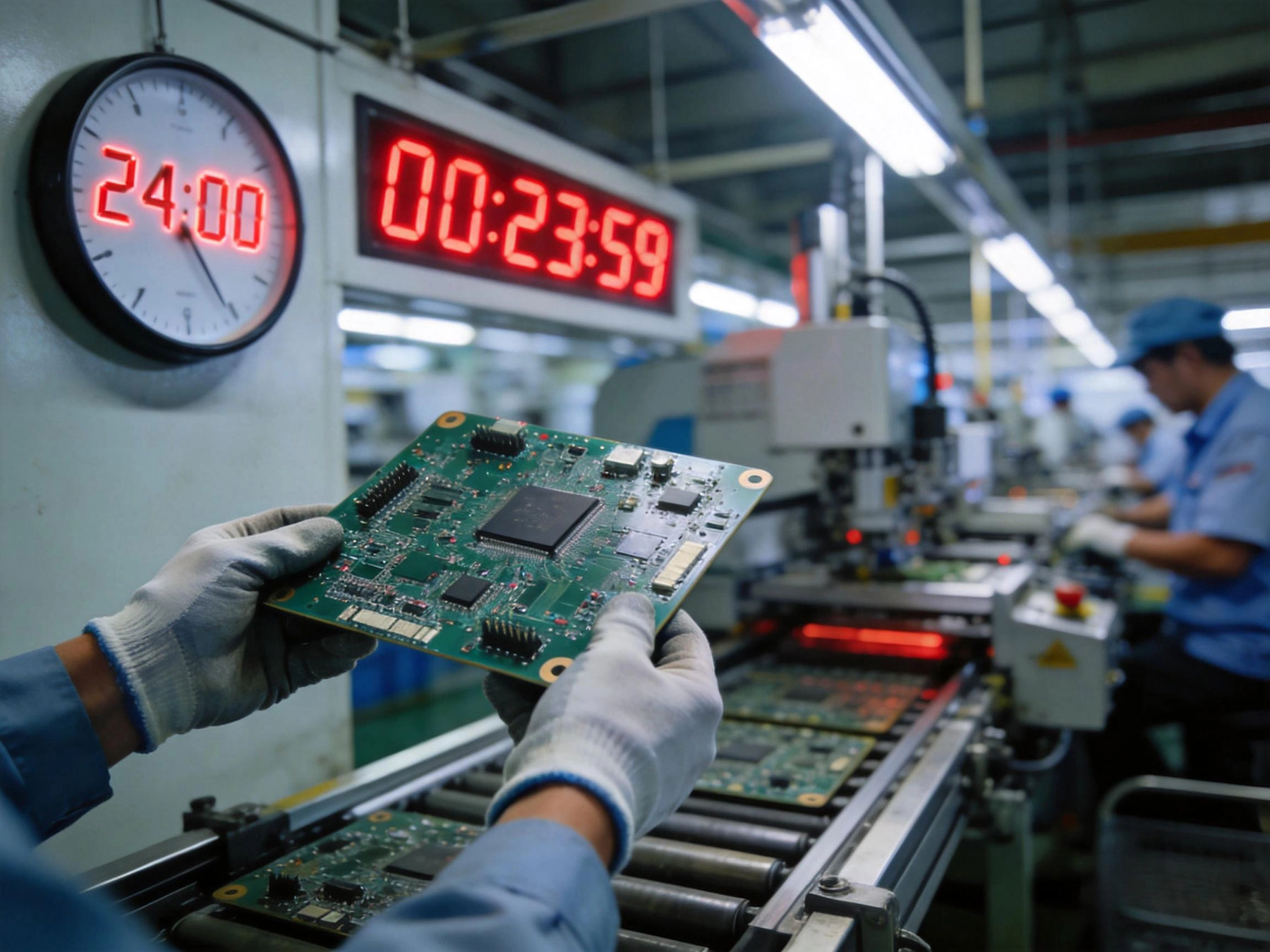
24-hour PCB turnaround is absolutely possible, but it is not magic. It requires specific board characteristics, excellent preparation, premium pricing, and a manufacturer set up for rapid production. This guide explains exactly how it works, what you can realistically expect, and how to maximize your chances of getting boards in your hands within 24 hours.
Before exploring how it works, let us establish what is actually achievable:
Not every board qualifies for 24-hour turnaround. Complex Multilayer Boards, exotic materials, and non-standard specifications typically cannot be fabricated in 24 hours regardless of how much you are willing to pay. Understanding these limitations is essential before planning your project.
There are three levels of speed in PCB Fabrication, and the terminology can be misleading:
| Service Level | Actual Turnaround | Layer Limit | Material Options | Typical Use Case |
|---|---|---|---|---|
| Same Day | 8-12 hours | 2 layers | Standard FR4 only | Emergency debug boards |
| 24-Hour | 18-24 hours | 4-6 layers | FR4, limited specialty | Urgent prototypes |
| Next Day | 24-36 hours | 8 layers | Most materials | Fast-track projects |
24-hour turnaround typically means from when the manufacturer receives your complete and approved files to when they ship the boards. Shipping time is additional and varies by location and shipping method chosen.
A quality 24-hour PCB turnaround does not skip processes. It rearranges and overlaps them, adds resources, and eliminates all waiting time. Here is what a typical 24-hour timeline looks like:
Files arrive, automated DRC runs, engineer reviews stack-up and specifications, quote approved, production begins immediately. Any file issues are flagged within minutes.
Material cut from pre-loaded inventory, drill programs loaded, tooling set up in parallel with material prep. No time wasted on scheduling decisions.
CNC drilling with continuous operation. For 4-layer boards, drilling typically takes 60-90 minutes. The machine runs continuously with operator monitoring.
Electroless copper and electroplating. Standard tank chemistry but optimized timing. Plating thickness verified continuously. This step cannot be rushed beyond certain limits.
Imaging, development, and etching of outer layers. UV exposure optimized for speed, developer chemistry refreshed more frequently than standard production.
Legend printing and Solder Mask application. These are relatively fast steps when the equipment is already set up for your board.
Hasl, Enig, or other surface finish applied. Routing and scoring completed. Electrical test performed.
Visual inspection, Aoi if configured, quality verification, packaging, and shipping. Expedited carriers contacted for priority pickup.
Plating operations (hours 4-14) are the longest single block and cannot be shortened without compromising quality. A manufacturer that claims to plate a board in 2 hours is cutting corners that will affect reliability.
24-hour turnaround typically works best for 2-4 layers. Some manufacturers can do 6 layers in 24 hours, but it requires everything to go perfectly. 8+ layers almost always require more time.
Pre-loaded inventory of standard FR4 (Tg 130-150) is available for immediate use. High-Tg, Rogers, Polyimide, and ceramic substrates require material sourcing that adds significant time.
1 oz and 2 oz copper weights are typically stocked. Heavy copper (3 oz and above) requires plating time adjustments that may exceed 24 hours.
Hasl and lead-free HASL are fastest because they are dip processes. Enig (gold plating) takes longer due to chemistry timing. Osp is fast but dependent on chemical availability.
Boards with Controlled Impedance require additional testing and tighter process control that adds time. If you need Impedance Control, expect next-day rather than same-day.
24-hour turnaround is expensive. Here is why and what you are paying for:
| Cost Element | Standard Lead Time | 24-Hour Turnaround | Premium Factor |
|---|---|---|---|
| 4-layer board (100x150mm) | $35-50 | $120-200 | 3-4x |
| 2-layer board (100x100mm) | $15-25 | $60-100 | 3-4x |
| Engineering review | 24-48 hours | Immediate | Included |
| Expedited shipping | Standard rates | Priority handling | Variable |
| Operator overtime | Regular shifts | Extended shifts | Included |
Even if your board qualifies, the process requires flawless execution on your end as well. Here is how to maximize your chances:
Despite the appeal of speed, there are situations where 24-hour turnaround is not the best choice:
Knowing what 24-hour turnaround involves helps you make better decisions about when to use it and how to prepare. It also helps you evaluate suppliers who offer this service.
24-hour PCB turnaround is real, achievable, and sometimes exactly what you need. But it comes with real constraints and real costs.
24-hour PCB turnaround is a valuable tool when used appropriately for qualifying boards with well-prepared files. It is not a solution for rushed design processes or complex boards that need the full attention of careful manufacturing. Know your limits, prepare thoroughly, and use speed strategically.
Microvias and Blind/Buried Vias: Key Technologies in HDI FabricationAugust/11/2026
Custom Surface Finishes: Choosing Between ENIG, HASL, OSP, and Immersion SilverSeptember/14/2026
Best Practices for Preparing Files for Expedited PCB ManufacturingJuly/29/2026
Thermal Management Strategies for Dense Multilayer PCB DesignsJuly/31/2026

Emergency PCB Runs: Strategies for Getting Boards Fast Without Sacrificing ReliabilityJuly/08/2026

How AI-Driven Scheduling is Making Rapid PCB Prototyping More ReliableJune/18/2026
Questions to Ask Before Placing a Rush Order for PCB FabricationSeptember/15/2026
How to Specify Tolerances and Stack-ups for High-Precision Custom PCBsJuly/28/2026