Open Nav

The contract Electronics Manufacturing market is large, fragmented, and varies enormously in capability. On one end are small shops with a single pick-and-place line and limited inspection equipment. On the other are large-scale facilities with fully automated assembly lines, X-ray and Aoi Inspection suites, in-house testing labs, and decades of experience across dozens of industry verticals. Choosing the wrong partner for your application — regardless of price — is one of the fastest ways to add cost, delay, and frustration to a Product Development program.
This article provides a systematic framework for evaluating Pcb Assembly partners. We cover what assembly capabilities to assess, which certifications matter and why, how to evaluate production capacity honestly, and the questions that separate a well-qualified partner from one that will struggle to meet your requirements.

The first filter in any assembly partner evaluation is technical capability. Can they physically build what you are designing? The answer depends on the combination of board complexity, component types, and assembly processes your project requires.
If your design includes ball grid array (BGA) packages, fine pitch QFN, or components with pitch finer than 0.4mm, the assembly partner must have proven experience with these packages and the inspection equipment to verify the results. BGA packages are invisible under the component body — the only way to confirm Solder Joint Quality is X-ray Inspection. Ask whether the partner has X-ray equipment, whether they perform 100% inspection or sampling, and what their historical defect rate is for BGA assemblies.
Fine pitch assembly also requires precise solder paste printing. Partners should have stencil printing equipment with automatic alignment and 3D solder paste inspection (SPI) to verify paste volume before reflow. A partner that skips SPI and relies only on Aoi after reflow is catching defects after the fact rather than preventing them upstream.
Many industrial and automotive boards combine Surface Mount (SMT) components with through-hole parts, press-fit connectors, heavy copper bus bars, or Odd-form Components. Not all assembly shops have the equipment to handle this variety. Through-hole components require wave soldering or selective soldering equipment. Press-fit connectors require controlled insertion force equipment. Heavy copper assemblies require thicker plating processes and potentially different reflow profiles.
Ask specifically whether the partner has experience with your combination of assembly technologies before assuming they can handle a mixed-technology board. Experience with SMT-only boards does not automatically translate to competence with through-hole or heavy copper assemblies.
Most commercial Electronics Assembly has moved to lead-free (RoHS-compliant) processes using SAC305 or other lead-free solder alloys. If your application has specific requirements — leaded assembly for legacy products, high-temperature solders for automotive under-hood applications, or silver-bearing solders for high-reliability aerospace assemblies — confirm that the partner has the relevant process capability and the materials on hand before you engage them.
Certifications are third-party validation that a manufacturing organization has documented processes, quality management systems, and equipment maintenance practices that meet recognized industry standards. They are not guarantees of quality — a partner with ISO 9001 can still produce defective boards — but they are important indicators of organizational maturity and process discipline.
ISO 9001 is the foundational quality management system standard. It requires the organization to document its processes, track non-conformances, implement corrective actions, and conduct internal audits. ISO 9001 registration is issued by an accredited registrar after an initial audit and annual surveillance visits. A partner without ISO 9001 is operating without an externally validated quality management system — which is a significant risk indicator.
Ipc-a-610 is the industry standard for Electronic Assembly acceptability. It defines acceptance criteria for solder joints, component placement, cleanliness, and documentation. Partners whose operators and inspectors are Ipc-a-610 certified have demonstrated knowledge of the acceptance criteria that apply to your board. Look for evidence that the partner trains and recertifies their staff regularly — Ipc Certification is not a one-time credential.
For applications in automotive, medical, or aerospace, generic ISO 9001 is insufficient. Each vertical has its own quality management requirements.
For automotive electronics, IATF 16949 is the quality management standard that replaced ISO/TS 16949. It is required by most automotive OEMs for suppliers of safety-critical components. If you are building ADAS modules, powertrain controllers, or any board that goes into a vehicle, your assembly partner must hold IATF 16949 certification.
For medical electronics, ISO 13485 is the quality management standard for medical devices. It requires more stringent design control, risk management (per ISO 14971), and traceability than ISO 9001. If your board goes into a regulated medical device, the assembly partner should be ISO 13485 registered, and you should confirm that they understand the regulatory documentation requirements that apply to your device classification.
For aerospace and defense, AS9100 is the relevant quality management standard. Military and aerospace assemblies may also require conformance to MIL-PRF-55110 or MIL-STD-2000 for soldered assemblies. These standards have specific requirements for process validation, inspection documentation, and traceability that are significantly more demanding than commercial IPC-A-610 acceptance criteria.
Underwriters Laboratories (UL) certification of the assembly process is less common but relevant for certain applications. UL 796 covers printed circuit board assemblies and addresses safety-related aspects of the assembly. If your product must carry a UL mark, confirm that the assembly partner is UL-certified and that they can provide the documentation required for UL listing.
RoHS (Restriction of Hazardous Substances) compliance is effectively mandatory for any electronic product sold in Europe, China, or most major markets. Your assembly partner should be RoHS-compliant and should be able to provide declarations of conformity for the materials and processes they use. For medical and aerospace applications, Reach Compliance may also be required. If your product must be halogen-free or must meet specific environmental standards beyond RoHS, confirm that the partner has the relevant certifications and process controls in place.
Capacity evaluation is often treated as an afterthought, but it is one of the most common reasons engineering teams get stuck with the wrong partner. A shop that can build your first prototypes beautifully may not have the equipment, staff, or floor space to scale to 10,000 units per month when your product enters production.
Ask about the partner's SMT line configuration: how many pick-and-place machines they operate, what the rated throughput of each line is in components per hour, and how many placement heads they have. A machine with a single head placing all components is significantly slower than one with multiple heads and the ability to place passives and ICs simultaneously. For high-mix low-volume boards (common in industrial applications), a flexible multi-head placer is more valuable than a high-speed chip shooter optimized only for high-volume production of identical boards.
The actual metric that matters is weekly or monthly output capacity expressed in the number of boards of your complexity class that can be produced per week. A partner quoting capacity in "shifts per day" or "hours of line time" is not giving you the information you need. Push for a specific estimate of how many boards they can produce per week at your projected production volume.
If your board includes through-hole components, confirm that the partner's wave soldering or selective soldering equipment has adequate throughput for your volume. Selective soldering (where individual through-hole pins are soldered with a localized solder fountain rather than a full wave) is slower than traditional wave soldering but produces better results for mixed-technology boards with sensitive nearby components. Make sure the partner's capacity estimate accounts for the actual process they will use.
Inspection is a capacity bottleneck at many assembly shops. Aoi (automated optical inspection) and X-ray Inspection each require equipment time and trained operators to interpret results. Ask how inspection is scheduled — is it a gate that every board passes through, or is it a sampling process that some boards skip? For safety-critical applications, every board should go through inspection, not just a statistical sample.
Functional test (Fct) capacity is another common constraint. If your board requires functional test after assembly, confirm that the partner has test fixtures, test software, and operators available at the production volume you need. Building test fixtures takes time and adds NRE cost — partners that quote fast lead times but have no test fixtures in place may be planning to skip Functional Testing, which is a significant quality risk.
Ask about standard lead times at different volume levels and whether the partner can accommodate rush orders when needed. Some partners offer expedited assembly for prototypes and pilot builds, with longer lead times for volume production. Others are optimized for one volume tier and struggle outside it. Understanding where your current and projected volume sits relative to the partner's sweet spot helps avoid the situation where your first order fits perfectly but scaling to production creates a capacity crunch.
Nothing substitutes for visiting the assembly facility in person. A facility tour reveals the cleanliness and organization of the floor, the age and condition of the equipment, the experience level of the operators, and whether the facility looks like it has the capacity it claims to have. Ask for a tour before you commit to any volume order, regardless of how impressive their website or sales materials look.
Ask for copies of their quality manual, their work instruction templates, and their incoming inspection procedures. Organizations with genuine quality management discipline are happy to share this documentation — it is a selling point for them. Organizations that are reluctant to share documentation may have processes that are undocumented, inconsistent, or not under control.
A partner with excellent references from medical device companies may not be the right fit for a high-volume consumer product, and vice versa. Ask for references in your specific industry vertical and, if possible, at a similar production volume to your expected order. Follow up on the references and ask specific questions: Would you use this partner again? Did they deliver on time? How did they handle quality issues when they arose?
The most reliable evaluation of a new assembly partner is a real order. Start with a first article build of 5 to 25 units before committing to volume production. A first article allows you to validate the partner's process quality, communication, documentation, and delivery performance on a low-stakes order. If the first article is late, has documentation errors, or shows signs of poor process control, those problems will be amplified at volume — and you have lost only a small amount of money and time rather than a large production commitment.
For most industrial and commercial electronics, ISO 9001 is an adequate baseline quality certification. It demonstrates that the partner has a documented quality management system, tracks defects, and implements corrective actions. However, ISO 9001 says nothing about the partner's specific technical capabilities — they could have ISO 9001 and still be unable to assemble a 0.3mm pitch BGA. Combine ISO 9001 with a technical capability review, process capability assessment, and preferably a first article evaluation before committing to volume orders.
Yes. IPC-A-610 is the industry-standard acceptance criteria for electronic assemblies. The partner's quality inspectors should be IPC-A-610 certified, and the partner's workmanship standards should reference IPC-A-610 as the basis for acceptance decisions. For safety-critical applications (automotive, medical, aerospace), IPC-A-610 is effectively mandatory — your OEM or regulatory submission will reference it. If a partner does not follow IPC-A-610, ask what standard they do follow and whether it is equivalent or more stringent.
Cross-reference their claimed capacity with the physical evidence: the number of SMT lines visible on the floor, the number of operators working those lines, and the output of their historical orders. Ask for a detailed breakdown of how they arrived at their capacity estimate — which machines, what utilization rate, and what the bottleneck step is. Partners that cannot explain their capacity estimate in concrete terms may be overstating what they can actually deliver. A site visit is the most reliable way to verify capacity claims.
IATF 16949 is the fundamental quality management system requirement for automotive electronics suppliers. Beyond that, the assembly must comply with PPAP (Production Part Approval Process) requirements specified by the OEM, and the manufacturing process must follow AIAG Core Tools (APQP, FMEA, SPC, MSA). For safety-critical modules such as ADAS controllers or airbag ECUs, the assembly partner may also need to comply with ISO 26262 functional safety requirements. Confirm the specific requirements with your automotive customer early — automotive Supply Chain qualification is a multi-month process that should begin before the first production order.
Engineering changes are inevitable in Product Development and production. Ask the partner how they handle ECOs (engineering change orders): what is their process for updating BOMs, revising assembly work instructions, and managing component substitutions? Do they notify you proactively when a component goes obsolete or enters shortage? How quickly can they update an assembly and re-run production after an ECO? Partners with poor ECO management create significant delays during the transition from Prototype to production and during the product lifecycle. Look for partners with a documented ECO process and a history of communicating changes clearly and quickly.
Choosing the right assembly partner is one of the most consequential decisions in any electronics product program. The right partner brings not just assembly capacity but process expertise, quality discipline, and the organizational stability to support your product through its full lifecycle — from first prototypes through full-scale production and into the ongoing engineering changes that every product accumulates.
Evaluate assembly partners across three dimensions: technical capability to build what you have designed, quality certifications that match your industry requirements, and production capacity that can scale to your volume targets without compromising delivery or quality. Never assume a partner can handle your requirements based on their website alone. Verify with facility tours, process documentation reviews, reference checks, and — most reliably — a first article order.
The time invested in a thorough partner evaluation upfront is repaid many times over in smooth production, lower defect rates, and the confidence that your manufacturing partner will be there when you need them.
Contact us to discuss your requirements.
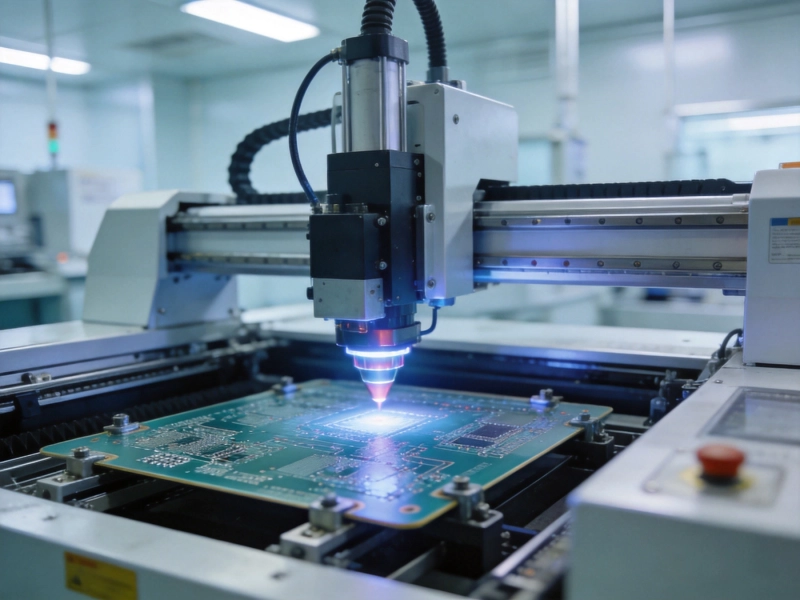
The Role of Equipment in Determining PCB Fabrication Capabilities (LDI, Laser Direct Imaging)September/09/2026

Cost Drivers in HDI and Multilayer PCB Fabrication: What Engineers Need to KnowSeptember/26/2026

High-Frequency Materials: Assessing Capabilities for RF and Microwave PCBsJuly/23/2026
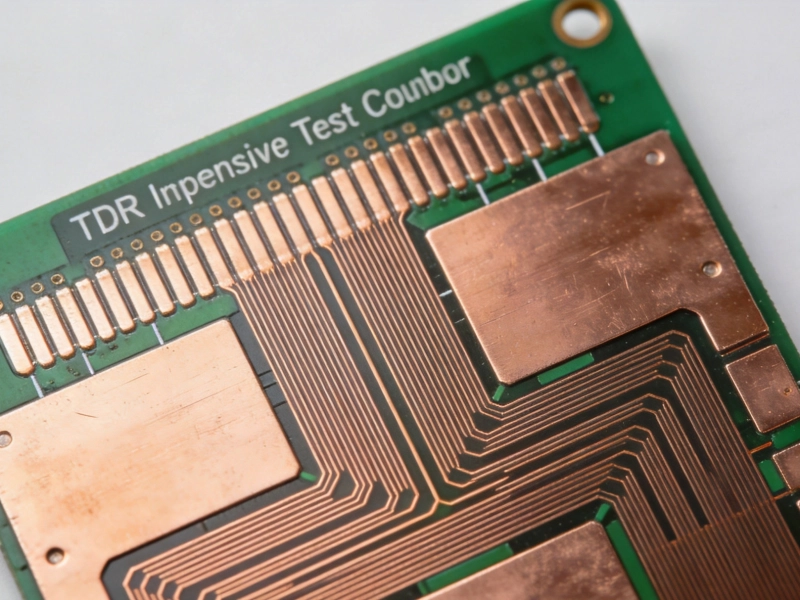
Controlled Impedance: Measuring a Manufacturer's Ability to Hit Tight TolerancesSeptember/20/2026

Minimum Trace and Space: How Far Has PCB Technology Advanced?July/01/2026

Top Trends Shaping the Chinese PCB Manufacturing Industry in 2026May/21/2026
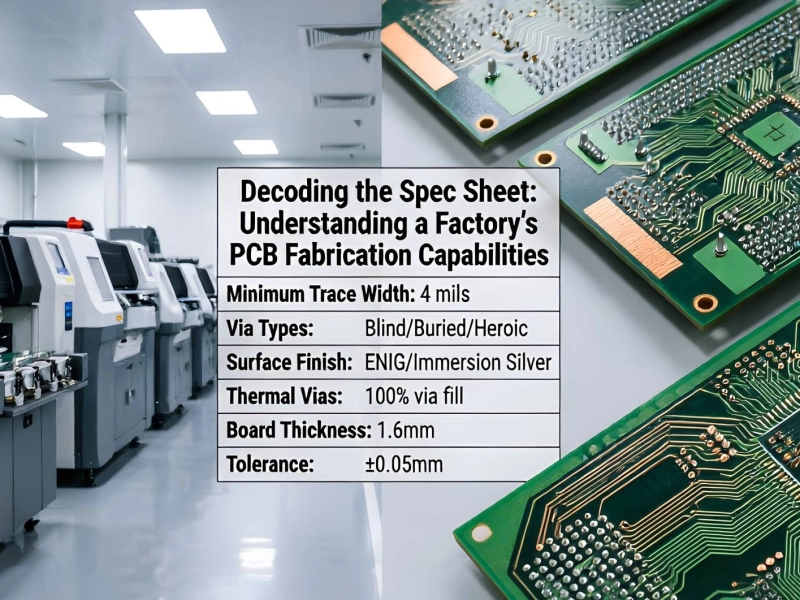
Decoding the Spec Sheet: Understanding a Factory's PCB Fabrication CapabilitiesJune/11/2026
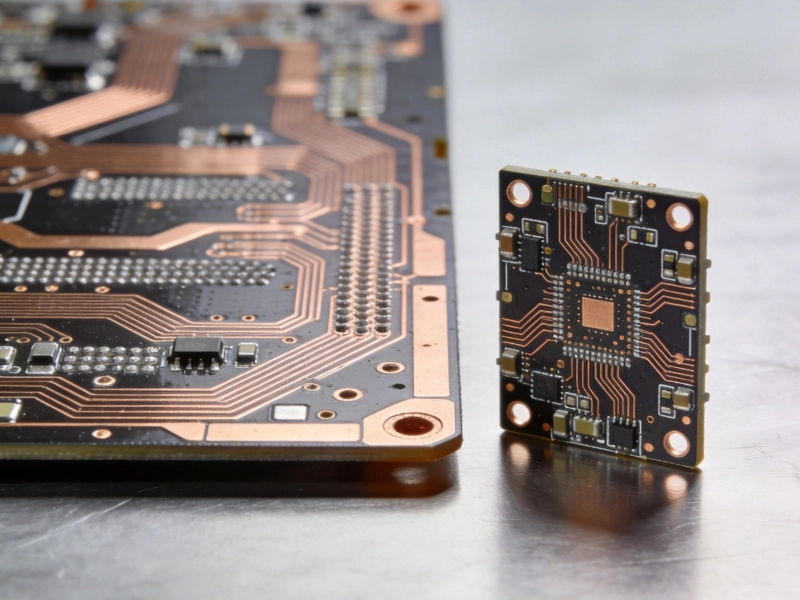
Large Format vs. Miniature PCBs: Evaluating Size Constraints and CapacitiesAugust/14/2026