Open Nav

We've all been there. The deadline is looming, the Prototype isn't quite right, and you suddenly need boards yesterday. It’s a stressful moment, but it’s also when you really start thinking about the trade-offs of rush orders. Getting Quick Turn PCBs is a lifesaver, but it definitely comes with a price tag, both in dollars and in potential headaches. I’ve managed enough supply chains to know that speed isn't free. Let’s talk about how to navigate this without sacrificing your budget or your sanity.
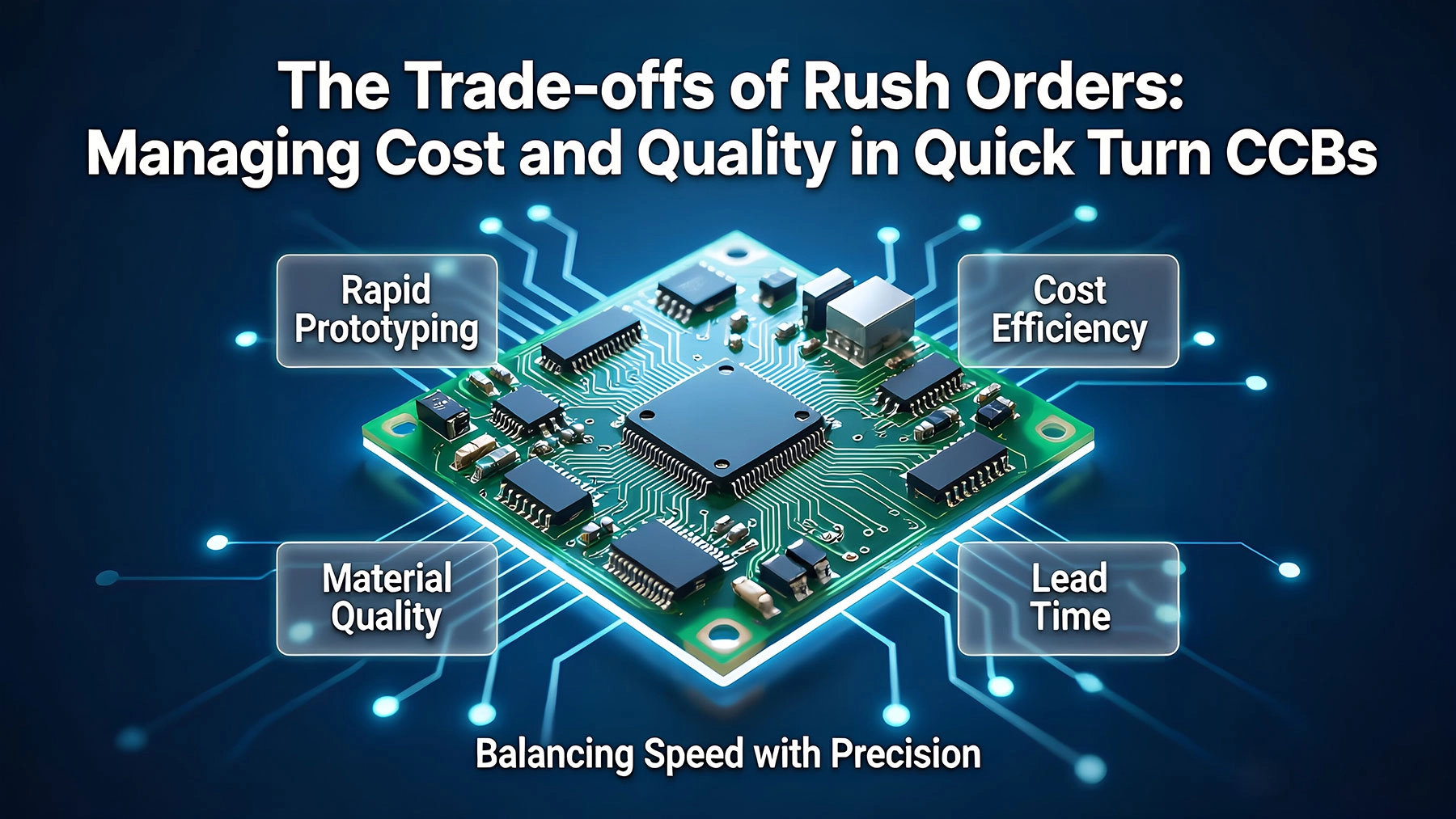
Let’s be real: rush fees are real. When you ask a fab house to jump your board to the front of the line, they have to reshuffle their production schedule. That costs them money, and they pass it to you. I’ve seen rush fees double the standard price, sometimes even triple it for 24-hour turns. The trade-offs of rush orders start right here with your budget. You have to ask yourself, is this delay worth 30% of my total project budget? Sometimes yes, sometimes no. But don't just look at the board cost. Think about the opportunity cost of waiting versus the cost of paying the premium.
Speed can sometimes be the enemy of perfection. When the trade-offs of rush orders aren't managed well, quality can slip. Engineers are working faster, machines are running tighter schedules, and there’s less buffer time for rework. I’ve had batches where the Solder Mask was slightly off-color or the Silkscreen was a bit messy because they were rushing to meet the cutoff. It doesn't mean the boards won't work, but it’s a risk. To manage this, you need to be extra clear in your fabrication notes. Don't assume they’ll catch small errors. Double-check your Gerbers before hitting send. A mistake in a rush order is a lot more expensive to fix than a standard order.
Even if the fab can build it in 24 hours, can they get the parts? This is a huge part of the trade-offs of rush orders. Component lead times can kill your Quick Turn plans. You might get the bare boards in two days, but wait three weeks for a specific connector. Always check component availability before committing to a rush PCB order. I always recommend using a turnkey service for rush jobs. They can source parts and build boards in parallel. If you’re doing consignment, you’re playing a dangerous game with shipping delays. One missed package and your "rush" order becomes a "wait" order.
In a normal order, you might have a few days for Dfm feedback. In a rush order, that window shrinks to hours. This is where the trade-offs of rush orders get tricky. If you skip the Dfm check to save time, you might end up with unmanufacturable boards. I’ve seen it happen. A via is too close to a pad, and the fab has to call you at 2 AM to ask for a fix. If you’re asleep, the order stops. The best way to manage this is to use DFM software before you even submit. Don't rely on the fab to catch everything when they’re under the gun. Clean up your design first.
You can’t just email and hope for the best with a rush order. You need to pick up the phone. Direct communication helps manage the trade-offs of rush orders by catching issues early. Ask for a dedicated project manager if possible. Confirm the exact cutoff times. Time zones matter! If you submit at 5 PM EST but the fab is in China, that’s their morning, but if you submit at 5 PM China time, you’ve just lost a whole day. I always try to align my submission with their morning shift. It sounds small, but it makes a difference.
Rush orders are a necessary tool, but they aren't a magic wand. The trade-offs of rush orders involve higher costs, tighter quality margins, and Supply Chain risks. But if you plan ahead, check your DFM, and communicate clearly, you can get those boards fast without blowing up your budget. Next time you’re in a crunch, take a deep breath, check your component stock, and call the fab. Don't just click "rush" and pray.
Q: How much should I expect to pay for a rush order?
A: It varies, but expect anywhere from 50% to 200% extra depending on the turnaround time. 24-hour turns are the most expensive.
Q: Can I rush order if I have hard-to-find components?
A: It’s risky. Check stock first. If the part is on allocation, no amount of PCB rushing will save you. Consider alternate parts.
Q: Is quality usually worse on rush orders?
A: Not necessarily, but the margin for error is smaller. Rejected boards take longer to replace because you’re back at the end of the line.
The Benefits of Combining PCB Fabrication and AssemblyMay/22/2026
Handling Mixed Technology: Integrating SMT, THT, and Odd-form ComponentsAugust/12/2026
The Importance of BOM Accuracy in the PCB Assembly ProcessJuly/13/2026
Inspection Standards: IPC-A-610 and What it Means for Your Assembled BoardsAugust/03/2026
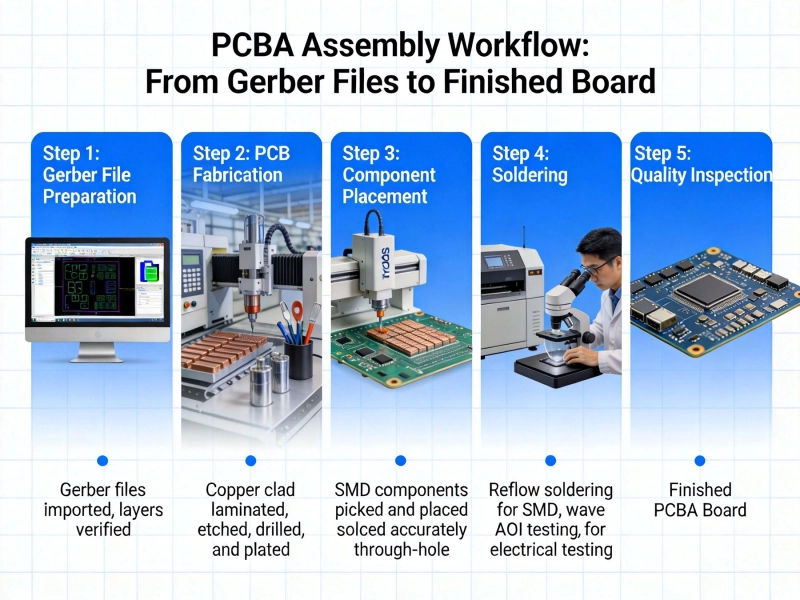
Understanding the PCBA Workflow: From Gerber Files to Finished BoardJune/16/2026
Turnkey Assembly: How to Hand Off Your Project and Get Finished ProductsJuly/22/2026
How Chinese Manufacturers Ensure Precision in the SMT PCB Assembly ProcessJune/03/2026

Prototyping vs. Production Assembly: Different Approaches for Different StagesSeptember/08/2026