Open Nav

Here's a scenario that plays out in engineering offices all the time: You spend weeks perfecting your Pcb Design, send the files to a fabrication house, wait for the boards to arrive, ship them off to an assembly partner, hold your breath during NPI—and then discover a manufacturing compatibility issue that could of been caught days earlier if the two shops had talked to each other. The one-stop shop model exists precisely to eliminate this kind of preventable headache.
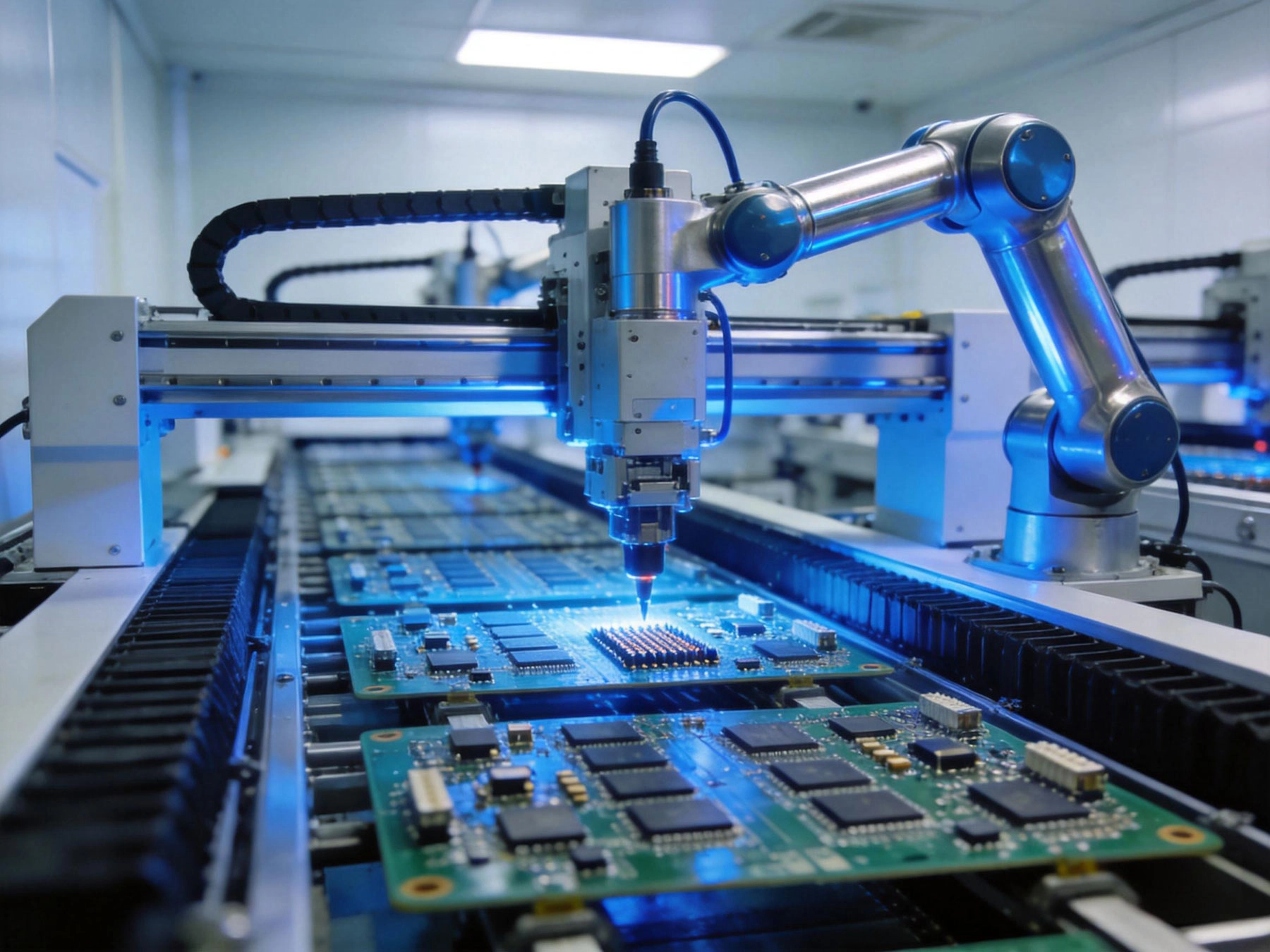
When you split PCB Fabrication and assembly between two vendors, you're also splitting accountability. When something goes wrong—which it inevitably will at some point—you get to play middleman between two companies pointing fingers at each other. Board delamination? The fab blames the assembly reflow profile. Solder joint failure? The assembler says the board surface finish was wrong. You're stuck in the middle, paying for rework, and watching your schedule evaporate.
A one-stop PCB Fabrication and assembly provider changes this dynamic entirely. One vendor owns the entire process from bare board to finished product. One team reviews your design holistically. One invoice covers everything. One support contact knows your project inside and out. For teams building anything beyond simple hobby projects, these aren't small conveniences—they're strategic advantages that directly affect your ability to ship on time and within budget.
At its core, a one-stop PCB shop handles both the Pcb Fabrication (manufacturing the bare board—the fiberglass substrate, copper layers, Solder Mask, and Silkscreen) and the Pcb Assembly (SMT placement, through-hole insertion, reflow soldering, inspection, and test). Some providers go even further, offering design support, Dfm feedback, box build, and final packaging.
The key differentiator isn't just doing both steps—it's doing them in an integrated workflow where information flows freely between fabrication and assembly teams. In a true one-stop operation, the engineer who reviews your board for fabrication also flags potential assembly issues. The Dfm report you receive covers the full manufacturing process, not just one piece of it.
Most one-stop providers fall into one of three models:
For most product teams, vertical integration delivers the cleanest accountability and fastest communication. But even partnership models with a strong coordinator outperform the fragmented two-vendor approach in most scenarios.
When fabrication and assembly happen under one roof—or under one coordination umbrella—the handoff between processes shrinks from days or weeks to hours. There's no shipping time between vendors. No separate job queue at the assembly shop. No waiting for the assembler to receive and inspect incoming boards before they can start programming.
In practical terms, experienced one-stop providers typically deliver 30% to 40% faster overall lead times compared to managing separate vendors. For a product launch with a hard deadline, this can be the difference between making your market window and missing it entirely.
Speed matters especially in NPI (New Product Introduction) phases where multiple iterations are expected. A board spins in days, not weeks. Your engineering team gets prototypes back faster, identifies issues sooner, and converges on a production-ready design with less calendar time burned.
It's tempting to assume separate vendors gives you negotiating leverage—let two shops bid against each other and capture the savings. In theory this works. In practice, it rarely does.
Here's why: the cost savings from competitive bidding between two vendors are usually offset by hidden coordination costs. These include engineering time spent managing two vendor relationships, expediting fees when things go wrong, scrap and rework from compatibility issues discovered late, inventory carrying costs for boards waiting between fabrication and assembly, and the occasional emergency air freight when a two-week shipping delay kills your schedule.
One-stop providers eliminate most of these hidden costs. With integrated workflows, DFM catches assembly issues before boards are built. There's no double-handling, no separate profit margins stacked on each step, and no margin for error from miscommunication between vendors. Most teams find the effective cost savings land between 20% and 35% when factoring in the full picture.
This is where one-stop really separates itself from the competition. When your fabrication engineer and assembly engineer work in the same organization—or at minimum, have a direct communication channel—your design gets reviewed holistically rather than in isolation.
Fabrication DFM alone won't catch everything. A board that's perfectly fabricable might have SMT pad geometry that causes tombstoning. Through-hole spacing that works for manual assembly might violate pick-and-place constraints. Trace routing that looks clean in your CAD tool might create antenna effects that fail EMI testing.
A combined review catches all of these—because the same team that optimized the board's layer count and Impedance Control also knows exactly how their pick-and-place machine handles 0201 components and what reflow profile their solder paste requires. You receive one coherent DFM report covering both fabrication and assembly considerations, often with suggested design modifications and the reasoning behind them.
"We used to spend half our Prototype budget on rework. Boards would come back from assembly with issues that traced back to decisions made at fabrication—surface finish incompatibility with our components, trace geometry that caused EMI problems, pad sizes that didn't match our paste stencil. Since switching to a one-stop provider, we get one DFM report that flags all of that upfront. Our first-pass yield on NPI went from 65% to over 90%."
— Principal Engineer, Industrial Sensor Company
When your product fails in the field, the last thing you want is two vendors arguing about who caused the problem. With a one-stop provider, there's no ambiguity. One organization owns the entire build. If a solder joint fails, they investigate the entire chain—board warp during reflow, surface finish oxidation, paste printing issues, component placement accuracy—and they fix it. You don't chase anyone. You don't mediate a dispute. You report the issue, they resolve it.
This unified accountability extends through the entire quality process. Traceability from bare board lot numbers through assembly lot numbers to finished goods means you can trace any defect back to its root cause with a single request. For industries requiring ISO 9001, Iatf 16949, or ITAR compliance documentation, this kind of end-to-end traceability isn't just convenient—it's often a regulatory requirement.
Managing one vendor instead of two frees up real engineering time. Your hardware team can focus on design and validation rather than playing project manager between external partners. Instead of writing three emails to coordinate two vendors, you write one. Instead of attending weekly calls with two separate suppliers, you have one check-in.
For small teams with limited bandwidth—which describes most hardware startups and many engineering departments—this efficiency gain is substantial. The project manager who previously spent 30% of their time on vendor coordination can redirect that energy to timeline management, risk tracking, or actually reviewing design data instead of chasing purchase orders.
Pcb Fabrication and assembly each have their own cost structures—setup costs, per-panel costs, per-component costs, test costs. When you buy both from the same provider, they can optimize across these line items in ways two separate vendors never will.
A one-stop provider might consolidate panelization to reduce fab waste while also optimizing the assembly feeder configuration. They can build boards in quantities that make sense for both processes rather than forcing you to buy bare boards in quantities optimized for fabrication efficiency and assembled boards in quantities optimized for assembly efficiency—quantities that rarely align.
The result: pricing that reflects genuine manufacturing efficiency rather than two separate vendors each protecting their margin.
The drawbacks are real but manageable. The specialization concern, for instance, mostly affects extremely high-volume production where dedicated high-end fabricators may have marginal cost advantages. For most medium-volume commercial products—typical runs of a few hundred to a few thousand units—the one-stop advantages overwhelmingly dominate.
Not all one-stop providers deliver equal value. Here's what separates the genuinely capable ones from the ones that'll just create different problems:
| Industry | Primary Benefits | Key Requirements |
|---|---|---|
| Consumer Electronics | Fast NPI, cost optimization, high volume capability | Speed-to-market, competitive pricing, visual quality standards |
| Medical Devices | Full traceability, compliance documentation, Quality Control | Iso 13485, FDA documentation, lot-to-unit traceability |
| Automotive | DFM excellence, IATF compliance, durability validation | Iatf 16949, PPAP documentation, thermal cycling validation |
| IoT & Wearables | Miniaturization support, flexible/rigid combinations, quick spins | Small form factor, RF integration, Rapid Prototyping cycles |
| Industrial & Automation | Long-run stability, robust assembly, extended temperature range | Wide temperature tolerance, Conformal Coating, long availability |
| Aerospace & Defense | ITAR compliance, full documentation, inspection rigor | ITAR/AS9100, detailed traveler records, high reliability standards |
The answers to these questions reveal more about a provider's actual capabilities than any marketing material. A confident, capable one-stop shop will answer each one directly, with specifics, and without deflection. If a provider gets defensive or vague on any of these, take note.
Moving from a two-vendor model to a one-stop provider doesn't have to be disruptive. Here's a practical path:
Hardware Development is increasingly requiring faster cycles, tighter integration between disciplines, and more holistic optimization across the entire product stack. The old model of sequential handoffs—design to fab to assemble to test—reflects an era when these steps were largely independent. They aren't anymore.
Modern electronics products demand co-design between mechanical, electrical, and thermal considerations. They require RF integration, embedded software, and complex multi-material substrates. The provider who can hold the entire manufacturing picture in view—and optimize across it—delivers better outcomes than any single-step specialist, no matter how excellent that specialist is in their lane.
One-stop PCB fabrication and assembly isn't just a procurement convenience. It's a structural advantage that compounds across every stage of your product lifecycle. Teams that embrace this model consistently report faster launches, fewer surprises, lower costs, and better quality. If your current approach doesn't deliver all four, it might be time to make the switch.
Consolidating your PCB fabrication and assembly with a single capable provider eliminates coordination overhead, accelerates your timeline, and gives you a single accountable partner from design through delivery. Whether you're launching a first prototype or scaling a product to volume, the one-stop model aligns your manufacturing with the way modern Hardware Development actually works. Start with a pilot build and experience the difference firsthand.
Turnaround varies by provider and build complexity, but a well-run one-stop shop typically delivers assembled boards in 10–15 business days for standard Multilayer Boards with standard surface finishes. Some offer expedited options in 5–7 days at premium pricing. The key advantage over two-vendor procurement: there's no separate queue for assembly after fabrication, so the clock runs continuously rather than starting fresh at each handoff.
Absolutely. While one-stop shines in medium-volume production, many providers have specific programs for high-mix low-volume work, offering panel consolidation across different designs, flexible assembly scheduling, and just-in-time Inventory Management. Ask specifically about their approach to low-volume builds—providers who specialize in this typically have different pricing structures and operational processes than those optimized purely for high-volume runs.
Most one-stop providers work in mixed scenarios—some customer-supplied components, some distributor-procured components, some full turnkey where they handle everything. The key question is component traceability and lot control. Be upfront about your component sourcing strategy, and ask how the provider handles BOM changes, part substitutions, and obsolescence management. A capable provider will have systems for all of these.
This is where one-stop really differs from the two-vendor model. When you have a quality issue, you contact one entity who owns the full build. They investigate the root cause across fabrication, assembly, and test. They implement corrective action. They provide a credited return or remake. There's no finger-pointing between vendors because there's only one vendor. Ask prospective providers about their non-conformance procedures, RMA process, and typical resolution timelines before committing.
Upfront per-unit pricing might appear higher. But when you account for coordination costs, expediting fees, scrap and rework from compatibility issues, inventory carrying costs, and engineering time spent managing two vendor relationships, the total cost of ownership almost always favors the one-stop model. Get a full cost breakdown before assuming one approach is cheaper than the other. The number that matters is total product cost, not unit board cost.
Common Defects in PCB Assembly and How Manufacturers Prevent ThemSeptember/18/2026
SMT vs THT PCB Assembly in China: Which Technology is Right for Your Project?June/10/2026
Inspection Standards: IPC-A-610 and What it Means for Your Assembled BoardsAugust/03/2026
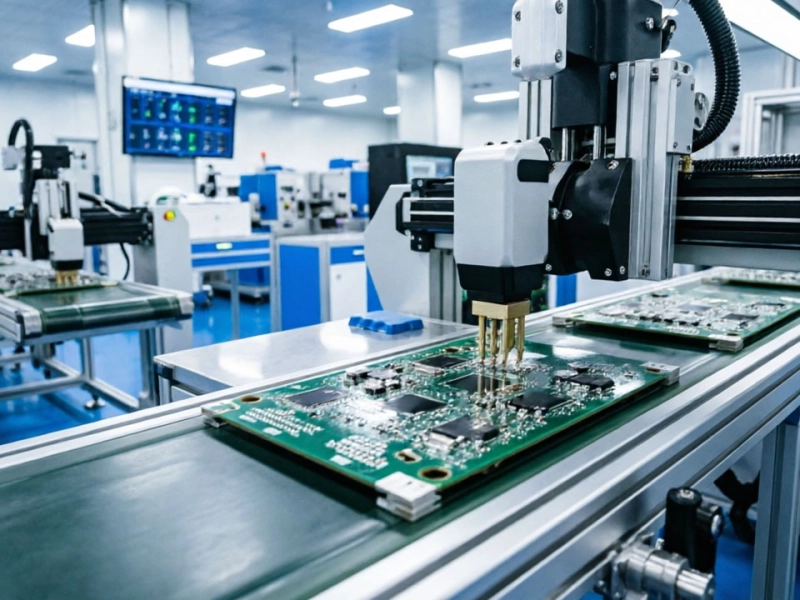
How Chinese Manufacturers Ensure Precision in the SMT PCB Assembly ProcessJune/03/2026
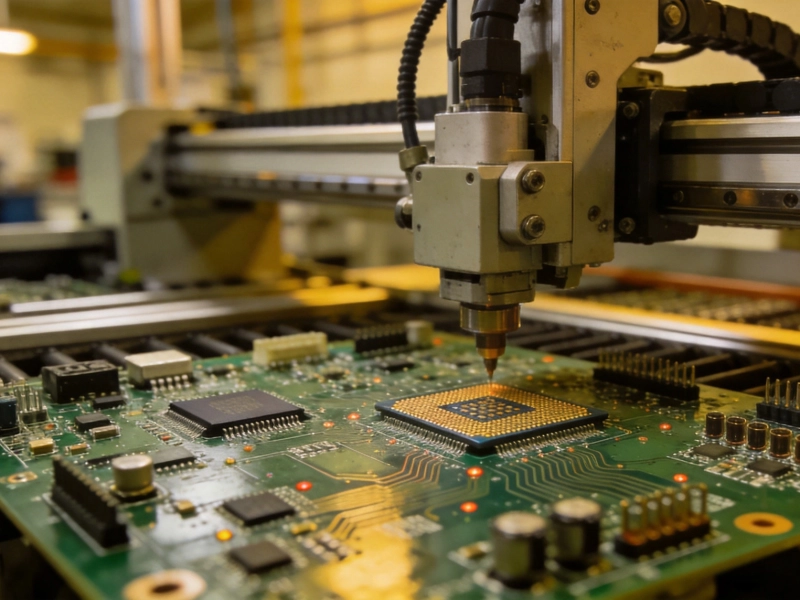
Handling Mixed Technology: Integrating SMT, THT, and Odd-form ComponentsAugust/12/2026
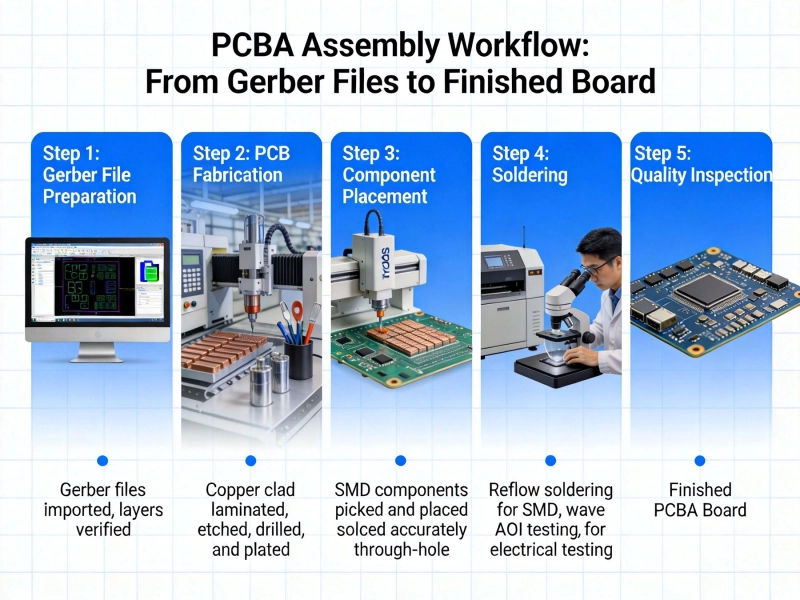
Understanding the PCBA Workflow: From Gerber Files to Finished BoardJune/16/2026
Managing Cost and Quality in Quick Turn PCBsJune/04/2026

The Importance of BOM Accuracy in the PCB Assembly ProcessJuly/13/2026