
Ordering PCBs from China has become standard practice for electronics companies of all sizes, from scrappy startups building their first Prototype to established manufacturers running high-volume production. The combination of competitive pricing, broad manufacturing capability, and increasingly sophisticated quality systems makes Chinese PCB suppliers attractive for nearly every application. Yet the same factors that make China Sourcing powerful also create opportunities for misunderstandings, unexpected costs, and disappointing results if buyers approach the process without knowing what to watch out for. The good news is that most of the common mistakes are entirely avoidable once you know they exist. This article walks through the ten mistakes that appear most frequently in buyer-supplier relationships, explains why they cause problems, and provides practical guidance for avoiding them in your own projects.
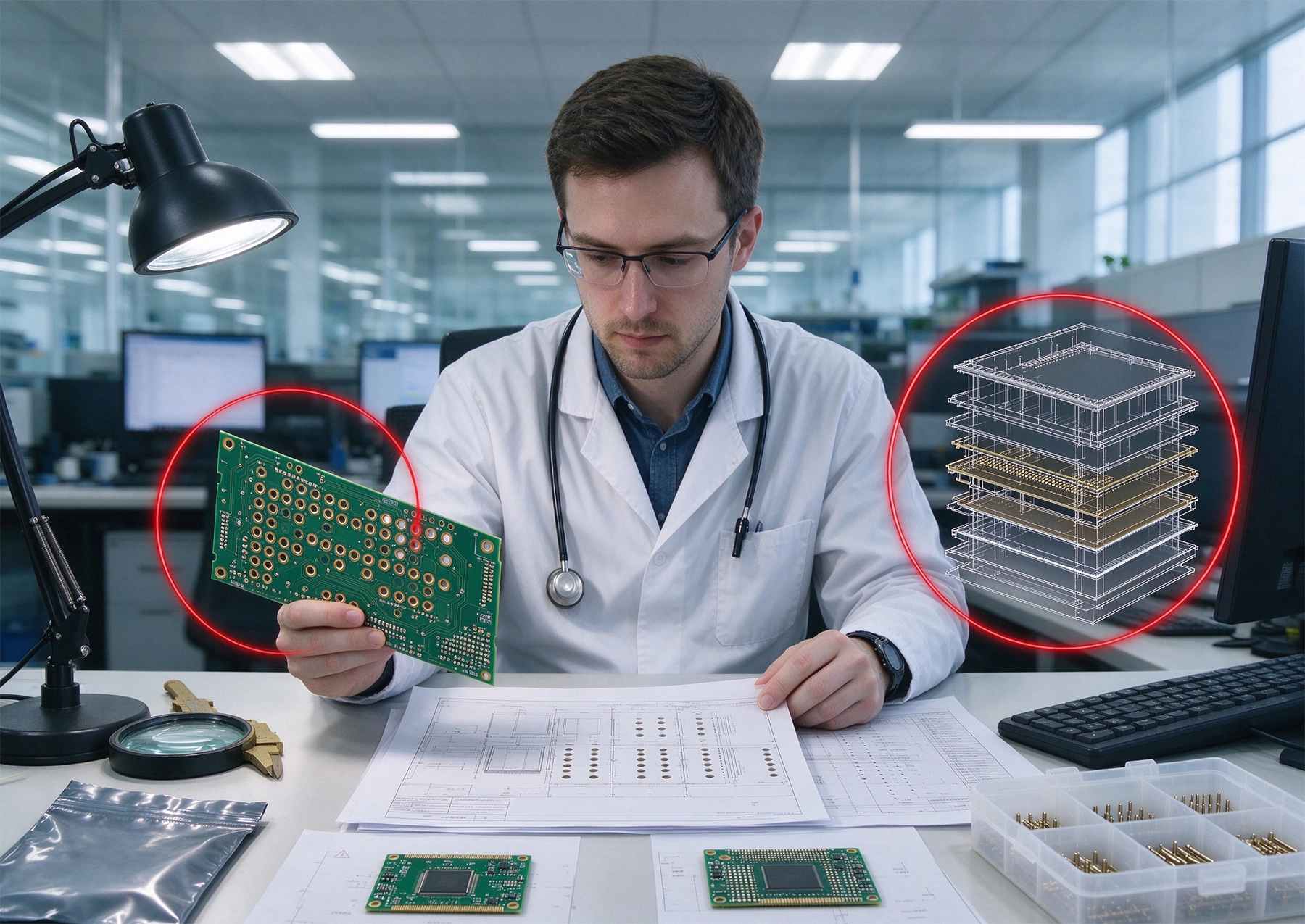
The single most common source of delays, disputes, and quality problems in PCB Fabrication orders is submitting incomplete or ambiguous design files. When buyers send Gerber Files without drill files, or with drill files that do not match the Gerber data, manufacturers must stop and ask for clarification before production can begin. These clarification cycles can add days or even weeks to lead times, eliminating much of the speed advantage that makes Chinese Manufacturing attractive in the first place.
Incomplete documentation also creates room for manufacturers to interpret requirements in ways that differ from buyer expectations. A stack-up described in vague terms might be produced with different layer thicknesses than intended. A Surface Finish not explicitly specified might be applied based on manufacturer preference rather than buyer requirement. When the finished boards arrive, they may technically conform to what was specified but not match what was actually needed, leading to expensive rework or scrap.
Providing complete documentation means including not just Gerber Files and drill data but also stack-up specifications, material requirements, impedance tolerance targets, Surface Finish requirements, and any special testing or qualification requirements. The more context you provide upfront, the less opportunity there is for misunderstanding. If you are not sure what information to include, ask your supplier for their documentation checklist and follow it completely.
Comparing quotes based solely on unit price without understanding what is and is not included is a reliable way to end up with unexpected costs and disappointing results. The lowest quoted unit price often reflects bare-minimum specifications, excludes necessary value-added services, or reflects pricing for quantities or configurations that do not match your actual requirements.
Hidden costs that frequently appear in PCB quotes include engineering review fees, expedited processing charges, special test requirements, custom packing, and export documentation. These line items can add 20% to 50% to the base unit price, making a quote that appeared competitive actually more expensive than alternatives that quoted higher unit prices with more inclusive terms.
The right way to compare quotes is to request itemized pricing that separates base unit cost from all additional charges, then evaluate the total cost of the complete order. Ask each supplier to confirm exactly what is included in their base price and what requires additional charges. A supplier who quotes slightly higher per-unit pricing but includes engineering review, standard testing, and domestic shipping may actually be less expensive than one who quotes a lower unit price with separate charges for each of these items.
Assuming any Chinese Pcb Supplier can produce any specification is a mistake that leads to production problems, quality escapes, and damaged supplier relationships. The Pcb Manufacturing industry includes a wide range of capability levels, from small shops that can produce simple double-sided boards to advanced facilities that specialize in Any-layer Hdi, heavy copper, or high-frequency materials. Ordering a complex board from a supplier whose capabilities do not match your requirements produces poor results regardless of how good their pricing looks.
Capability verification before placing an order should include reviewing the manufacturer's published capability specifications, requesting samples for new technology types, and in some cases conducting a facility audit either in person or remotely. For standard commercial boards, published specifications may be sufficient. For complex, high-reliability, or regulated applications, more thorough qualification is appropriate before committing to production volumes.
Asking for capabilities documentation and sample evaluations costs time upfront but prevents far more costly problems later. A sample order for a new technology type typically costs only a few hundred dollars and a few weeks of time, while a production run of boards that cannot be manufactured to acceptable quality can cost thousands of dollars and months of schedule delay.
When comparing pricing from Chinese suppliers, it is tempting to focus on the manufacturing cost and treat shipping as a minor afterthought. For large orders where the cost per board is the dominant factor, this approach may be acceptable. For small Prototype runs or orders with unusual dimensions, shipping costs can equal or exceed the manufacturing cost, dramatically affecting the true total cost of the order.
Shipping method selection involves trade-offs between cost, speed, and risk. Sea freight offers the lowest per-unit cost but requires 3 to 5 weeks transit time from major Chinese ports. Air freight costs more but arrives in 3 to 7 days, which may be necessary for urgent prototype needs. Express courier services like DHL, FedEx, and UPS are the fastest but most expensive option, appropriate only for very small orders where speed is critical and budget is flexible.
Import duties and taxes add another layer of cost that is easy to overlook when comparing quotes. PCB boards and electronic assemblies may be subject to import tariffs depending on the product classification and destination country. Some trade agreements provide reduced duty rates for products from certain countries, but claiming these benefits requires proper documentation that your supplier must provide. Understanding the landed cost, including manufacturing, shipping, duties, and any brokerage fees, gives you the true basis for comparing suppliers rather than an incomplete picture based only on manufacturing cost.
Material selection has a significant impact on PCB performance, reliability, and cost, yet many buyers leave material specifications vague or accept whatever the manufacturer suggests without verification. When boards arrive with different materials than expected, the buyer may face performance issues, regulatory compliance problems, or simply have paid for performance they did not need.
For standard commercial applications, generic material specifications like FR4 Tg 140 may be adequate and allow the manufacturer to select from multiple qualified sources. For applications with specific thermal, electrical, or reliability requirements, the material must be explicitly specified. High-frequency applications require materials with specific Dielectric Constant and Loss Tangent values. High-reliability applications may require specific Tg ratings, UL certifications, or traceability documentation. Medical and automotive applications may require materials on the manufacturer's qualified materials list with documented performance history.
Confirming material specifications before production means specifying the exact material type, thickness, and copper weight for each layer, and requesting a material verification check when boards are received. If your application requires specific material certifications or compliance documentation, request these as part of the order and verify they are included with the shipment.
Working with Chinese suppliers means operating across a significant time zone gap, typically 12 to 14 hours difference from US East Coast time or 7 to 8 hours from European time. This gap creates real challenges for timely communication that, if not managed effectively, leads to misunderstandings, missed deadlines, and unnecessary frustration on both sides.
Communication delays from time zone differences can add a full business day to any exchange that requires a response. If you send an email at 9am your time, you receive a response at 11pm your time. If you then need to follow up, the next exchange may not happen until another day has passed. For time-sensitive issues like production problems or quality concerns, these delays can have serious consequences for project schedules.
Managing communication across time zones requires establishing clear expectations about response times, using asynchronous communication tools that allow both parties to contribute on their own schedule, and scheduling synchronous calls for complex issues that cannot be resolved efficiently through email. Some buyers find it helpful to establish a regular weekly call with their supplier during hours that overlap both parties' working days, creating a predictable forum for resolving outstanding issues and reviewing upcoming orders.
The temptation to move directly from design to volume production to save time and money is understandable, especially under schedule pressure. However, skipping prototype validation means that design errors, manufacturing issues, or specification mismatches are discovered only during production, when the cost of fixing them is highest.
Prototype validation through a small sample order before committing to volume production serves multiple purposes. It confirms that the manufacturer can produce your design to acceptable quality, that your specifications are interpreted correctly, that the materials perform as expected in your application, and that the logistics of shipping and customs clearance work as planned. Finding out during a 1,000-unit production run that the boards do not meet your impedance tolerance requirements is far more costly than discovering this during a 5-unit prototype run.
The scope of prototype validation should be proportional to the complexity and risk of the project. For simple, low-cost boards, a single prototype order may be sufficient. For complex, high-cost, or regulated applications, multiple prototype iterations with progressively more comprehensive testing may be appropriate. The investment in thorough prototype validation is almost always recovered through reduced production problems.
Assuming that your supplier knows what quality level you expect, or that industry standard quality is sufficient for your application, leads to disputes when the delivered boards do not meet your actual needs. Quality is not one-size-fits-all, and the inspection rigor applied during production should match the quality requirements of your application.
For commercial applications where board failure is an inconvenience rather than a safety issue, standard manufacturing quality with normal sampling inspection may be perfectly adequate. For medical, automotive, or aerospace applications, the consequences of quality escapes are far more severe, and your quality requirements should reflect this. Specifying AQL levels, inspection sampling plans, required test types, and acceptance criteria explicitly ensures that both you and your supplier understand what constitutes acceptable product.
Quality requirements should be documented in your purchase order or quality agreement, not left to verbal understanding or manufacturer default practices. This documentation should specify sampling plans, acceptable defect types and counts, electrical test requirements, visual inspection standards, and any special test requirements specific to your application. When quality issues arise, documented requirements make it clear whether the supplier has met their obligations or is responsible for corrective action.
Pricing from Chinese suppliers is typically quoted in US dollars, but the actual cost to the supplier is in Chinese yuan. Currency exchange rate fluctuations between the time of quote and the time of payment can cause the effective cost to change significantly, creating disputes or unexpected cost increases that neither party anticipated.
Payment terms also require careful attention when working with international suppliers. Most Chinese PCB manufacturers require partial or full payment before production begins, which means you pay before receiving the goods and cannot inspect them before payment obligation is due. Common payment terms include T/T bank transfer with 30% to 50% deposit and balance before shipment, or full payment for first orders from new customers. PayPal and credit card payments are sometimes accepted for small orders but carry higher transaction fees.
Managing currency and payment risk means understanding the payment terms your supplier requires, planning cash flow accordingly, and considering whether to lock in exchange rates for large orders through forward contracts or similar instruments. For ongoing relationships with predictable order volumes, establishing a line of credit with the supplier or maintaining a deposit account can simplify payment processing and reduce per-transaction costs.
Even with the best planning, quality problems occasionally occur. Boards arrive with defects, specifications are not met, or quantities are incorrect. How you handle these situations determines whether they become manageable inconveniences or relationship-ending disputes. Entering the supplier relationship without a clear plan for addressing quality problems sets you up for frustration when problems inevitably arise.
A quality dispute resolution plan should specify what constitutes a defect, how defects will be identified and documented, what photographs or test data are required to support a claim, what the supplier's obligations are for defective product, and what timeline applies to making claims. Without clear agreements on these points, disputes become lengthy arguments about responsibility rather than efficient resolution of the underlying problem.
Typical warranty approaches for PCB orders include replacement of defective boards, credit toward future orders, or refund of payment for confirmed defective product. The specific terms should be agreed upon before placing the order, not negotiated after a problem occurs when negotiating leverage is asymmetric. Documenting warranty terms in the purchase order or a separate quality agreement protects both parties and provides a clear framework for resolving issues when they arise.
The mistakes described in this article are common, but they are also avoidable with proper planning and clear communication. Successful relationships with Chinese PCB suppliers are built on thorough documentation, realistic cost comparisons that include all charges, verified capability matching, and clear agreements about quality, payment, and dispute resolution. The investment in getting these elements right upfront pays dividends throughout the relationship through smoother orders, fewer quality problems, and more productive partnerships.
Chinese Pcb Manufacturing has matured significantly over the past two decades, and many suppliers now offer quality, capability, and service that matches or exceeds what is available from domestic sources. Taking advantage of these capabilities requires approaching the supplier relationship with the same rigor you would apply to any strategic partnership, rather than treating it as a simple transactional purchase.
Contact us to discuss your requirements and explore how to build successful supplier relationships for your PCB Fabrication needs.

The Rise of Smart Factories: How Automation is Revolutionizing China's PCB SectorJune/16/2026

Environmental Standards in China: How PCB Factories are Going GreenSeptember/11/2026

Rigid-Flex and Flexible PCBs: Unlocking New Possibilities with Custom DesignsJuly/17/2026

The Economics of Customization: Balancing Performance and Budget in PCB DesignJune/17/2026

From Prototype to Mass Production: Scaling Your Custom PCB Project SeamlesslyJuly/07/2026
Essential Tips for Your First Custom PCB OrderJune/02/2026

How to Choose the Right PCB Fabrication Manufacturer for Your StartupOctober/14/2026

Overcoming Language and Cultural Barriers in Chinese PCB SourcingJuly/07/2026