Open Nav

Sourcing printed circuit boards is one of those decisions that looks simple on the surface but quickly becomes complex when you dig into the details. Every electronics company that manufactures products eventually faces the question of where to source PCBs, and increasingly the comparison comes down to China versus Southeast Asia. Both regions produce PCBs, both offer competitive pricing, and both have supplier ecosystems that serve customers worldwide. But the differences between them matter for different types of products, different volume levels, and different quality requirements. Understanding these differences helps you make a sourcing decision that serves your product roadmap, not just your immediate cost target.
This article examines the key factors that differentiate PCB Fabrication in China from PCB Fabrication in Southeast Asian countries including Vietnam, Thailand, Malaysia, and Indonesia. Rather than declaring a universal winner, it provides a framework for evaluating which region is better suited to your specific circumstances. The right answer depends on what you are building, how much you need, and what matters most to your business.
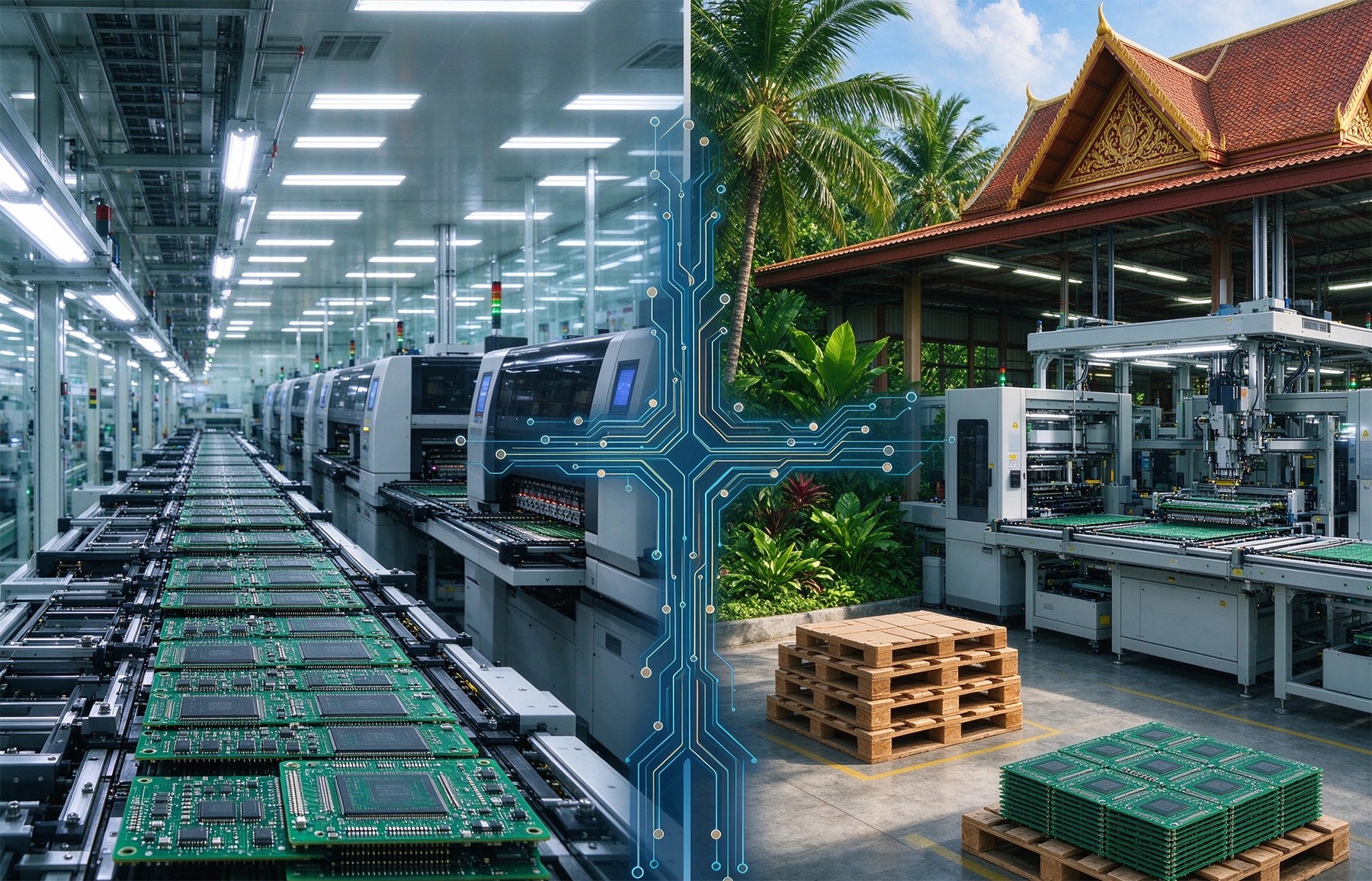
China is by far the world's largest producer of printed circuit boards, accounting for roughly 50 to 60 percent of global PCB output by revenue and an even larger share by area. This dominance reflects decades of investment in manufacturing infrastructure, a deep Supply Chain for materials and components, and a massive workforce trained in Electronics Manufacturing. The concentration of Pcb Manufacturing in China is not accidental. It reflects genuine competitive advantages in scale, capability, and cost efficiency that have been built over many years.
Southeast Asia has a smaller but established Pcb Manufacturing base, primarily concentrated in Thailand, Vietnam, Malaysia, and to a lesser extent Indonesia. These countries have been building Electronics Manufacturing capability for decades, partly driven by companies diversifying away from China and partly driven by their own domestic industrial development. The PCB industry in Southeast Asia is less comprehensive than in China, but it includes capable manufacturers that serve demanding applications in automotive, industrial, medical, and other sectors.
The trade tensions and Supply Chain disruptions of recent years have accelerated interest in Southeast Asia as a Pcb Sourcing alternative to China. Companies that once sourced entirely from China are evaluating or已经在 implementing dual-sourcing strategies that include Southeast Asian suppliers. This shift is reshaping the competitive landscape and creating new opportunities and challenges for buyers in both regions.
China's PCB manufacturing capability spans the full range from simple single-sided and double-sided boards through the most advanced HDI, Any-layer Hdi, and ultra-high-layer-count rigid boards produced anywhere in the world. The largest Chinese manufacturers operate fabrication facilities with capabilities that match or exceed the most advanced manufacturers in Japan, Taiwan, or Korea. These facilities can produce boards with 20-micron lines and spaces, 12 or more metal layers, laser Microvias, and advanced materials including high-frequency laminates. If you need the most advanced PCB technology available, Chinese manufacturers are likely to be among your options.
Southeast Asian manufacturers occupy a narrower range of the capability spectrum, with greater concentration in mid-technology applications. Thai and Malaysian manufacturers have significant capability in Multilayer Boards, Controlled Impedance constructions, and more complex stack-ups, but fewer operate at the absolute leading edge of HDI technology. This does not mean Southeast Asian manufacturers cannot produce advanced boards, but the number of suppliers with cutting-edge capability is smaller, and qualifying a new supplier at the leading edge takes more time and engineering effort.
For standard Multilayer Boards with 4 to 12 layers, fine-line and impedance-controlled constructions, and common substrate materials, both regions have abundant capability. The differentiation in capability matters most for highly advanced designs that push the boundaries of manufacturing technology, or for niche requirements like specific high-frequency materials or unusual board formats.
Cost is often the primary factor in sourcing decisions, and the cost comparison between China and Southeast Asia is nuanced rather than simple. Labor costs in Southeast Asia are generally lower than in coastal China, but the labor cost advantage has narrowed substantially over the past decade as Chinese wages have risen. The raw material costs for PCB substrates, copper, and chemicals are largely global commodity prices, so the material cost component is similar across both regions. The cost advantage of Southeast Asia, where it exists, tends to come from lower overhead, more favorable regulatory environments, and sometimes favorable trade relationships with the customer's country.
For high-volume commodity Pcb Production, Chinese manufacturers often have a cost advantage because of their scale and the density of the supplier ecosystem. When hundreds of manufacturers compete for the same business, pricing is highly competitive, and the scale advantages of large Chinese facilities translate into lower per-unit costs at high volumes. Southeast Asian manufacturers generally operate at smaller scale, which means higher per-unit costs for comparable complexity unless they have specific structural advantages in their cost base.
However, total cost of ownership extends beyond unit price to include logistics, tariffs, quality costs, and supply chain risk. When Chinese goods face tariffs or trade restrictions, as has been the case with US tariffs on Chinese electronics, the landed cost of Chinese PCBs increases substantially. Southeast Asian suppliers may benefit from more favorable tariff treatment under regional trade agreements or bilateral trade relationships. These trade policy factors can shift the effective cost comparison significantly and should be factored into any sourcing analysis.
Quality in PCB manufacturing depends on the maturity of quality management systems, the training and discipline of production personnel, and the investment in process monitoring and control equipment. Both China and Southeast Asia have manufacturers at all quality levels, from world-class facilities with comprehensive quality systems to small operations with minimal process control. Generalizing about quality by country ignores this within-region variation.
Chinese manufacturers who serve international customers, particularly those with ISO 9001, Iatf 16949, or AS9100 certifications, have invested heavily in quality management systems that meet international standards. These manufacturers have well-documented processes, statistical process control programs, incoming material verification, and comprehensive final inspection protocols. They compete for international business and understand the quality expectations of demanding customers in automotive, medical, and industrial markets.
Southeast Asian manufacturers with similar certifications operate at comparable quality levels. The region's longer history of serving Japanese and European customers has produced some manufacturers with exceptionally mature quality cultures. Thai manufacturers in particular have built strong reputations in automotive electronics, where quality requirements are among the most demanding of any industry.
The key to quality success in either region is supplier qualification, not geography alone. Visiting facilities, reviewing quality documentation, auditing process controls, and verifying first article results are essential steps regardless of which country you are sourcing from. A well-qualified supplier in either region will outperform a poorly qualified supplier in either region.
Lead time for Pcb Fabrication depends on board complexity, manufacturer capacity, and the state of the global supply chain. Chinese manufacturers generally offer faster lead times for standard multilayer boards because of the sheer volume of capacity available and the mature logistics infrastructure connecting Chinese factories to international customers. Express services with turnaround times of 24 to 48 hours are common among Chinese quick-turn suppliers, and standard lead times of 10 to 15 days are routine for multilayer boards.
Southeast Asian lead times are comparable for standard boards but may be longer for more complex constructions that require capabilities not available in the region. For highly advanced HDI or ultra-high-layer-count boards, Southeast Asian suppliers may need to source some processing from outside the region, extending lead times substantially. Logistics from Southeast Asia to major markets may also be slower than from Chinese coastal facilities, though this varies by specific origin and destination.
Delivery reliability has improved substantially in both regions as manufacturers have invested in capacity planning and production scheduling systems. However, both regions remain subject to capacity constraints during periods of high demand, and delivery delays are not uncommon during peak ordering periods. The more relevant comparison is the supplier's track record with your specific order type and volume, not aggregate regional statistics.
Supply chain concentration risk has become a major consideration in sourcing decisions over the past several years. Relying on a single country for critical components, including PCBs, creates vulnerability to trade policy changes, logistics disruptions, and geopolitical tensions. The experience of companies that faced supply shortages during trade disputes or pandemic-related disruptions has accelerated interest in geographic diversification.
Southeast Asia offers genuine diversification benefits because it is a distinct geographic region with independent logistics infrastructure, different trade policy relationships, and different geopolitical exposure than China. Sourcing from Vietnam, Thailand, Malaysia, or Indonesia reduces the concentration risk of depending entirely on Chinese suppliers. This diversification value is real and should be factored into sourcing decisions, particularly for products where supply continuity is critical.
The depth of the supply chain differs significantly between regions. China's PCB industry is supported by a dense ecosystem of material suppliers, equipment vendors, specialty process providers, and logistics services that enables Rapid Prototyping, fast material sourcing, and flexible production scheduling. Southeast Asia's supply chain is less dense, which means some materials or process capabilities may require longer lead times or may not be available locally at all. This supply chain depth affects both cost and flexibility, and the difference is more pronounced for complex or specialized requirements.
The ability to communicate effectively with your Pcb Supplier affects everything from quote accuracy to problem resolution. English language capability, engineering expertise, and responsiveness to customer inquiries vary by company more than by country, but the overall communication environment differs somewhat between regions.
Chinese manufacturers who serve international customers have invested heavily in English-language sales and Engineering Support. Many have offices or representatives in major markets who can communicate in English, understand technical requirements, and bridge cultural differences between customer engineering teams and factory production personnel. The level of Engineering Support ranges from basic order processing to sophisticated Dfm feedback that helps optimize designs for manufacturing.
Southeast Asian manufacturers generally have strong English language capability as a legacy of their business culture's orientation toward international trade. Communication with Thai, Vietnamese, or Malaysian PCB suppliers is typically straightforward for English-speaking customers, though technical terminology may require clarification in some cases. The cultural proximity to East Asian business practices means some communication conventions are similar to those in China, while others align more closely with Western business norms.
Time zone differences affect responsiveness regardless of country. Working with manufacturers in China requires adapting to a significant time zone gap for European or Americas-based teams, while Southeast Asian time zones are somewhat more manageable for some regions. This operational consideration matters for programs with aggressive development timelines or frequent engineering changes.
China remains the right choice for many Pcb Sourcing scenarios, and the reasons are practical rather than ideological. For highly advanced PCB designs that push the technology frontier, Chinese manufacturers are more likely to have the specific capabilities needed without requiring development or qualification of new processes. For very high volumes where scale economics drive cost, Chinese capacity and competition produce the best pricing. For quick-turn prototyping with aggressive delivery requirements, China's quick-turn ecosystem is unmatched.
Products with complex PCB requirements, including advanced HDI, any-layer builds, ultra-high layer counts, or specialized materials, are generally better served by Chinese manufacturers who have these capabilities established and proven. The qualification risk is lower when working with suppliers who have extensive track records with the specific technology required.
Projects with extremely tight cost targets and high volume requirements, where the unit price difference between regions could amount to significant total cost savings, may justify the supply chain concentration risk of sourcing exclusively from China. This is particularly true for consumer electronics and other cost-sensitive products where PCB cost is a meaningful fraction of total product cost.
Southeast Asia is the right choice when supply chain diversification is a priority, when the products being built have specific requirements that align with Southeast Asian manufacturing strengths, or when trade policy considerations make Chinese sourcing less attractive. The automotive electronics sector in Thailand, the industrial electronics clusters in Malaysia, and the growing electronics manufacturing base in Vietnam each have specific capabilities that serve particular market segments well.
Products that will be sold in markets with tariff structures favoring Southeast Asian imports may benefit from sourcing in the region. Products with long production lifecycles where supply continuity over five to ten years matters benefit from the reduced geopolitical risk of a diversified supply base. Products where the customer or end market explicitly requires or prefers non-China Sourcing may mandate Southeast Asian suppliers regardless of other factors.
Medium complexity boards with moderate volumes, where the cost difference between regions is modest and supply chain resilience has real business value, are well-suited to Southeast Asian sourcing. The quality and capability are comparable to Chinese options for these applications, and the diversification benefit provides insurance against the risks of single-country concentration.
Rather than choosing between China and Southeast Asia as mutually exclusive options, many companies are implementing dual-sourcing strategies that leverage both regions for their complementary strengths. A typical dual-sourcing approach might qualify a Chinese supplier for advanced technology requirements and quick-turn prototyping, while maintaining a Southeast Asian supplier for production volumes where diversification has material value.
Dual sourcing requires additional supplier management effort and typically does not achieve the lowest unit prices that single-source volume relationships can deliver. The cost premium for maintaining dual sources is justified when supply continuity risk is high, when product volumes are large enough that supply disruption would be costly, or when customers or regulations require supply base diversification.
Managing dual sources effectively requires clear specifications for which supplier is used for which product types and volumes, robust quality monitoring to detect drift or divergence between suppliers, and mechanisms for sharing engineering improvements across both supply relationships. The administrative overhead of dual sourcing is real but manageable with appropriate systems and processes.
There is no universal answer to whether China or Southeast Asia is better for Pcb Fabrication. The right answer depends on your specific product requirements, volume levels, quality expectations, cost targets, and risk tolerance. China offers deeper capability at the leading edge of PCB technology, greater capacity for high-volume production, and a more mature quick-turn ecosystem. Southeast Asia offers supply chain diversification, competitive quality for mid-technology applications, and reduced geopolitical risk concentration.
The best approach for most companies is a deliberate evaluation of both regions based on specific criteria relevant to their products and markets, followed by qualification of suppliers in one or both regions as appropriate. Treating sourcing decisions as strategic rather than tactical, and investing the time to understand the trade-offs, produces better outcomes than defaulting to familiar patterns or chasing the lowest quoted price.
Contact us to discuss your requirements and explore how our Manufacturing Capabilities can support your Pcb Sourcing Strategy.
Why Capability Statements Matter: Matching Your Design Needs to Factory StrengthsOctober/09/2026
Large Format vs. Miniature PCBs: Evaluating Size Constraints and CapacitiesAugust/14/2026
How to Reduce Costs in PCB Fabrication China Without Sacrificing QualityOctober/28/2026
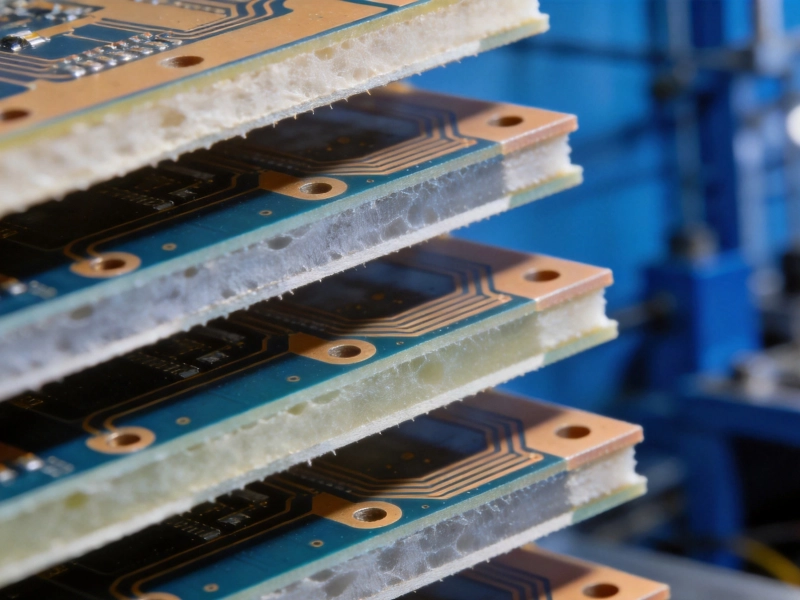
High-Frequency Materials: Assessing Capabilities for RF and Microwave PCBsAugust/03/2026
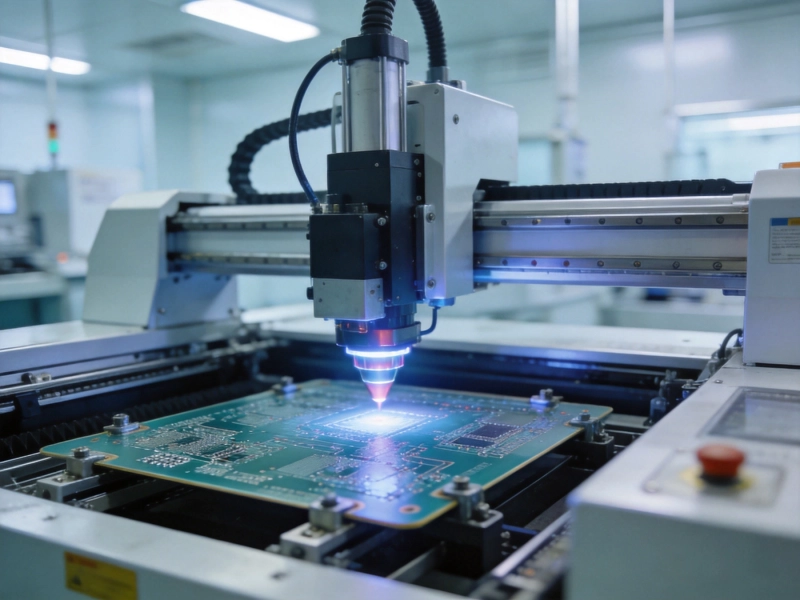
The Role of Equipment in Determining PCB Fabrication Capabilities (LDI, Laser Direct Imaging)September/09/2026
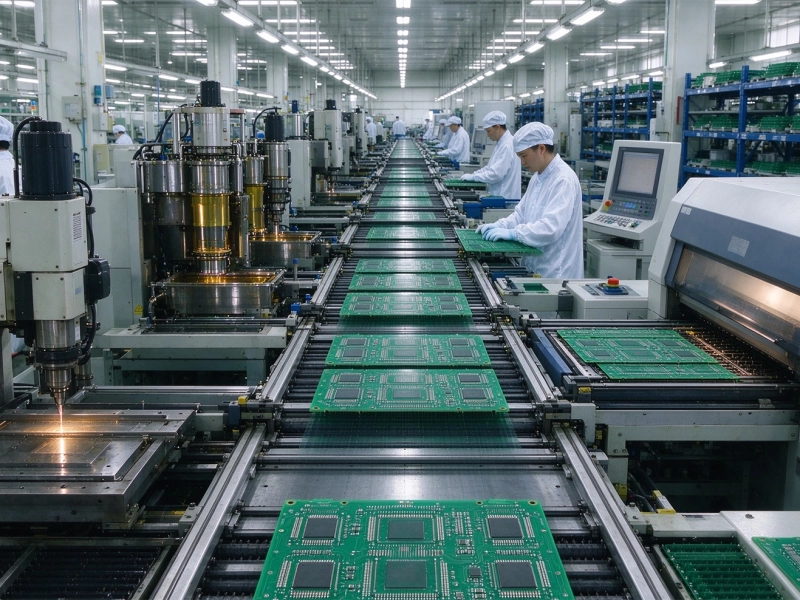
PCB Factory China 101: How the Supply Chain Actually WorksOctober/20/2026
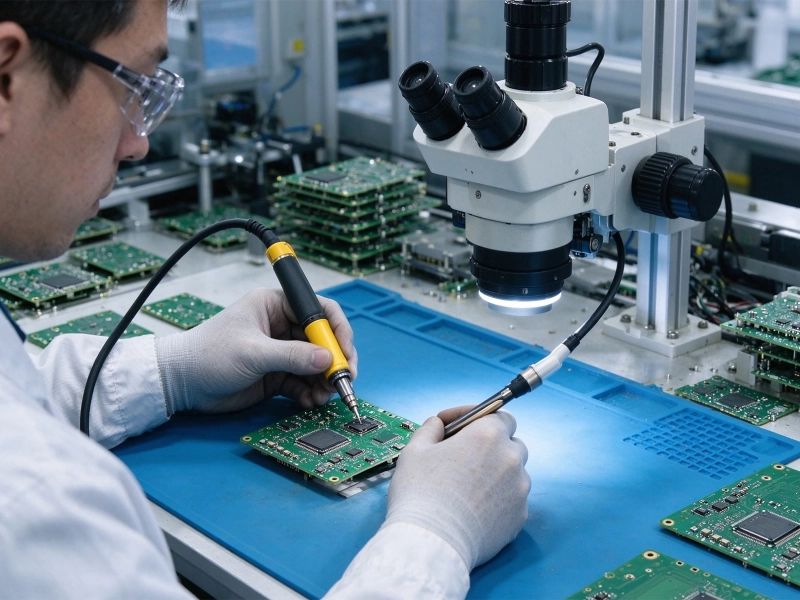
Common Defects in PCB Production China and How to Prevent ThemNovember/23/2026

High-Frequency Materials: Assessing Capabilities for RF and Microwave PCBsJuly/23/2026