
China has become the undisputed leader in High-density Interconnect Pcb Manufacturing, producing the overwhelming majority of HDI boards used in smartphones, medical devices, automotive electronics, and advanced computing systems worldwide. Understanding why this dominance exists, and what capabilities Chinese manufacturers have developed, helps engineers and procurement teams make better sourcing decisions and have more productive conversations with their manufacturing partners.
HDI technology represents one of the most technically demanding segments of PCB Fabrication, requiring precision equipment, sophisticated process control, and deep expertise that takes years to develop. Chinese manufacturers have invested heavily in this space, building capabilities that now rival or exceed what was traditionally available only from Japanese, Korean, or Taiwanese suppliers. This article examines the state of advanced HDI technology in China, the technical capabilities available, and the factors that have driven this remarkable industrial development.
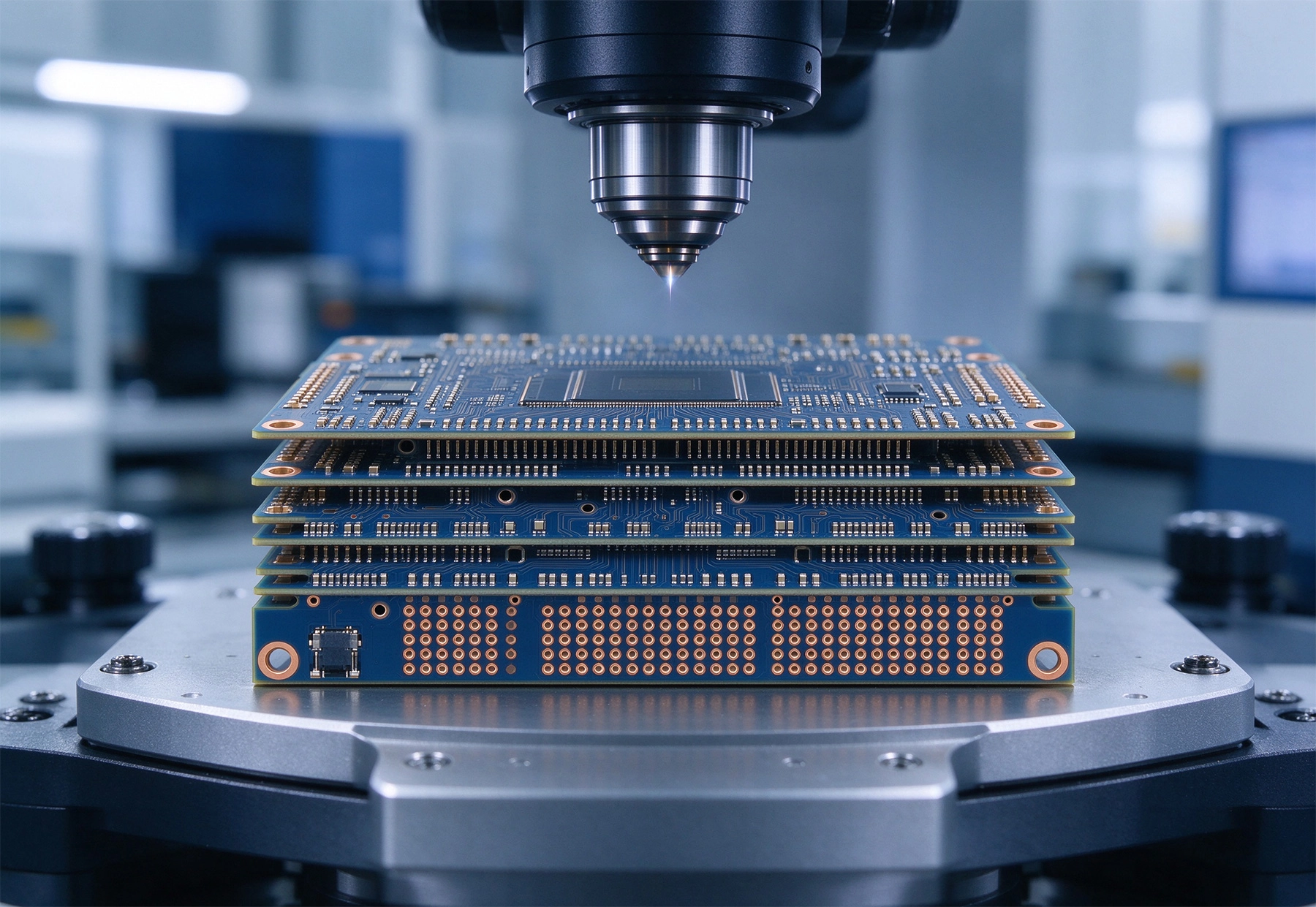
High-density Interconnect PCBs differ from conventional boards in several fundamental ways that affect both design and manufacturing. Understanding these differences is essential for anyone working with HDI technology, regardless of where the boards are ultimately fabricated.
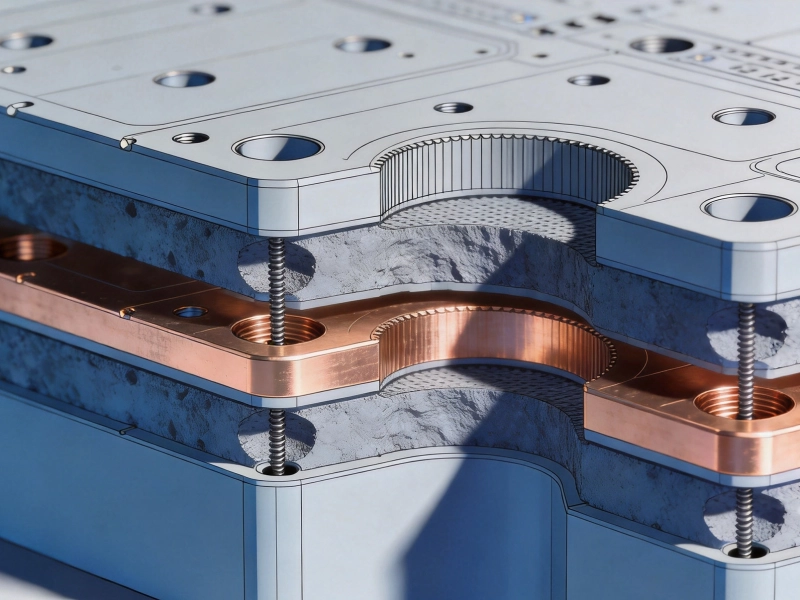
Microvias are the defining characteristic of HDI boards. These tiny plated-through holes, typically 0.1 to 0.3 millimeters in diameter, connect layers without consuming the routing space that through-hole vias require. A Microvia connects only adjacent layers, so routing density increases dramatically compared to through-hole designs. The ability to stack Microvias creates even more routing flexibility, allowing designers to achieve densities that would be impossible with conventional technology.
Laser Drilling has replaced mechanical drilling for Microvia formation because laser systems can produce the smaller diameters and cleaner sidewalls that HDI technology demands. This equipment is expensive, with advanced Laser Drilling systems costing millions of dollars per unit, and requires highly trained operators and sophisticated process controls to maintain consistent quality across high-volume production runs.
Sequential lamination is another key process in Hdi Manufacturing. Because microvias must be formed before outer layers are added, HDI boards typically go through multiple lamination and drilling cycles. Each additional layer adds complexity, cost, and potential for defects, which is why HDI boards with more than eight layers require increasingly sophisticated Manufacturing Capabilities.
The rise of Chinese Hdi Manufacturing did not happen by accident. It resulted from deliberate investment, technology transfer, and the demands of serving some of the world's most demanding electronics brands. Understanding this evolution helps explain the current state of capabilities and where Chinese manufacturers are heading next.
In the early 2000s, Chinese PCB manufacturers focused primarily on simple double-sided and multi-layer boards for consumer electronics and industrial applications. As the global Electronics Supply Chain shifted production to China, the country's manufacturers gained volume experience and began investing in more sophisticated capabilities. The smartphone industry, led by companies like Apple and Samsung, created enormous demand for HDI boards while also driving rapid technology advancement.
Technology transfer from Japanese and Taiwanese partners played an important role in accelerating Chinese capability development. Joint ventures, equipment purchases, and the movement of experienced engineers between companies helped spread knowledge that might otherwise have taken much longer to develop organically. Chinese manufacturers also invested heavily in research and development, building proprietary processes that now differentiate their capabilities.
Government support through industrial policy and infrastructure development created an environment where capital-intensive manufacturing could thrive. Reliable power, transportation networks, and a concentration of related industries in manufacturing clusters allowed HDI facilities to achieve the economies of scale that make high-volume production economically viable. These factors combined to create a manufacturing ecosystem that few other countries can match.
Today's Chinese HDI manufacturers offer a range of capabilities that address nearly every application requirement. The specific capabilities available vary by manufacturer, but the industry as a whole has pushed toward increasingly advanced specifications.
Any-layer HDI, sometimes called Any-layer Interconnect or ALHDI, represents the most advanced form of HDI technology. In any-layer construction, any internal layer can connect to any other layer through microvias, creating maximum routing flexibility. This technology, pioneered for smartphone applications, has now spread to medical devices, advanced automotive electronics, and high-performance computing modules. Chinese manufacturers like Unimicron, SEMCO, and multiple domestic Chinese companies have qualified any-layer capabilities for major customers.
Fine-line resolution has advanced significantly in Chinese HDI facilities. Line and space geometries of 40 microns or less are now routine for advanced HDI production, with some facilities achieving 25 microns or finer for the most demanding applications. This level of resolution requires not just advanced equipment but also sophisticated process controls and clean manufacturing environments to prevent defects.
Laser Microvia Technology has matured to the point where via diameters of 0.1 millimeters and below are achievable in volume production. The combination of smaller vias and finer lines means that board densities continue to increase, allowing designers to pack more functionality into smaller form factors. This capability has been essential for the continued miniaturization of portable electronics.
Material selection becomes more critical as HDI technology advances. The base substrate, prepregs, and copper foil all affect final board performance, and Chinese manufacturers have developed expertise in matching materials to application requirements.
Low Dielectric Constant materials reduce signal propagation delay and loss, which matters for high-speed digital applications and RF circuits. Standard FR4 remains suitable for many applications, but advanced HDI boards increasingly use modified epoxy or hydrocarbon-based materials that offer better electrical performance. Chinese manufacturers have qualified multiple material systems from suppliers like Rogers, Isola, and Panasonic to meet diverse customer requirements.
Thermal Management materials have become important as component power densities increase. High-Tg materials resist softening at elevated temperatures, which matters for boards that will experience significant self-heating or challenging environmental conditions. Some HDI manufacturers now offer metal-core constructions or thermal vias with heavy plating to address thermal challenges in demanding applications.
Ultra-thin cores enable the thinnest HDI constructions. Cores of 50 microns or less allow manufacturers to achieve very thin total board thickness while maintaining the layer count needed for complex designs. Handling and processing these thin materials requires specialized equipment and careful process control, which represents one of the areas where advanced manufacturers differentiate themselves.
Advanced HDI manufacturing demands rigorous quality systems because defect rates must be extremely low to be economically viable in competitive markets. Chinese manufacturers have invested heavily in quality infrastructure to meet the expectations of global customers.
ISO 9001 certification has become baseline for serious HDI manufacturers, demonstrating systematic quality management processes. Beyond this, many manufacturers have obtained automotive industry certification (Iatf 16949), medical device manufacturing certification (Iso 13485), and other sector-specific credentials that demonstrate capability for demanding applications. These certifications require investment in documentation, process control, and continuous improvement that smaller manufacturers often cannot justify.
Statistical process control and real-time monitoring have transformed how advanced manufacturers manage quality. Rather than relying primarily on end-of-line inspection, leading facilities monitor critical parameters during production and adjust processes automatically when measurements drift outside acceptable ranges. This approach catches problems early and maintains consistency across large production volumes that would be impossible with traditional inspection-only Quality Control.
Traceability systems allow manufacturers to track every board back to the specific lot of raw materials, the exact equipment used, and the operators involved. This capability is essential for regulated industries like automotive and medical devices where failure investigation and recall management require detailed records. Advanced Chinese manufacturers have implemented traceability systems that meet or exceed what was traditionally available only from Japanese suppliers.
Geographic concentration of Electronics Manufacturing in China creates both opportunities and challenges for Pcb Sourcing. Understanding these dynamics helps procurement teams develop strategies that balance cost, reliability, and risk.
Component proximity matters for HDI boards because the boards are rarely stand-alone products. Most HDI boards are incorporated into assemblies that include sensors, displays, connectors, and other components sourced from nearby suppliers. The Pearl River Delta and Yangtze River Delta regions have concentrations of Electronics Manufacturing that allow assembled products to move quickly from board delivery to final test. This proximity reduces inventory requirements and improves Supply Chain responsiveness.
Supplier diversification has become a strategic priority for many companies following recent disruptions. Working with multiple Chinese HDI manufacturers provides insurance against single-source risks while potentially offering competitive pricing through order volume leverage. Building relationships with manufacturers at different capability levels allows companies to match board complexity to appropriate supplier capacity, optimizing cost without sacrificing quality for less demanding applications.
Logistics infrastructure in China has matured to support global distribution. Major manufacturers have established relationships with freight forwarders, consolidated shipments from multiple suppliers, and developed expertise in export documentation and customs compliance. These capabilities reduce the logistical burden on customers and help ensure that boards arrive on time regardless of destination.
Sourcing HDI boards from Chinese manufacturers requires approach that differs somewhat from traditional vendor relationships. Understanding how to communicate effectively and manage the process maximizes the value of the relationship.
Clear documentation prevents misunderstandings and reduces redesign iterations. Design files should follow standard formats like Gerber and ODB++ with complete drill files and stack-up specifications. Design rule checking against the manufacturer's capabilities before submission catches potential issues early. Some manufacturers offer design review services that can identify manufacturability concerns before production begins.
Material specifications should be explicit because material choices affect both performance and cost. Stating preferences for specific manufacturers or material grades, rather than allowing generic substitution, helps ensure consistent results across multiple production runs. For applications with specific regulatory requirements, material declarations and compliance documentation should be requested upfront.
Communication time zones require planning but rarely create serious obstacles. Most serious manufacturers have established English-speaking engineering and customer service teams that accommodate international customer schedules. Clear escalation paths for addressing quality concerns or production issues should be established before production begins rather than discovered during a crisis.
China's dominance in advanced HDI PCB Fabrication reflects decades of strategic investment, technology development, and operational excellence that few other regions can match. The capabilities available from Chinese manufacturers now span the full range from standard HDI through the most advanced any-layer constructions, with quality systems that meet the most demanding industry requirements.
For engineers and procurement professionals, this represents an opportunity to access world-class manufacturing at competitive prices while benefiting from the geographic advantages of proximity to the broader Electronics Supply Chain. Success requires clear communication, thorough documentation, and relationship management practices adapted to working with large-scale manufacturing operations.
The continued investment by Chinese manufacturers in advanced equipment, process development, and quality systems suggests that this capability advantage will persist. As new applications emerge in areas like electric vehicles, augmented reality, and advanced medical devices, Chinese HDI manufacturers are positioning themselves to serve those markets with the same combination of capability and cost-effectiveness they have demonstrated in consumer electronics.
Contact us to discuss your requirements and explore how advanced HDI Manufacturing Capabilities can support your Product Development.
How to Speed Up Your PCB Fabrication and Assembly TurnaroundNovember/13/2026
Best Practices for Preparing Files for Expedited PCB ManufacturingJuly/29/2026
Quality Control Standards in PCB Fabrication China: IPC Class 2 vs. Class 3October/29/2026
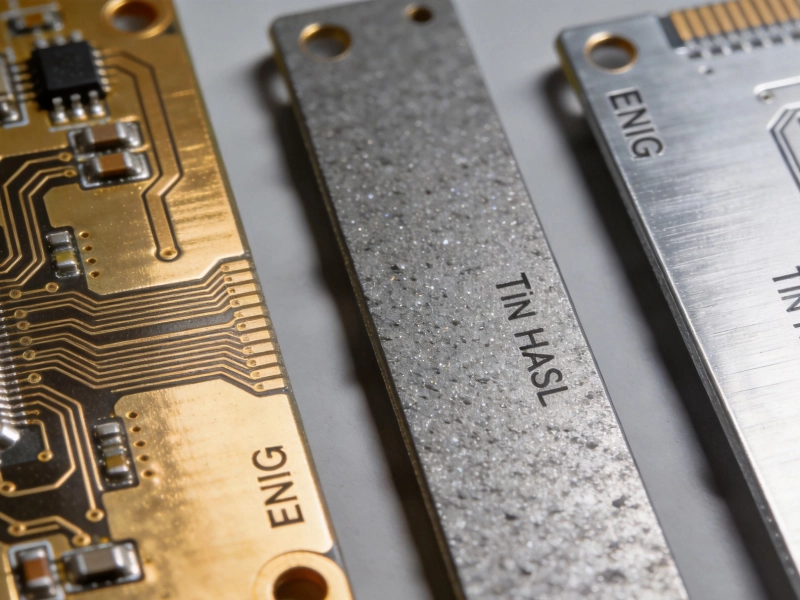
Custom Surface Finishes: Choosing Between ENIG, HASL, OSP, and Immersion SilverSeptember/14/2026
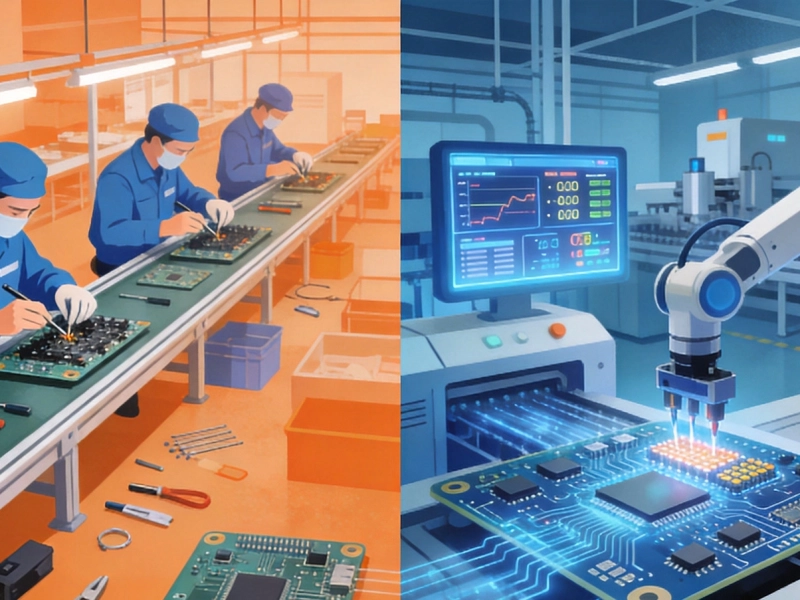
Comparing Traditional vs. Digital Quick Turn PCB ServicesJuly/18/2026
Why Startups Rely on Quick Turn Fabrication to Secure Funding FasterAugust/08/2026
24-Hour Turnaround: Is it Possible and How Does it Work?May/21/2026
How to Specify Tolerances and Stack-ups for High-Precision Custom PCBsJuly/28/2026