Open Nav

When sourcing printed circuit boards from China, one question keeps coming up in engineering reviews: should the project follow IPC Class 2 or IPC Class 3? The answer is not just about “higher quality.” It determines copper thickness, inspection frequency, defect tolerance, testing cost, and whether the board can survive vibration, thermal cycling, or long-term continuous operation. Understanding Quality Control standards in PCB Fabrication China helps buyers, engineers, and procurement teams avoid over-specifying or under-specifying reliability.
In Chinese Pcb Manufacturing, Ipc Standards are widely used as the baseline for acceptance. Most factories reference IPC-A-600 for visual and structural acceptability, and IPC-6012 for performance, reliability, and qualification requirements.1, 8 China’s national standards, such as the GB/T 4588 series and GB/T 18334, are also aligned with IPC-6012 and IPC-A-600.10 This makes IPC a practical common language between overseas buyers and Chinese manufacturers.
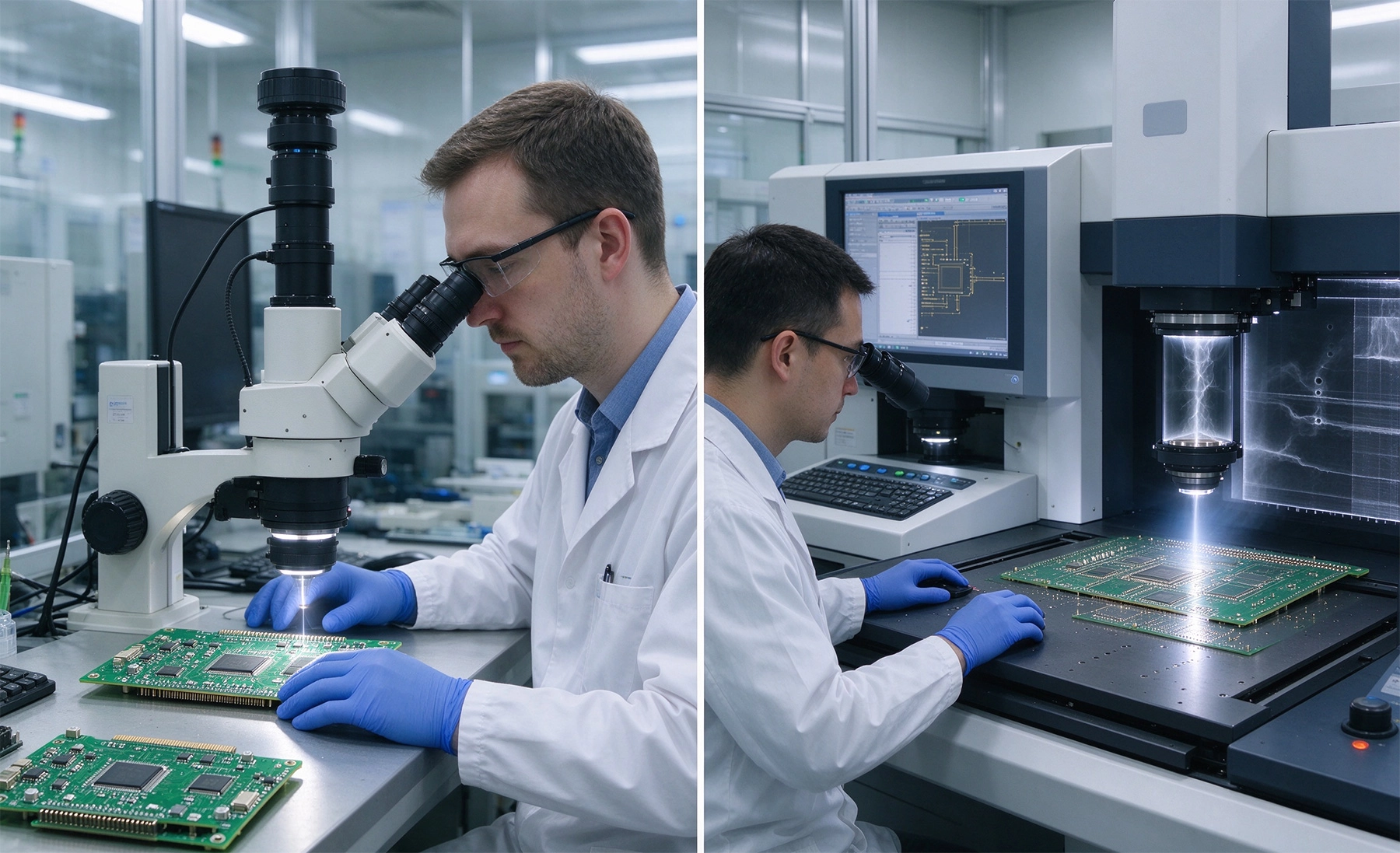
IPC-A-600 is an illustrated acceptability standard. It helps inspectors decide whether a bare PCB meets minimum requirements for conductors, holes, Solder Mask, laminate defects, Surface Finish, and workmanship.1, 14 IPC-6012 is a performance specification. It defines material requirements, electrical performance, mechanical reliability, testing methods, and quality conformance for rigid printed boards.1, 14
In practice, both documents are used together. IPC-6012 sets the performance class, while IPC-A-600 provides visual criteria for pass/fail decisions. For buyers working with Chinese PCB suppliers, the purchase order should clearly state the required IPC class, applicable standard revision, and any customer-specific requirements. Vague notes such as “high reliability” are not enough.
IPC Class 2 applies to dedicated service electronics that need reliable performance and a long service life, but where short downtime is acceptable. Typical applications include communication equipment, industrial control boards, instrumentation, commercial servers, and non-safety-critical automotive modules.4, 7
IPC Class 3 applies to high-reliability electronics where failure is not acceptable. These boards must maintain continuous performance under harsh environmental conditions. Typical applications include aerospace avionics, military systems, implantable medical devices, life-support equipment, and safety-critical automotive systems.3, 4
Choosing Class 3 when Class 2 is sufficient increases cost without adding real value. Choosing Class 2 when Class 3 is required can create field failures that are expensive to diagnose. The right class depends on failure consequence, operating environment, expected service life, and maintenance accessibility.
The differences between Class 2 and Class 3 are not only cosmetic. They affect copper plating, conductor geometry, Microvia reliability, inspection intensity, and process control.
Plated Through-hole copper is one of the most important reliability indicators. IPC-6012 typically requires an average plated copper thickness of at least 20 µm for Class 2, and at least 25 µm for Class 3, with stricter minimum local thickness requirements for Class 3.2, 4 Class 3 also demands more uniform plating and does not tolerate voids or discontinuities in the hole wall.2, 19
Class 3 requires tighter control of conductor dimensions. Base copper thickness tolerance is typically ±10% for Class 3, compared with ±15% for Class 2. After etching, outer-layer conductor width for Class 3 must generally remain at least 90% of the nominal value, while Class 2 allows about 85%.2, 16 This matters for fine-pitch designs, impedance-controlled layers, and High-density Interconnect boards.
Class 2 allows limited annular ring breakout under defined conditions. Class 3 requires a minimum external annular ring of about 0.05 mm and a minimum internal annular ring of about 0.025 mm.6, 19 Class 3 also places stricter limits on hole wall roughness, cracks, and separation defects. For laser Microvias, Class 3 may require a minimum via-bottom copper thickness and high fill reliability, while Class 2 is generally less restrictive.2, 16
Under IPC-A-600, many defects that are acceptable for Class 2 become rejectable for Class 3. This includes conductor nicks, Solder Mask bubbles, laminate whitening, exposed copper, and spacing reductions caused by copper roughness or burrs.3, 4 Class 3 inspection assumes that even small defects may grow under thermal stress, vibration, or long-term current loading.
Class 2 production usually follows statistical sampling plans and standard Electrical Testing. Class 3 programs often require more frequent sampling, stricter process control, and sometimes 100% Electrical Testing for critical networks.3, 4 Microsection analysis, thermal stress testing, and detailed documentation are more common in Class 3 manufacturing. Traceability of materials, process parameters, and test results is also tighter.
Most established PCB manufacturers in China are familiar with IPC-A-600 and IPC-6012. For standard industrial and commercial products, many factories use IPC Class 2 as the default manufacturing and inspection level.7 When a customer requires Class 3, the factory usually adjusts plating specifications, inspection criteria, sampling frequency, and documentation.
However, “Class 3 capable” is not the same as “automatically producing to Class 3.” Buyers should confirm whether the supplier has internal procedures for Class 3 plating control, microsection testing, impedance verification, and failure analysis. Some Chinese manufacturers hold IPC QML validation or other quality certifications, which can strengthen confidence in their processes.21 For aerospace, medical, or automotive safety applications, additional certifications such as AS9100 or Iatf 16949 may also be required.
When ordering from a Chinese Pcb Supplier, use a clear technical checklist instead of relying on general quality claims.
One frequent mistake is assuming that Class 3 always means better value. For consumer electronics, industrial controllers, or non-safety automotive modules, Class 2 usually provides sufficient reliability at lower cost. Another mistake is writing “high-quality PCB” without referencing Ipc Standards. This leaves room for different interpretations between the buyer and the factory.
It is also risky to copy a Class 3 requirement from another project without checking whether the design really needs it. Class 3 increases plating thickness, inspection workload, and rejection rate. If the application does not require zero-tolerance reliability, those costs may not deliver measurable benefit.
Quality Control standards in PCB Fabrication China are largely built around IPC-A-600 and IPC-6012. IPC Class 2 suits products that need reliable performance and reasonable service life, while IPC Class 3 is reserved for applications where failure is unacceptable. The main differences appear in plated through-hole copper, conductor tolerance, annular ring requirements, defect acceptance, testing intensity, and traceability.
For overseas buyers, the safest approach is to define the IPC class early, confirm inspection methods with the supplier, and require documented evidence for critical parameters. A clear specification prevents both unnecessary cost and hidden reliability risk.
Not necessarily. Class 3 is stricter, but it also costs more. If the product does not operate in a safety-critical or extreme environment, Class 2 may be the more economical and appropriate choice.
Yes. Many Chinese PCB manufacturers can produce to IPC Class 3 requirements. However, buyers should confirm the supplier’s process capability, testing equipment, and whether they follow IPC-A-600 and IPC-6012 for the requested class.7, 21
Class 2 typically requires an average plated through-hole copper thickness of at least 20 µm, while Class 3 typically requires at least 25 µm with stricter limits on voids and local thin spots.2, 4
Microsection reports are especially useful for Class 3 boards, high-reliability designs, or new supplier qualification. For standard Class 2 production, they are often provided only for first articles or when specifically requested.
No. Class 3 means much tighter acceptance criteria and higher reliability expectations, but it does not guarantee absolute zero defects. Proper design, manufacturing control, inspection, and testing all remain necessary.
Understanding the Basics of PCB Production China: From Gerber Files to Finished BoardsOctober/16/2026

Emergency PCB Runs: Strategies for Getting Boards Fast Without Sacrificing ReliabilityJuly/08/2026
How to Specify Tolerances and Stack-ups for High-Precision Custom PCBsJuly/28/2026
Top 5 Qualities of a Reliable PCB Fabrication ManufacturerNovember/18/2026
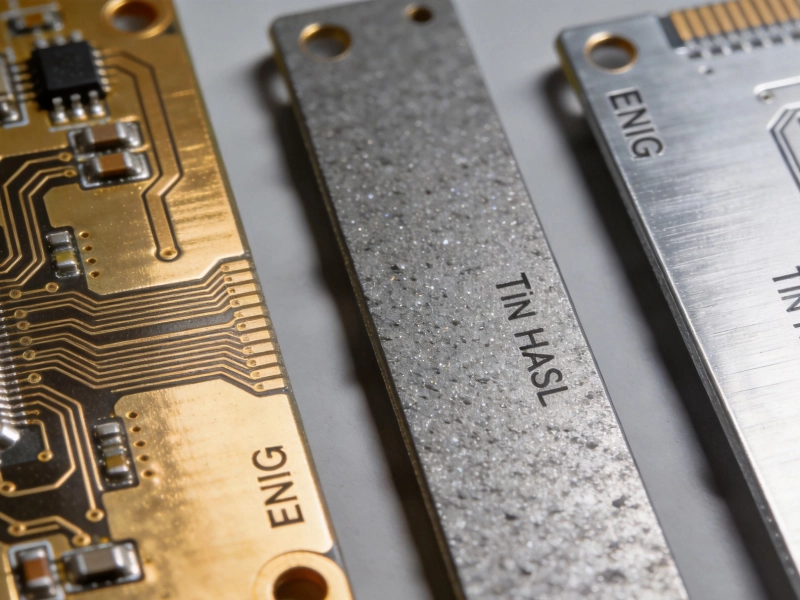
Custom Surface Finishes: Choosing Between ENIG, HASL, OSP, and Immersion SilverSeptember/14/2026
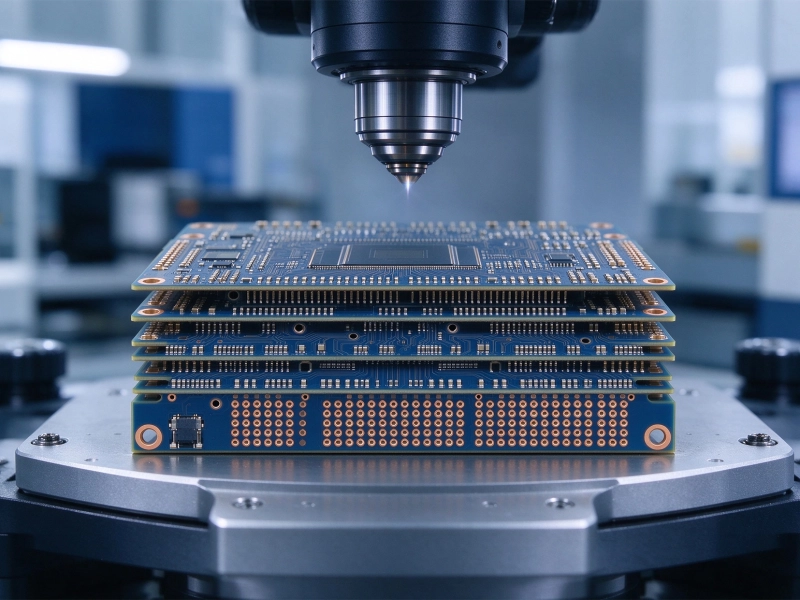
Advanced HDI Technology in PCB Fabrication ChinaOctober/30/2026
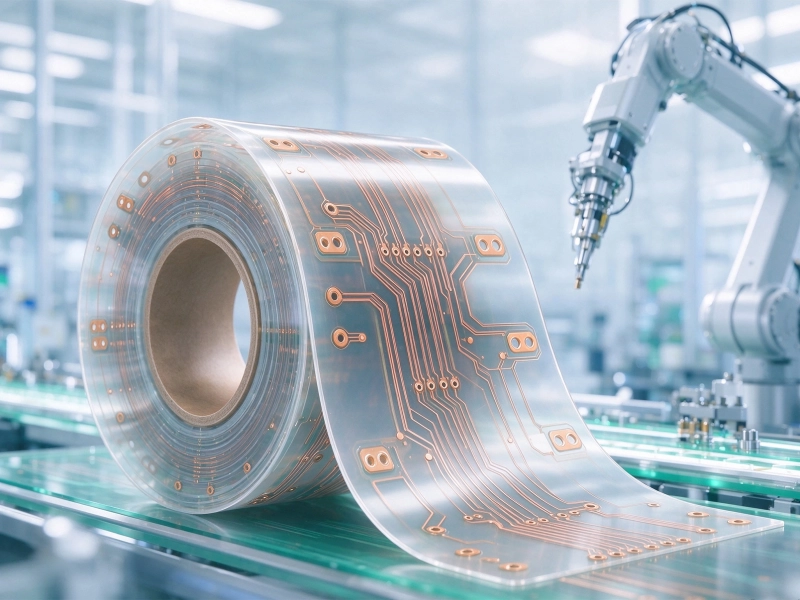
The Rise of Flexible Circuits in PCB Production ChinaNovember/24/2026
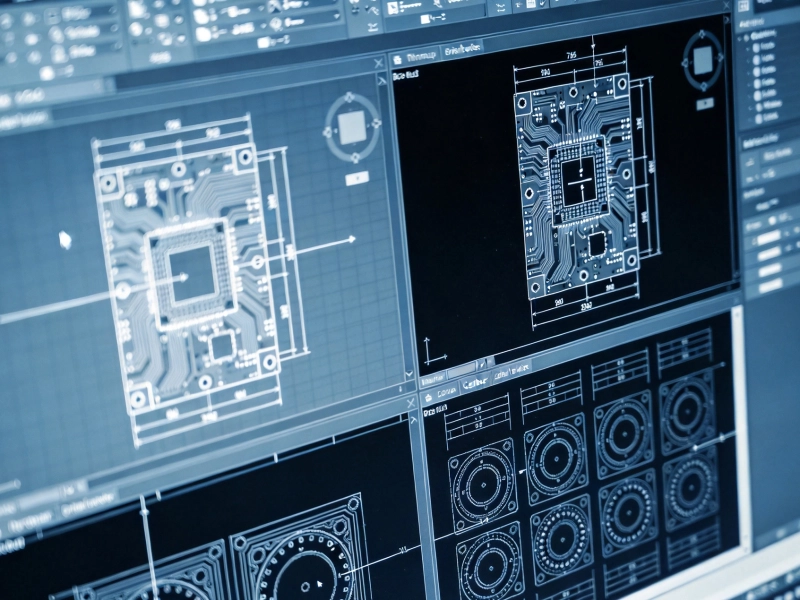
Best Practices for Preparing Files for Expedited PCB ManufacturingJuly/29/2026