Open Nav

Selecting a PCB Fabrication partner is one of the highest-stakes sourcing decisions in the entire electronics Product Development cycle. The difference between a reliable manufacturer and an unreliable one can mean the difference between a smooth product launch and weeks of unexpected delays, hidden quality problems, and missed market windows. Many product teams evaluate PCB suppliers primarily on quoted unit price and standard lead time, but those two metrics tell you almost nothing about long-term reliability. The manufacturers that consistently deliver outstanding results over multi-year product lifecycles all share a small set of core qualities that are far more meaningful than the lowest price or the fastest advertised turnaround. Understanding these five qualities will help engineering and procurement teams identify, evaluate, and select PCB Fabrication partners that they can trust with their most important programs.
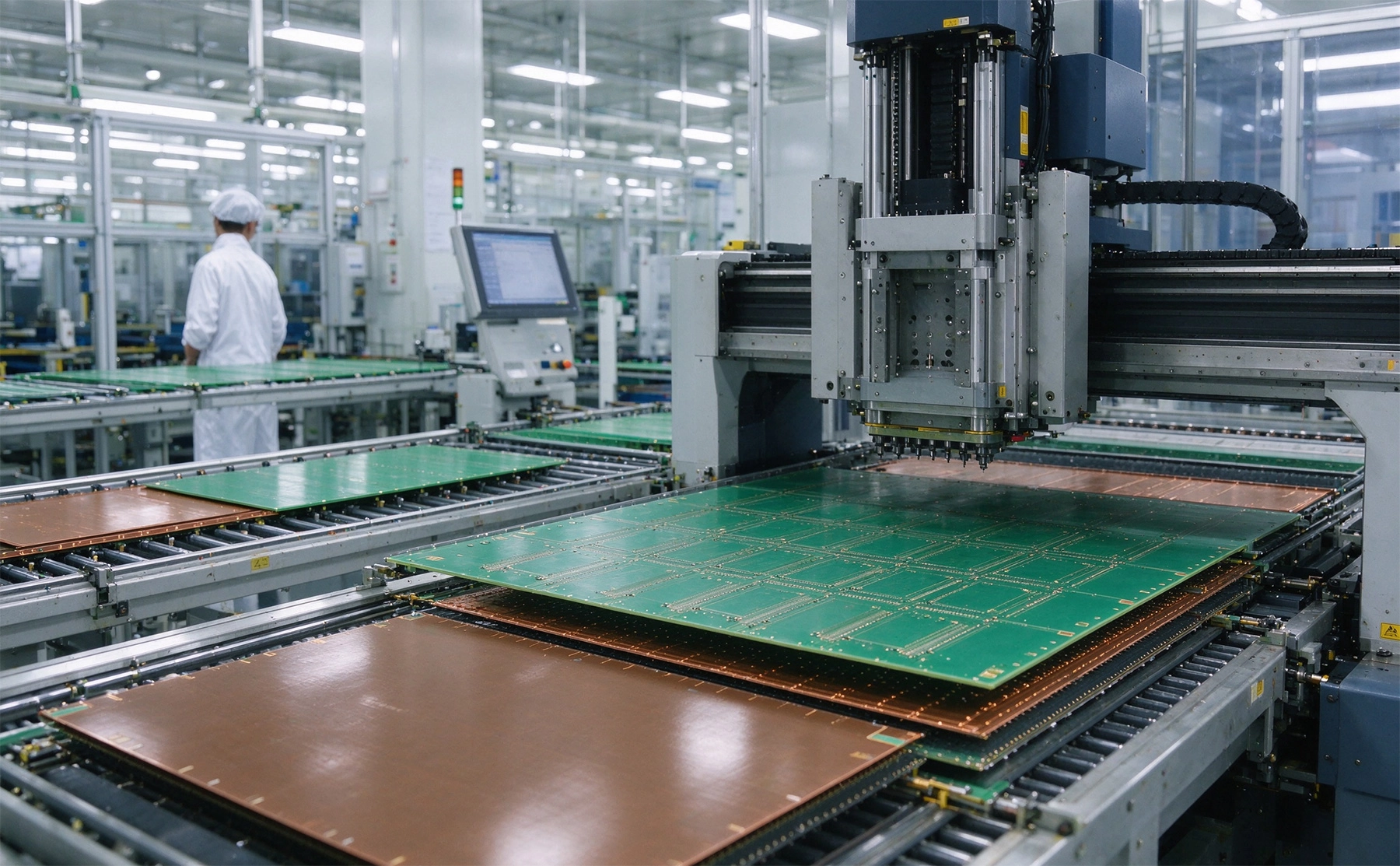
The number one defining quality of a truly reliable Pcb Manufacturer is the level of documented, statistically valid process control they maintain across their entire production operation. This is the foundation that every other aspect of quality is built on top of. Reliable PCB fabricators do not treat manufacturing as an artisanal craft that depends on the skill of individual shift supervisors — they treat it as a disciplined, measured, data-driven process that produces predictable, repeatable output every single production lot.
Statistical process control charts for every critical manufacturing process step are maintained in real time, with explicit control limits and action thresholds defined for every parameter. This includes the trace width variation in the Etching Process, the copper thickness distribution across plating batches, the lamination pressure and temperature profiles, the drill bit wear tracking, and the Surface Finish deposition thickness monitoring. For every critical parameter, they calculate Cpk process capability indices on an ongoing basis, and the process is continuously tuned and optimized to maintain Cpk values of 1.33 or higher, well above the minimum acceptable threshold. When the process drifts outside the pre-defined control limits, production is automatically paused, and a structured root cause corrective action process is triggered before any non-conforming product can be manufactured.
Full traceability from raw material receipt to finished board shipment is embedded into every step of their operation. Every sheet of raw Copper Clad Laminate is tracked with a unique lot identifier that follows the panel through every process operation. Every production panel carries a unique barcode or identifier that links it to the full process history: which etcher it ran through, which plating batch it was part of, which lamination press cycle it went through, and which operators performed each step. If a quality issue is later identified in the field, the manufacturer can immediately isolate exactly which panels are affected, rather than launching a costly full recall of unrelated production lots. This level of traceability does not exist in low-cost, low-reliability PCB shops where paper traveler systems are incomplete and process records are scattered across disconnected spreadsheets.
Continuous process improvement is a formal, ongoing activity, not an occasional project that only happens when a major quality failure forces action. The engineering team in a reliable Pcb Manufacturer spends measurable time every week analyzing process data, identifying bottlenecks and variation sources, and implementing incremental process changes that systematically reduce defect rates over time. Over the course of years, this culture of incremental improvement drives the first-pass yield up from the 85 to 90 percent range that is typical for average fabricators up to 98 percent and higher, which directly translates into fewer scrap losses, fewer delivery delays, and lower total cost for customers even when the nominal quoted price is slightly higher.
On-time delivery reliability is the second most important quality of a dependable PCB manufacturer. Many PCB shops advertise very short 24-hour, 48-hour, or 5-day turnarounds on their websites, but very few can actually deliver on those promised dates consistently across hundreds or thousands of orders per month. A manufacturer that promises 5-day delivery but only achieves 70 percent on-time performance will routinely delay your production schedule by 2, 3, or even 5 extra days, throwing off your entire assembly plan and missing critical product launch milestones.
The most reliable PCB fabricators publish their on-time delivery performance metrics openly to their customers, and they track delivery against the original committed date that was agreed at order entry, not a shifted, renegotiated date that the supplier pushes back after receiving the order. Their internal operation is structured around a capacity management system that prevents overbooking, so that they never accept more work than their production lines can actually process within the advertised lead times. They do not overpromise and then push jobs out the queue, a very common industry practice that causes endless schedule headaches for customers.
Proactive communication about potential delays is a key part of reliable delivery performance. When an unexpected process issue does threaten to delay an order, the reliable manufacturer will notify you within 24 hours of detecting the problem, explain exactly what happened, provide a realistic revised delivery date, and present mitigation options to minimize the impact on your schedule. The unreliable fabricator, by contrast, will go radio silent and only inform you that your order is late after you call to ask why it hasn't arrived. That difference in communication behavior alone saves customers hundreds of hours of wasted follow-up time every year, and gives them the ability to rearrange their downstream production schedule before it is too late.
Production capacity scalability is another critical element of delivery reliability. The most reliable PCB manufacturers maintain 15 to 25 percent spare capacity at all times, so that when unexpected demand surges, process yield issues, or equipment maintenance events happen, they can absorb the fluctuation without delaying customer orders. They also maintain strong long-term relationships with a small network of carefully vetted peer fabricators that they can subcontract overflow work to during peak load periods, so they never have to fall behind schedule during industry-wide demand spikes.
A top-tier reliable PCB manufacturer does not operate as a pure "print and ship" service provider that blindly takes your Gerber Files and sends them straight to production without looking at them. The third defining quality of a great PCB fabricator is their in-house engineering team that understands Pcb Design, manufacturing processes, and your application requirements deeply enough to catch problems before they are manufactured, problems that your own design team or your contract assembler might have missed completely.
Full Dfm analysis is performed on every single incoming order, not just the complex high-layer-count boards. The Dfm engineer reviews every aspect of your Design For Manufacturability, including trace width and spacing against their process minimums, drill sizes and aspect ratios, via annular ring clearance, impedance stackup verification, Solder Mask bridging risk, and panel utilization optimization. They do not just run a automated script that generates a generic report — a human engineer looks at the critical sections of your board, identifies actual real-world manufacturing risks, and proposes practical design changes or process adjustments that will improve yield, reduce cost, and shorten turnaround. The best DFM feedback you will ever get in the entire Product Development cycle comes from a fabricator's senior DFM engineer who has 15+ years of experience working on thousands of different board designs.
Cross-functional problem-solving for challenging requirements sets reliable manufacturers apart. If you need a custom stackup with specific impedance values, special high-frequency material, Controlled Impedance tight tolerance, unusual Surface Finish, or complex hybrid build-up structure, their engineering team will work with you to create a manufacturing process that achieves your requirements rather than simply saying "we don't do that". They will run test coupons, perform test prints, and generate process development data to validate that your special requirement can be achieved before the full production run begins.
Technical support after delivery is another underappreciated aspect of engineering quality. If you receive your boards and you notice something unusual during assembly or test, the reliable manufacturer will assign an engineer to investigate the issue with you, review the process records, and help you troubleshoot root cause rather than giving you generic "everything was done correctly" responses and refusing to engage. They will participate in failure analysis, share cross-section images and test data, and collaborate with you to resolve the issue even when it is not immediately obvious whether the root cause originates in fabrication or somewhere else in your Supply Chain.
Reliable PCB manufacturers operate with a level of transparency that is completely alien to low-cost, low-reliability shops that treat their internal processes as trade secrets they will never share with customers. The fourth core quality is full operational transparency that builds long-term trust between the fabricator and the customer.
They will share their full stackup material library, standard process capabilities document, and Design For Manufacturability guidelines openly, no non-disclosure agreement required. You will know exactly what material part numbers they use, what their actual minimum trace and spacing values are, what their typical copper weight tolerances are, what the real achievable impedance tolerance is, and what their standard surface finish process specifications look like. There are no hidden surprises or unwritten process limitations that will suddenly pop up after you submit an order. Many less reliable fabricators keep all this information hidden, forcing customers to guess at what the actual process capabilities are, which inevitably leads to misaligned expectations and quality disputes later.
Sample inspection reports and process certification documentation for your specific order are provided on request without excessive administrative hoops to jump through. You can receive the copper foil lot certifications, the Prepreg material certificates, the Solder Mask and Silkscreen material data sheets, the XRF copper thickness measurement records from your production panel, the impedance test measurement results from your impedance coupons, and the Aoi Inspection summary for your order. For medical, aerospace, and high-reliability applications where full documentation is mandatory, they have pre-built documentation packages that can be generated quickly and efficiently to meet your regulatory requirements, without expensive custom paperwork charges.
Virtual factory access for key long-term customers is a service that top-tier PCB fabricators offer, where they provide secure online portals that let you track the real-time status of every single order through every manufacturing process step. You can see when your panels were etched, when they went through lamination, when they finished Aoi Inspection, and when they were packed and shipped, without having to send multiple email inquiries and wait for account manager responses. This level of transparency eliminates the black-box experience that most customers have with Pcb Manufacturing, where you submit your files and you have no idea what is happening with your order until it shows up at your door.
The fifth and final quality that distinguishes truly reliable PCB manufacturers from their competitors is proven long-term business stability that allows them to support your product across its entire multi-year production lifecycle. This is enormously important for products that have expected operational lifetimes of 5, 10, or even 15 years. Many PCB shops come and go, change ownership, go out of business, or change their product focus dramatically every 2 to 3 years, and when they do, your PCB source suddenly disappears, forcing you to go through full re-qualification with a new supplier at enormous expense and schedule delay.
The most reliable PCB fabricators are financially stable, profitable, and have been operating continuously under consistent ownership for 10 years or more. They invest in new equipment, process upgrades, and employee training on an ongoing sustained basis, not just when a new investor forces a one-time equipment refresh. Their core engineering and operations teams have been working together for many years, so the institutional process knowledge is retained inside the organization instead of walking out the door with high employee turnover. This creates consistent quality performance year after year, which is exactly what long-lifecycle products need.
Long-term part number and drawing management systems are maintained for active customer products. They will store your approved artwork files, stackup specifications, and process travelers in their document control system indefinitely, so when you come back to place a repeat order 18 months after the last production run, you do not have to re-submit all the documentation and go through full requalification again. They know exactly who you are, what your part number is, and exactly how your board is supposed to be manufactured, which reduces the turnaround time for repeat orders dramatically.
Continuous improvement culture that keeps up with advancing PCB technology is the final marker of long-term stability. Great fabricators do not stand still manufacturing the same 2-layer boards they made 20 years ago. They invest in new capabilities like HDI Microvia Technology, heavy copper up to 20 ounces, rigid-flex, and high-frequency PTFE material processing over time, so that as your product roadmap evolves and your boards become more complex, you do not have to change manufacturers to access the new capabilities you need. This long-term partnership value is something that you simply cannot get from low-cost fly-by-night suppliers who disappear after a couple of production runs.
These five qualities — consistent documented process control, 98 percent+ on-time delivery, deep experienced Engineering Support, full operational transparency, and proven long-term business stability — are the real markers of a truly reliable Pcb Fabrication manufacturer. None of these qualities are visible on the front page of a website or in a low-ball initial quote. But they are the qualities that separate the suppliers that you can build a long-term trusted partnership with, from the suppliers that will cause you endless headaches, missed deadlines, quality surprises, and expensive production disruptions. The slightly higher upfront cost of working with a reliable PCB fabricator always pays for itself many times over through fewer production delays, fewer scrap losses, fewer quality failures, and far less management overhead.
Contact us to discuss your Pcb Fabrication requirements and to explore how our manufacturing quality systems, delivery performance, Engineering Support, and long-term service capabilities can support your product success objectives.
How to Specify Tolerances and Stack-ups for High-Precision Custom PCBsJuly/28/2026
The Logistics of Speed: Shipping and Handling for Urgent PCB DeliveriesSeptember/03/2026
Microvias and Blind/Buried Vias: Key Technologies in HDI FabricationAugust/11/2026
The Rise of Flexible Circuits in PCB Production ChinaNovember/24/2026
Questions to Ask Before Placing a Rush Order for PCB FabricationSeptember/15/2026
Quality Control Standards in PCB Fabrication China: IPC Class 2 vs. Class 3October/29/2026
The Difference Between PCB Fabrication and PCB Manufacturing Assembly ExplainedOctober/22/2026
Best Practices for Preparing Files for Expedited PCB ManufacturingJuly/29/2026