Open Nav

Flexible printed circuits have evolved from a niche interconnect technology used primarily in military and aerospace applications to a mainstream PCB category that now accounts for over 18 percent of the global printed circuit board market by value. The shift is driven by the relentless consumer demand for thinner, lighter, and more compact electronic devices, the explosive growth of wearable and medical electronics that require circuits conforming to the human body, and the automotive industry's transition to electric and autonomous vehicles that pack vastly more electronics into tighter spaces. China has emerged as the world's undisputed center of flexible circuit manufacturing, producing more than 55 percent of global FPC output by volume, with a manufacturing ecosystem that spans from raw Polyimide film production through high-density multilayer flex assembly. Having spent the past several years sourcing flexible circuits from Chinese manufacturers for products ranging from smartphone camera modules to industrial sensor arrays, I have watched this industry transform from a scattered collection of small workshops into a sophisticated, technology-driven manufacturing sector that increasingly sets the pace for the global flex circuit industry.
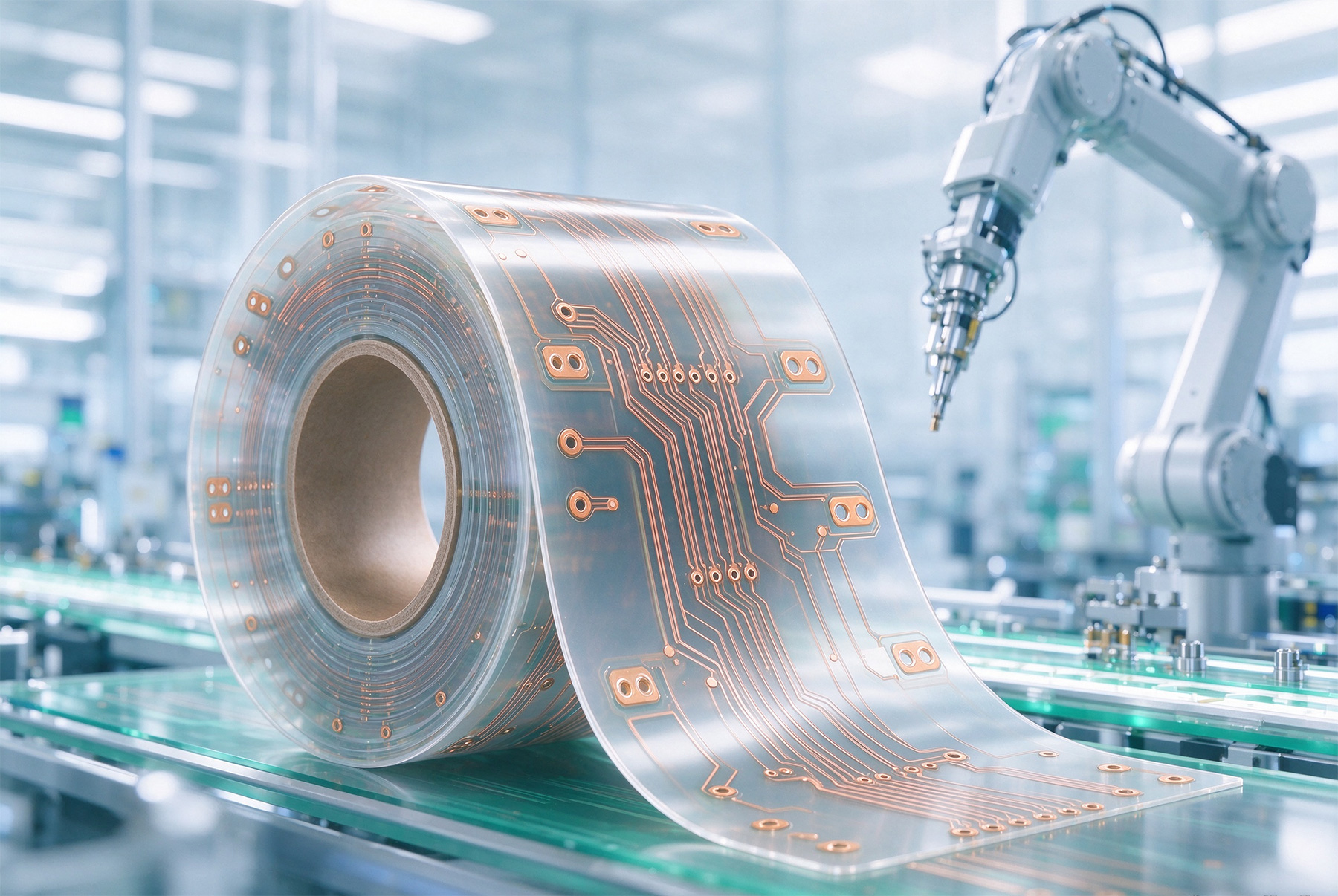
The rise of China as the dominant force in flexible circuit production was not accidental but resulted from a combination of strategic investment, ecosystem development, and the natural advantages of scale. In the early 2000s, the FPC market was dominated by Japanese manufacturers who held the advanced technology for Polyimide processing, fine-line etching, and coverlay lamination. As consumer Electronics Manufacturing migrated to China's Pearl River Delta region, the FPC Supply Chain followed, with Japanese, Taiwanese, and Korean flex circuit makers establishing joint ventures and wholly-owned subsidiaries in Shenzhen, Dongguan, and Suzhou.
By 2010, a new generation of Chinese-owned flex circuit factories had emerged, founded by engineers and managers who had trained at the foreign-owned plants and absorbed the manufacturing expertise. These domestic manufacturers initially competed on price, serving the low-end consumer electronics market with simple single-sided and double-sided flex circuits for feature phones, MP3 players, and early smartphones. As their technical capabilities and quality systems matured, they progressively moved upmarket, investing in the equipment and processes needed for multilayer flex, High-density Interconnect flex, and the ultra-fine-pitch flex circuits required by the smartphone camera module and display connector market.
The smartphone boom from 2010 to 2020 was the single most powerful driver of Chinese flex circuit manufacturing growth. Each smartphone contains 10 to 20 flexible circuits, connecting the display, camera, battery, antenna, buttons, and sensors to the main logic board, and the production of over 1.4 billion smartphones per year at peak volume created enormous, sustained demand for flex circuits that Chinese factories were uniquely positioned to serve. The volume drove investment in automated production lines, Laser Drilling equipment, roll-to-roll processing systems, and the cleanroom infrastructure needed for high-yield high-density flex manufacturing. By 2020, Chinese flex circuit factories had achieved parity with Japanese and Taiwanese manufacturers in both technical capability and quality for most commercial applications, while maintaining a 20 to 40 percent cost advantage that made them the default choice for global electronics manufacturers.
Today, the Chinese flex circuit manufacturing ecosystem includes over 300 specialized factories, ranging from large publicly-traded companies with annual revenues exceeding 500 million USD to mid-size specialists focused on specific application segments. The ecosystem is supported by a comprehensive domestic Supply Chain for flex circuit materials, including polyimide film production, copper foil manufacturing, coverlay and adhesive manufacturing, and Surface Finish chemical supply. This localized supply chain reduces material lead times from the 6 to 8 weeks typical of imported materials to 1 to 2 weeks for domestic sourcing, giving Chinese flex factories a significant speed advantage that compounds their cost advantage.
Chinese flex circuit manufacturers now offer the full range of flexible circuit technologies, from basic single-sided flex to complex multilayer and rigid-flex constructions. Understanding the available circuit types and their Manufacturing Capabilities is essential for selecting the right technology for a specific application.
Single-sided flex circuits, with copper traces on one side of a polyimide dielectric film, are the simplest and lowest-cost flex circuit type. Chinese manufacturers produce these in enormous volumes for applications like LED lighting strips, battery management system interconnects, simple sensor connections, and low-density signal routing. The manufacturing process is straightforward, using reel-to-reel processing with screen printing or photoimaging for trace definition, and the cost per unit area is the lowest of any flex circuit type. Minimum trace and space capabilities for volume production single-sided flex are typically 75/75 microns, with advanced factories offering 50/50 microns for high-density applications.
Double-sided flex circuits add a second copper layer with plated through-holes connecting the two layers, doubling the routing density and enabling more complex interconnect topologies. This is the workhorse flex circuit type for consumer electronics, used in smartphone display and camera connectors, laptop hinge interconnects, and wearable device internal connections. Chinese manufacturers have achieved excellent yields on double-sided flex with 50/50 micron trace and space, 0.15 mm minimum via diameter, and 6 to 8 layer multilayer constructions for high-density applications.
Multilayer flex circuits with 3 to 8 copper layers are used for applications that require high routing density combined with Controlled Impedance, such as high-speed display interfaces, camera module interconnects with integrated power and signal layers, and complex wearable electronics. Chinese manufacturers have invested heavily in the lamination equipment and registration systems needed for multilayer flex, and the best factories now produce multilayer flex with layer-to-layer registration accuracy of 25 microns or better, sufficient for 50/50 micron trace and space designs across all layers.
Rigid-flex circuits, which combine rigid PCB sections with flexible sections in a single continuous structure, are the most complex flex circuit type and are used in aerospace, medical, and high-end industrial applications where space and weight are critical. Rigid-flex eliminates the need for connectors between rigid boards and flex ribbons, improving reliability and reducing assembly complexity. Chinese manufacturers have developed rigid-flex capabilities over the past decade, and while the technology is still dominated by Taiwanese and Japanese manufacturers for the most demanding aerospace and defense applications, Chinese factories now produce rigid-flex for commercial medical and industrial applications at competitive costs and quality levels.
The performance of flexible circuits is fundamentally determined by the materials used in their construction, and the past decade has seen significant advances in flex circuit materials that have expanded the application range and improved the reliability of Chinese-manufactured flex circuits.
Polyimide film remains the dominant dielectric material for flexible circuits, and the availability of domestically produced polyimide film in China has been a key enabler of the flex circuit industry's growth. Chinese polyimide film manufacturers have achieved quality levels approaching those of the established Japanese suppliers, with film thicknesses from 12.5 to 125 microns available with excellent thickness uniformity and mechanical properties. The domestic availability of high-quality polyimide film has reduced material costs by 20 to 30 percent compared to imported film and has eliminated the supply chain vulnerability that previously constrained Chinese flex circuit production during global material shortages.
Adhesiveless flex constructions, where the copper foil is bonded directly to the polyimide film without an adhesive layer, have become the standard for high-reliability and high-density flex applications. Adhesiveless construction offers better thermal stability than adhesive-based construction, withstanding reflow temperatures up to 300°C without delamination, and provides better dimensional stability for fine-pitch trace manufacturing. Chinese manufacturers have invested in the sputtering and plating equipment needed for adhesiveless flex production, and the technology is now widely available from mid-size and larger flex factories. The cost premium for adhesiveless construction over adhesive-based construction has narrowed from 40 percent in 2015 to approximately 15 percent today, making it the preferred choice for most new designs.
Coverlay materials have also advanced, with the traditional acrylic and epoxy adhesive coverlay being supplemented by photoimageable coverlay that enables finer coverlay openings and tighter registration. Photoimageable coverlay allows coverlay openings as small as 50 microns with registration accuracy of 25 microns, compared to 150 micron minimum openings and 75 micron registration for traditional film coverlay. This capability is essential for fine-pitch component mounting on flex circuits, enabling 0.4 mm pitch and finer SMT components to be assembled directly on flex circuit pads. Chinese manufacturers have adopted photoimageable coverlay technology across most of the mid-size and larger factories, bringing fine-pitch flex assembly capabilities to the mainstream market.
Several high-growth application segments are driving the continued expansion of Chinese flex circuit manufacturing, each with distinct technical requirements that are pushing the capabilities of Chinese factories to new levels.
Consumer electronics remains the largest application segment by volume, with smartphones, tablets, laptops, wearables, and wireless earbuds all consuming large quantities of flex circuits. The trend toward foldable smartphones has created a new and particularly demanding flex circuit application, with the foldable hinge flex circuit requiring hundreds of thousands of flex cycles while carrying high-speed display and touch signals. Chinese flex manufacturers have developed specialized constructions for foldable hinge applications, using ultra-thin 12.5 micron polyimide with adhesiveless copper bonding and optimized trace routing that achieves flex cycle life exceeding 200,000 cycles while maintaining Signal Integrity for MIPI display interfaces running at 4 Gbps per lane.
Automotive electronics is the fastest-growing application segment for flexible circuits, driven by the electrification of vehicle powertrains and the proliferation of advanced driver assistance systems. Electric vehicles use flex circuits for battery management system cell voltage monitoring connections, where the flex circuit must withstand the harsh chemical environment inside the battery pack and the high vibration levels of automotive service. ADAS applications use flex circuits for camera module interconnects, radar module connections, and lidar system internal wiring, all requiring high reliability over a 15-year automotive service life. Chinese flex manufacturers have achieved Iatf 16949 automotive quality certification and are supplying flex circuits to both Chinese and international automotive OEMs, with the automotive flex circuit market growing at over 25 percent annually.
Medical electronics represents a smaller but high-value application segment where flex circuits enable innovative devices that conform to the human body or can be inserted into minimally invasive surgical instruments. Applications include hearing aids with flex circuits that conform to the ear canal shape, endoscope camera modules with flex interconnects that must survive repeated chemical sterilization, and implantable devices with flex circuits that must operate reliably inside the human body for years. Chinese flex manufacturers have achieved Iso 13485 medical quality certification and are serving the medical device market with specialized cleanroom production lines and traceability systems that meet medical regulatory requirements.
Industrial IoT and sensor applications use flex circuits for connecting sensors in hard-to-reach locations, routing signals through articulated robotic arms, and creating conformal sensor arrays that wrap around pipes, tanks, and structural elements. These applications typically require robust environmental protection, long service life in harsh industrial environments, and cost-effective production in medium volumes. Chinese flex manufacturers have developed specialized constructions for industrial applications, using thicker polyimide films, reinforced coverlay systems, and Conformal Coating options that extend flex circuit life in industrial environments.
While the overall quality level of Chinese flex circuit manufacturing has improved dramatically, there remains significant variation between factories in their actual capabilities and quality consistency. Verifying that a specific factory can meet your application requirements requires a structured approach that goes beyond reviewing the factory's published capability claims.
Capability verification should begin with a Design For Manufacturability review conducted with the factory's engineering team, where your specific design requirements are reviewed against the factory's actual production capabilities. The review should cover minimum trace and space, minimum via diameter, maximum layer count, available material types and thicknesses, coverlay capability, Surface Finish options, and any special requirements like Controlled Impedance or high-frequency signal performance. The factory should provide actual production data showing yields for similar designs, not just theoretical capability limits. A factory that claims 50/50 micron capability but has never produced a design with that feature in volume production is a risk that should be evaluated carefully.
Quality system assessment should go beyond checking for the appropriate ISO certification, which provides only a baseline assurance of quality system maturity. The assessment should examine the factory's statistical process control practices, their yield tracking and root cause analysis methodology, their incoming material inspection procedures, and their outgoing Quality Control testing. Request to see actual quality data from recent production runs, including first article inspection reports, in-process quality data, and final inspection results. A factory that cannot or will not provide this level of quality data is a red flag, regardless of their certification status.
Sample production and testing is the most reliable way to verify that a factory can meet your requirements. Before committing to a production order, have the factory produce a small sample quantity using your actual design, and subject the samples to your full qualification test protocol. This should include visual inspection under magnification, Cross-section Analysis of vias and plated through-holes, Electrical Testing for continuity and insulation resistance, flex cycle testing for dynamic flex applications, and thermal cycling for high-reliability applications. The sample test results provide objective evidence of the factory's actual capability that no certification or quality document can substitute for.
While Chinese flex circuits are generally cost-competitive, significant cost optimization is possible through design choices and sourcing strategies that align with Chinese Manufacturing Capabilities and economics.
Design For Manufacturability is the most powerful cost optimization tool, because flex circuit cost is directly tied to the complexity of the manufacturing process. Reducing the layer count from 4 to 2 layers typically reduces cost by 30 to 40 percent, and reducing from 2 layers to single-sided reduces cost by another 30 to 40 percent. Every design decision that simplifies the manufacturing process translates directly into lower cost, and the design should be reviewed with the factory's engineering team to identify any features that are driving cost without adding necessary functionality.
Panel utilization optimization maximizes the number of circuits per production panel, directly reducing the per-circuit material and processing cost. The flex circuit outline should be designed to nest efficiently within the standard 250 mm by 300 mm or 300 mm by 400 mm panel sizes used by most Chinese flex factories, with minimal waste material between circuits. If the circuit outline creates significant waste material, consider whether the outline can be modified to improve nesting without compromising the end application requirements.
Volume concentration across part numbers leverages the economies of scale in flex circuit production. If your product uses multiple different flex circuit designs, consolidating the sourcing of all designs with a single factory can reduce the per-circuit cost by 10 to 20 percent compared to splitting the designs across multiple factories, because the combined volume improves the factory's material purchasing power and production scheduling efficiency. This consolidation also simplifies supplier management and quality oversight, reducing your engineering and quality management overhead.
Material specification optimization avoids over-specifying materials that add cost without providing necessary functionality. For example, specifying adhesiveless polyimide construction when adhesive-based construction is adequate for the application adds 15 percent or more to the circuit cost. Specifying RA copper when ED copper is adequate adds 10 to 20 percent. Each material specification should be evaluated against the actual application requirements, and the lowest-cost material that meets those requirements should be selected. The factory's engineering team can provide valuable guidance on material selection trade-offs, because they have experience with the cost and performance implications of different material choices across many applications.
The Chinese flex circuit industry continues to evolve rapidly, with several emerging trends that will shape the industry over the next five years and beyond.
Ultra-high-density flex circuits with 30/30 micron or finer trace and space are being developed to meet the demands of next-generation mini-LED and micro-LED displays, which require extremely fine-pitch flex connections to route thousands of individual LED drive signals. Chinese manufacturers are investing in semi-additive plating processes and direct metal lithography equipment that can achieve these ultra-fine feature sizes, and the technology is expected to move from Prototype to volume production within the next 2 to 3 years.
Stretchable circuits, which can elongate by 10 percent or more without damage to the traces, represent the next frontier beyond flexible circuits for wearable and medical applications. These circuits use special elastomeric substrates and serpentine trace patterns that accommodate stretching, and Chinese research institutions and manufacturers are actively developing stretchable circuit technology for applications like skin-mounted health monitoring patches and conformal sensor arrays. While still in the early commercialization phase, stretchable circuits produced by Chinese manufacturers are expected to reach volume production by 2027.
Automation and Industry 4.0 adoption is transforming Chinese flex circuit factories, with automated material handling, inline inspection at every process step, and AI-based defect classification systems improving both quality and productivity. The most advanced Chinese flex factories now operate with minimal human intervention in the cleanroom production areas, reducing the human error and contamination issues that have historically been the primary causes of flex circuit defects. This Automation investment is gradually narrowing the quality gap between the best Chinese factories and the top-tier Japanese and Taiwanese manufacturers, and is expected to close the gap entirely for most commercial applications within the next 3 to 5 years.
The rise of flexible circuits in Pcb Production in China represents one of the most significant shifts in the global Electronics Manufacturing landscape over the past two decades. What began as a low-cost manufacturing alternative has evolved into a sophisticated, technology-driven industry that increasingly leads the world in flex circuit manufacturing capability, volume, and innovation. For electronics product designers and sourcing managers, the Chinese flex circuit manufacturing ecosystem offers an unparalleled combination of technical capability, cost competitiveness, and production speed that makes it the default choice for most commercial flex circuit applications. Understanding the capabilities, quality systems, and cost dynamics of this ecosystem is essential for leveraging it effectively and for making sourcing decisions that result in reliable, cost-effective flex circuit supply for your products. As the flex circuit market continues to expand into new applications like foldable electronics, automotive ADAS, medical wearables, and industrial IoT, the Chinese flex circuit manufacturing industry is positioned to remain at the center of this growth, driving innovation and setting the pace for the global industry.
Contact us to discuss your flexible circuit design and manufacturing requirements and to explore how our China-based flex circuit manufacturing capabilities and Engineering Support can help bring your product to market efficiently and cost-effectively.
Why Startups Rely on Quick Turn Fabrication to Secure Funding FasterAugust/08/2026

Thermal Management Strategies for Dense Multilayer PCB DesignsJuly/31/2026

Best Practices for Preparing Files for Expedited PCB ManufacturingJuly/29/2026
Why Quick Turn PCB Fabrication is Critical for R&D TeamsMay/21/2026
Advanced HDI Technology in PCB Fabrication ChinaOctober/30/2026
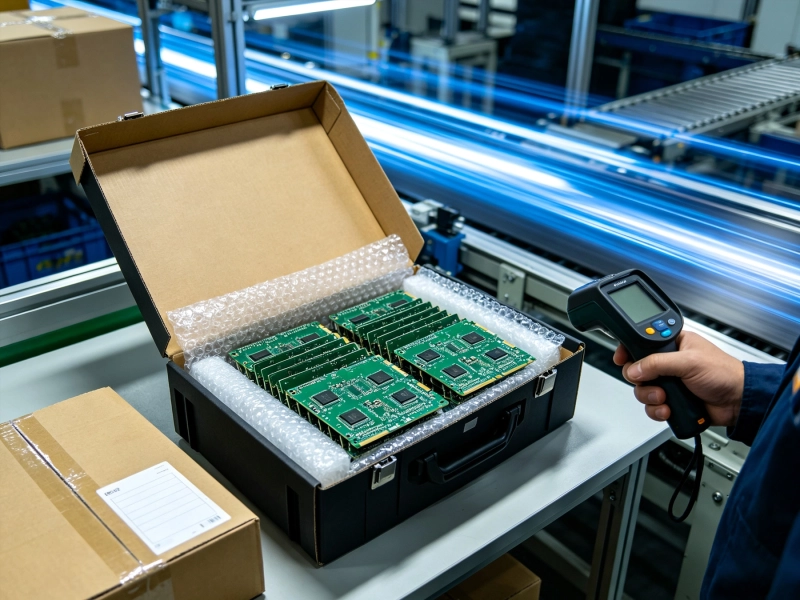
The Logistics of Speed: Shipping and Handling for Urgent PCB DeliveriesSeptember/03/2026

Emergency PCB Runs: Strategies for Getting Boards Fast Without Sacrificing ReliabilityJuly/08/2026
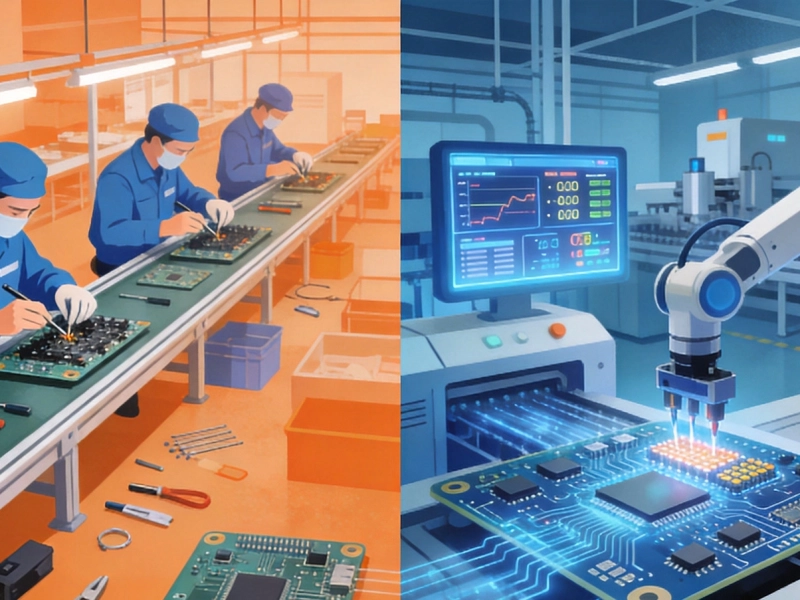
Comparing Traditional vs. Digital Quick Turn PCB ServicesJuly/18/2026