Open Nav

You have a design. You need it built. You search for manufacturers, compare websites, and send out requests for quotes. Days or weeks later, you get responses back—some promising, some disappointing, some mysteriously silent. Somewhere in this process, you might be making a fundamental mistake: treating all manufacturers as interchangeable providers of the same basic service.
They aren't. A factory that excels at simple two-layer boards may struggle with your 12-layer HDI design. A manufacturer with decades of experience in consumer electronics might not have the documentation practices your aerospace customer requires. The difference between a smooth production run and a nightmare of yield problems and missed deadlines often comes down to whether your design matches the manufacturer's actual capabilities.
Capability statements—the formal and informal documentation of what a factory can actually do—are the tool that bridges this gap. Understanding how to read them, what questions to ask, and when to push for more detail can transform your manufacturing outcomes.
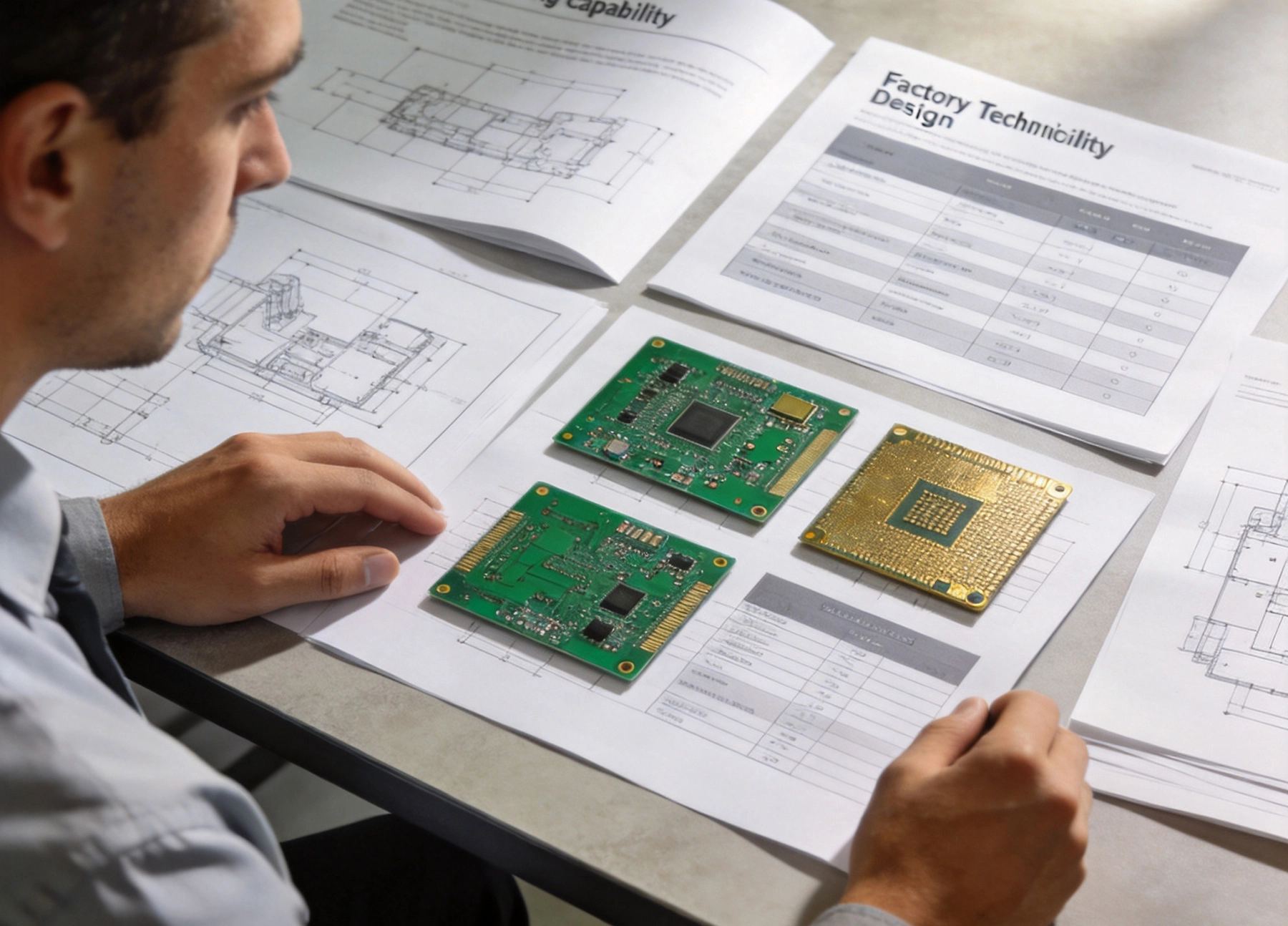
Most manufacturers publish some form of capability documentation. This ranges from simple specification lists on their websites to detailed technical data sheets covering equipment tolerances, process parameters, and quality metrics. The value you extract depends on understanding what you're looking at.
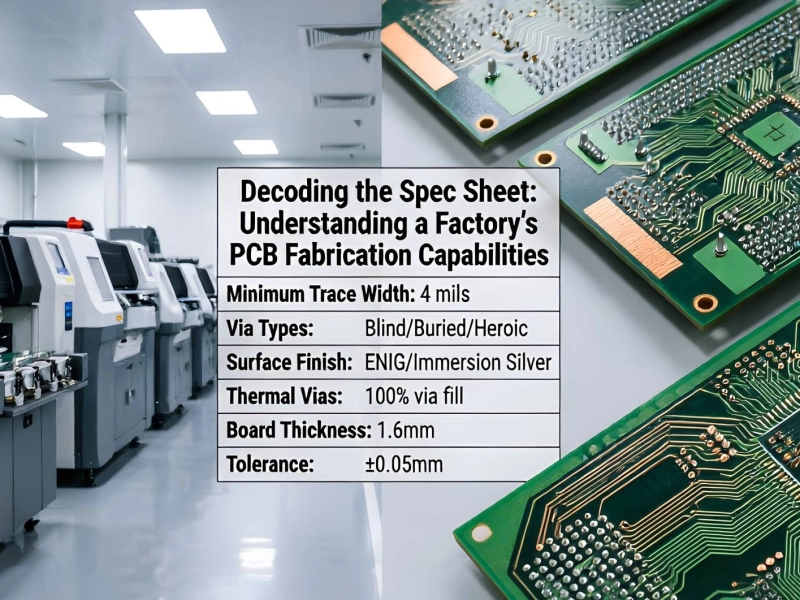
Basic capabilities typically include board layer count, Minimum Trace Width and spacing, drilled hole sizes, and surface finish options. These are necessary but not sufficient. They tell you whether a factory could theoretically build your board, not whether they do so routinely with high yields.
Advanced capability statements go further. They specify the equipment used for each process, the tolerances that equipment actually achieves in production (not just in specification), and the historical quality data that validates those claims. A factory that documents a 98.5% first-pass yield on 10-layer boards has proven something different from one that merely claims to support 10-layer boards.
When a manufacturer states they support 10-layer boards, that tells you almost nothing on its own. Some factories can produce 10-layer boards with 4-mil traces and 0.2mm Microvias as a standard product. Others consider a 10-layer board an advanced special order that requires significant process development for each build. These represent fundamentally different capability levels.
Ask yourself: is this capability based on mature, well-established processes, or is it aspirational? Has the factory produced this complexity recently, or is it something they claim they could do if everything went perfectly? The answers matter enormously for your project timeline and risk profile.
The best capability statements differentiate between what a factory does routinely, what they can do with development, and what they cannot do. Be wary of manufacturers who don't make this distinction—it's often a sign that they haven't been honest with themselves about their real limitations.
Not all Pcb Materials are created equal, and not all factories handle all materials equally well. Standard FR-4 is widely understood across the industry. High-frequency materials like Rogers or PTFE composites require specific processing knowledge that not every manufacturer has developed.
If your design uses specialized materials, the capability statement should address this explicitly. Does the factory have experience with this specific material? What are the processing differences from standard FR-4? Have they built similar designs recently? Material-related failures often trace back to assuming that "Pcb Manufacturing" is generic when it isn't.
Metal-core substrates, flexible materials, and hybrid constructions combining different material types each require specific process knowledge. A factory claiming broad material support isn't automatically the right choice—look for evidence of recent, relevant experience with your specific material requirements.
Here's an uncomfortable truth: capability statements are marketing documents. The factory publishes them to win business. This doesn't make them dishonest, but it does mean you should read them critically. The question isn't just "can they do X?" but "what does doing X actually mean at this factory?"
A capability list might claim Minimum Trace Width of 3 mils, but the fine print might reveal this requires specific conditions—maybe only on outer layers, maybe only with specific materials, maybe only for limited panel sizes. The summary claim sounds impressive; the detailed reality might be quite different.
Reputable factories typically include reasonable disclaimers about their capabilities. "Standard production" versus "development" versus "not supported" are useful categories. Watch for vague language that could mean almost anything—"capable of" doesn't mean "routinely produces" or "produces with acceptable yields."
Some capability statements list equipment as a selling point: "We have Laser Drilling, sequential lamination, and automated optical inspection." Equipment is necessary but not sufficient. A factory with Laser Drilling equipment might have learned to use it well, or might be still working out process issues that affect your boards.
What matters is validated process capability. Equipment exists; using it to consistently produce parts that meet your requirements is a different matter. Ask about yield rates for your specific complexity level. Ask about defect modes they've encountered and how they've addressed them. Ask about the last time they built something similar to your design.
When reviewing capabilities, come prepared with specific questions. Generic questions get generic answers. Questions that probe for evidence and examples get useful information.
Ask: "Can you show me examples of boards you've built at this complexity level?" Any factory can claim to support a capability; only ones with genuine experience can provide evidence. Request photos, test reports, or at minimum a verbal description of recent similar projects.
Follow up with: "What was the most challenging aspect of those builds, and how did you address it?" This question reveals whether the factory has actually faced and solved problems at this complexity level, or is approaching your project as a learning experience at your expense.
Also ask: "What would you change about this design to make it easier to manufacture?" Experienced manufacturers see common failure modes. A factory willing to offer design suggestions before quoting is demonstrating expertise, not trying to simplify your design arbitrarily.
Ask about their incoming inspection process. Do they verify material lot numbers? Do they check drill hit accuracy before production runs? These practices indicate whether the factory has systematic quality controls or is simply hoping that starting materials are good.
Ask about their measurement and test equipment calibration. How do they verify that the equipment producing your boards is operating within tolerance? Factories with rigorous calibration programs typically have lower defect rates.
Ask about documentation practices. Will you receive inspection reports, lot traceability, and material certifications? For regulated industries, this documentation isn't optional. For everyone else, it provides valuable assurance about what you're actually receiving.
Different projects have different capability requirements. Understanding your project's needs helps you evaluate whether a factory's capabilities actually match.
For prototypes, capability requirements often focus on speed and flexibility. Can they turn your design around in your required timeframe? Do they accept small quantities? Are they willing to answer technical questions during the build? Complex documentation matters less than responsiveness and the ability to flag problems quickly.
However, Prototype capability doesn't predict production capability. A factory that quickly produces prototypes through manual processes or development setups may not be the right choice when you need to scale to production. The same capability statement might serve both uses, but the evaluation criteria should differ.
Low-volume production adds requirements around consistency and documentation. The boards you receive in month six should match the boards you received in month one. This requires process control that Prototype-focused factories may lack.
For low-volume production, pay attention to documentation practices, traceability, and the factory's approach to change management. How do they handle material substitutions? What notification do you receive when process changes occur?
High-volume production demands optimization and yield focus. At thousands of boards per month, small yield improvements translate to significant cost savings. Factories optimized for volume typically have different equipment, different process controls, and different cost structures than prototype-focused shops.
For high-volume work, evaluate the factory's yield tracking, their continuous improvement practices, and their capacity for Design Optimization suggestions. A factory that helps you improve manufacturability is providing real value that compounds over production runs.
Watch for warning signs that may indicate capability gaps:
Inconsistencies between what's on their website, in their quote, and in their technical discussions. Factories with clear internal alignment typically present consistent information. Inconsistencies suggest either poor communication or intentional misrepresentations.
Reluctance to discuss specifics. If a factory can't or won't explain what equipment they use for your via requirements, what their typical yield is for your complexity level, or what their quality process looks like, that's information. Either they don't know, or they don't want you to know.
Overly broad claims. "We support all Ipc Standards" means nothing if they can't tell you which class they build to routinely. "All surface finishes available" doesn't mean they're experienced with each one. Look for specificity and evidence, not marketing breadth.
No recent examples. If a factory claims to support your complexity level but can't point to recent (within the past year or two) builds at that level, be skeptical. Capabilities can atrophy without ongoing practice.
The best outcomes come from genuine partnerships rather than transactional vendor relationships. This takes time to develop, but it pays compound returns.
Share context about your application. A manufacturer who knows that your board goes into a medical device approaching FDA submission understands the stakes differently than one who thinks they're building a consumer gadget prototype. This context shapes their approach to quality and documentation.
Respect their expertise. You've designed the board; they've built thousands like it. Their input on manufacturability, component availability, and process optimization often improves the design in ways you wouldn't have discovered otherwise.Factories that offer unsolicited design feedback are demonstrating the kind of expertise that makes them valuable partners.
Be clear about your priorities. Is timeline more important than cost? Is first-pass yield more important than unit price? Different priorities warrant different manufacturing approaches, but the factory can only optimize for what you tell them matters.
Look for specificity: exact tolerances, specific equipment used, recent examples of similar builds, and clear distinctions between standard and development capabilities. Vague claims that could mean almost anything should prompt follow-up questions.
Request references from similar projects, ask for sample documentation from past builds, and look for third-party certifications (ISO, ITAR, UL) that validate their quality systems. Industry reputation and peer recommendations also provide evidence.
Not necessarily. The most capable manufacturers often charge premium prices and may have longer lead times. If your design doesn't require their advanced capabilities, you're paying for capability you don't use. Match the capability level to your actual requirements.
Re-evaluate when your requirements change significantly, before starting major new projects, or when you experience quality issues. Annual capability reviews are reasonable for ongoing partnerships, even when nothing has gone wrong.
This is common and not necessarily a problem. Discuss your requirements directly with the manufacturer. Some capabilities beyond their standard range may be achievable with development, while others may genuinely be outside their ability. The honest answer is more valuable than an optimistic quote.
Contact us to discuss your requirements.

Heavy Copper PCBs: Capabilities for High-Current and Power ElectronicsJuly/14/2026
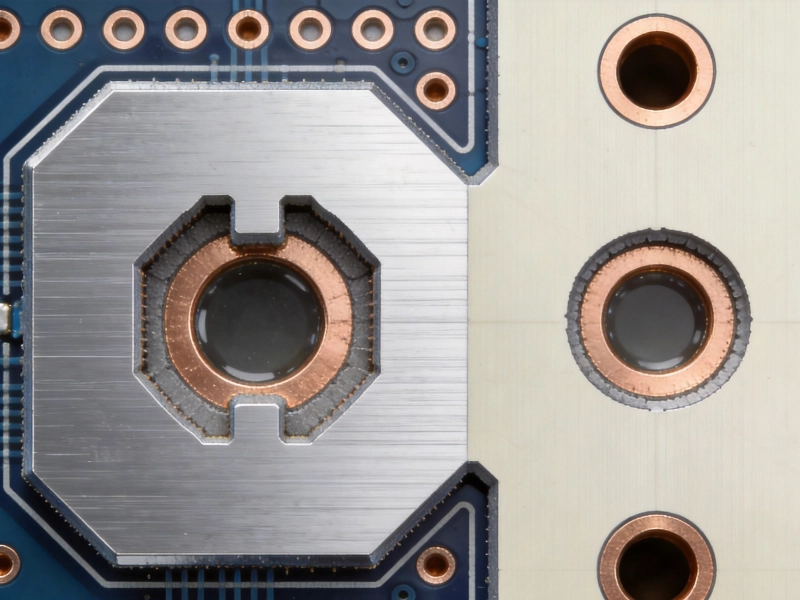
Back-drilling and Via-in-Pad: Advanced Capabilities for High-Speed DesignsSeptember/29/2026
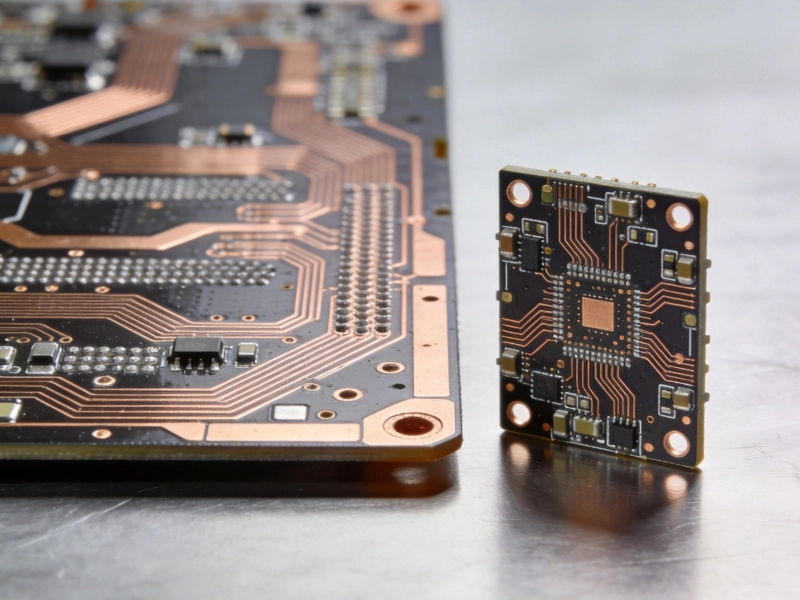
Large Format vs. Miniature PCBs: Evaluating Size Constraints and CapacitiesAugust/14/2026

Controlled Impedance: Measuring a Manufacturer's Ability to Hit Tight TolerancesSeptember/20/2026
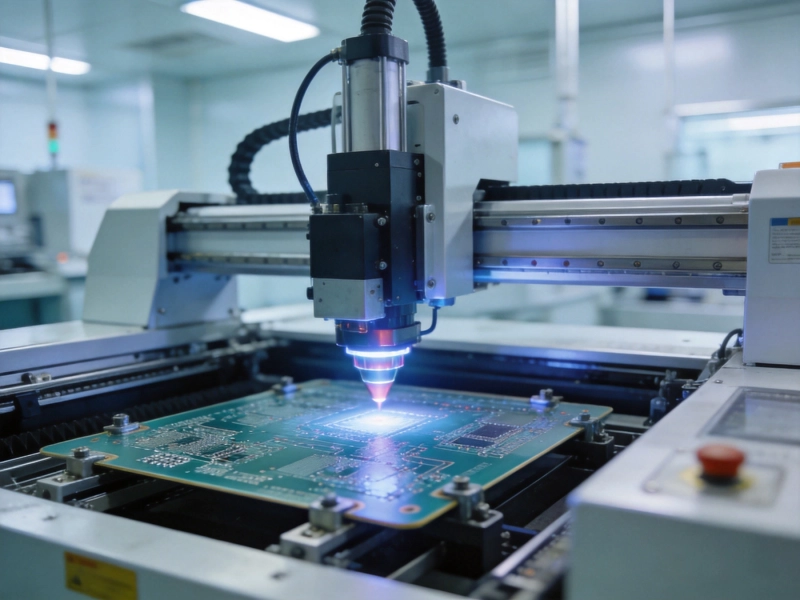
The Role of Equipment in Determining PCB Fabrication Capabilities (LDI, Laser Direct Imaging)September/09/2026
Decoding the Spec Sheet: Understanding a Factory's PCB Fabrication CapabilitiesJune/11/2026

Any-Layer Interconnect: The Pinnacle of High-Density PCB TechnologyJuly/10/2026
High-Frequency Materials: Assessing Capabilities for RF and Microwave PCBsAugust/03/2026