
For more than two decades, the economics of Pcb Fabrication pointed decisively toward China. Lower labor costs, concentrated supply chains, mature manufacturing ecosystems, and favorable trade policies combined to create cost structures that no other region could match. Western electronics companies didn't just prefer Chinese Manufacturing—they depended on it. The question of whether to manufacture in China wasn't really a question at all.
2026 looks different. Trade tensions, tariffs, Supply Chain fragility exposed by pandemic disruptions, and rising Chinese wages have complicated what once seemed like an obvious equation. Meanwhile, manufacturing capacity has expanded in Southeast Asia, India, and even North America, creating alternatives that didn't exist in earlier eras. The question every hardware company must now answer—where should we manufacture our PCBs—has become genuinely complex. This analysis examines the cost factors that drive that decision, evaluates how the calculus has shifted, and provides a framework for making the choice in 2026.
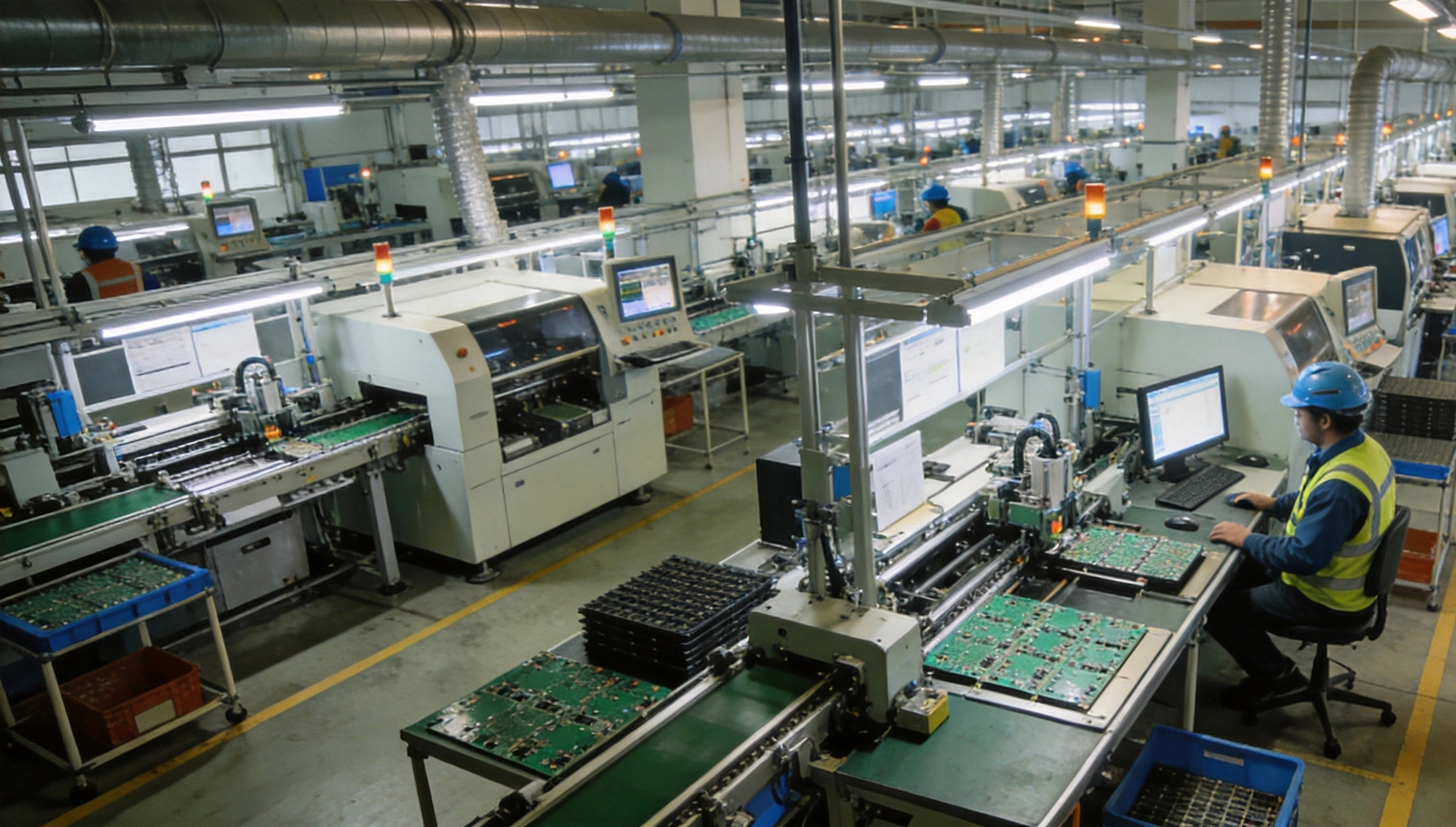
Understanding why China dominated Pcb Manufacturing requires understanding the specific cost advantages that built that dominance. Labor cost was the most visible factor but far from the only one.
Chinese Pcb Fabrication reached global scale through decades of concentrated investment in manufacturing infrastructure. Industrial parks dedicated to Electronics Manufacturing clustered suppliers, component distributors, and fabrication services within geographic proximity that eliminated logistics costs and minimized production delays. A company sourcing PCBs from a Shenzhen industrial park could walk from an PCB fabricator to a component supplier to an assembly house within minutes. This density created efficiency that dispersed manufacturing locations couldn't match.
The workforce that built China's PCB industry developed deep process expertise over decades. Generation after generation of technicians, engineers, and managers accumulated knowledge specific to PCB fabrication—knowledge that exists in the minds of experienced workers as much as in documented procedures. This human capital, combined with equipment investment, created production capability that other countries couldn't replicate quickly regardless of capital availability.
Scale drove costs down further. Chinese fabricators operated massive production lines serving global markets, achieving economies of scale that lowered per-unit costs for standard board specifications. The volume that flowed through Chinese factories meant that even complex boards—the exceptions that required special handling in lower-volume regions—represented routine production runs in China. Familiarity with challenging specifications became self-reinforcing: the more complex boards Chinese fabricators processed, the more expertise they accumulated, and the more complex boards they could reliably produce.
The cost equation that favored China in 2015 looks substantially different in 2026. Several factors have narrowed the gap.
Chinese Manufacturing wages have increased substantially. Average wages in the Pearl River Delta manufacturing region—the heart of China's Electronics Manufacturing—have roughly doubled over the past decade in real terms. While still significantly lower than Western wages, the differential has compressed. For labor-intensive processes that couldn't be automated, this wage increase translates directly into higher production costs. The gap between Chinese and, say, Vietnamese or Indian manufacturing wages has widened as those countries have industrialized more recently.
Trade policy has introduced substantial cost uncertainty. The tariff regime between the United States and China has created effective price increases of 25% or more on Chinese-manufactured electronics in the American market. Similar pressures from European regulations and the threat of further escalation have made the cost stability of Chinese manufacturing questionable. Companies that priced products based on Chinese manufacturing costs now face spreadsheet revisions that threaten previously viable business models.
Supply Chain resilience has emerged as a cost factor that didn't register in traditional manufacturing economics. The COVID-19 pandemic demonstrated that concentrating all production in a single geographic region creates catastrophic risk—factories in lockdown, ports congested, and companies unable to source products they'd designed exclusively for Chinese production. The cost of that risk, previously invisible, has been revealed and priced into manufacturing decisions. Geographic diversification, while adding logistical complexity, provides insurance against the kind of supply chain disruption that cost some companies their entire inventory in 2020 and 2021.
Quality concerns that once differentiated Chinese manufacturing have largely faded. In earlier eras, Western engineers worried—sometimes justifiably—that Chinese fabricators lacked the process control, quality management systems, or technical expertise to produce boards meeting demanding specifications. Those concerns have been substantially addressed.
Leading Chinese PCB fabricators have achieved ISO 9001, AS9100, IATF 16949, and other quality management certifications that match or exceed Western standards. The engineering talent available at premium Chinese fabrication houses is comparable to that available anywhere in the world. Many Chinese facilities have invested heavily in advanced equipment—Laser Drilling, automated optical inspection, impedance testing, X-ray Inspection—purchasing the same capital equipment used by premium manufacturers everywhere.
For standard Multilayer Boards, rigid-flex circuits, and even many high-frequency applications, Chinese fabricators produce quality that rivals any global competitor. The gap in quality that once justified price premiums at Western manufacturers has narrowed to the point where it's often undetectable for all but the most demanding applications. Companies that once assumed they needed to pay premium prices for domestic manufacturing for quality reasons may find those assumptions no longer hold in 2026.
The sticker price of Chinese PCB fabrication doesn't capture the full cost picture. Several hidden costs deserve consideration in any total cost analysis.
Intellectual property risk remains a persistent concern, even if it has been overstated by some commentators. The actual risk depends heavily on the nature of the product, the specific manufacturing partners, and the contractual protections in place. For consumer electronics with short product lifecycles, IP concerns may be minimal. For products with significant IP embedded in the hardware design—proprietary architectures, specialized components, unique manufacturing processes—the risk profile is different. Managing IP risk requires due diligence, contractual protections, and sometimes geographic diversification of manufacturing partners.
Logistics and lead time costs can erode apparent savings. Shipping PCBs from China adds transit time of two to four weeks by sea, plus customs clearance, inland transportation, and the inventory carrying costs of maintaining buffer stock to cover longer supply pipelines. Air freight provides faster delivery but at substantial cost premiums. The total logistics cost for Chinese PCBs—including the working capital tied up in transit inventory—often adds 5-15% to the fabrication cost depending on lead time requirements and supply chain efficiency.
Communication overhead deserves recognition as a real cost. Time zone differences, language barriers, and the asynchronous nature of international communication slow problem resolution and extend development cycles. When a critical issue arises on a Friday evening in California, the response from a Chinese manufacturer may not arrive until Monday morning California time—72 hours of delay on an issue that might have been resolved in hours with a local manufacturer. For startups moving fast or companies with aggressive development schedules, this communication friction has real cost.
Vietnam, Thailand, Malaysia, and other Southeast Asian countries have emerged as credible alternatives for Pcb Manufacturing, particularly for companies seeking to diversify supply chains away from China. These countries offer lower labor costs than China while providing manufacturing infrastructure that has matured over decades of serving electronics OEMs.
Vietnam has attracted substantial investment from electronics manufacturers seeking to reduce China exposure. PCB fabrication capability in Vietnam has expanded significantly, supported by favorable government policies and proximity to Chinese supply chains that enables component access without full China manufacturing. The quality of Vietnamese Pcb Production matches Chinese standards at comparable price points, making Vietnam a viable primary manufacturing location for many products.
Malaysia and Thailand offer established electronics manufacturing ecosystems with decades of experience serving global brands. These countries provide stable political environments, English-speaking engineering workforces, and infrastructure that supports complex manufacturing. While labor costs run somewhat higher than Vietnam, the combination of established capability and supply chain access makes these countries attractive for demanding applications where manufacturing partner track record matters.
The limitation of Southeast Asian manufacturing remains supply chain depth. While the region has grown its component ecosystem substantially, the full breadth of components available from Chinese distribution remains unmatched. For products requiring specialized components, Chinese manufacturing's supply chain advantage still applies. Companies considering Southeast Asian manufacturing should verify component accessibility before committing to a manufacturing location.
Making an informed manufacturing location decision requires a comprehensive cost model that captures more than unit price differences. The following framework organizes the cost factors that belong in the analysis.
Start with the obvious: fabrication price per board. Chinese fabricators typically offer 20-40% lower prices than equivalent Western manufacturers for standard specifications, though this differential varies by complexity, layer count, and special requirements. Southeast Asian fabricators generally price between Chinese and Western options. Collect quotes from multiple manufacturers across regions to establish accurate price baselines.
Calculate actual logistics costs including shipping, customs duties, tariffs, insurance, and inland transportation. Add the cost of inventory buffer required to cover longer lead times. For high-volume products, these costs can amount to 5-12% of the total product cost. For low-volume prototypes, the absolute numbers are small but the percentage impact on cost may still be significant.
Historical defect rates and first-pass yield directly affect total cost. If Chinese manufacturing produces 1% defective boards versus 0.5% from a domestic manufacturer, the effective cost difference narrows substantially. Request quality data from potential manufacturing partners and factor actual defect rates into cost comparisons.
For products still in development or requiring frequent design iterations, the cost of communication delays and extended lead times deserves quantification. Estimate the number of Prototype spins per year, calculate the additional time to receive prototypes from international versus domestic sources, and value that time at the engineering cost rate. For fast-moving startups, these delays can translate to significant opportunity cost.
Quantifying supply chain risk is inherently uncertain, but the 2020-2022 disruptions provide a real-world data point. Companies that couldn't source products for months lost revenue, market share, and in some cases customers entirely. A rough allocation of expected annual cost from supply chain disruption—whether self-insured or reflected in price premiums for diversified manufacturing—belongs in any serious cost analysis.
Cost optimization is the primary driver for most manufacturing decisions, but strategic factors sometimes override pure cost calculations.
Geographic diversification provides strategic value beyond risk reduction. Having manufacturing capacity in multiple regions enables better coverage of regional markets, simplifies compliance with local content requirements that some countries impose, and provides negotiating leverage with manufacturing partners. The company that can credibly shift volume between regions commands better pricing and service from all its partners.
Time-to-market advantages from local manufacturing can outweigh unit cost differences for new product introductions. When speed matters more than cost—as it often does for first-to-market products—local manufacturing's faster response times and simpler communication justify price premiums. The same logic applies to field issues requiring rapid rework or replacement.
Customer requirements increasingly specify manufacturing geography for defense, government, and some industrial applications. These requirements may mandate domestic manufacturing regardless of cost considerations. Understanding the geographic restrictions that apply to your products and markets shapes the manufacturing decision regardless of where the pure cost analysis points.
Given the complexity of the decision, a structured framework helps organize the analysis and produce actionable guidance.
For high-volume standard products where unit cost is the primary concern and supply chain resilience is manageable, Chinese manufacturing likely remains the lowest total cost option. The scale advantages, supply chain depth, and established quality systems haven't disappeared— they've just been partially offset by tariff costs and rising wages. If your product fits this profile, the analysis likely points toward China, particularly if you've established manufacturing relationships that reduce IP and quality risk.
For products with moderate volume, significant design iteration, or supply chain resilience requirements, a hybrid approach may optimize outcomes. Prototype and NPI runs from domestic or regional manufacturers that can respond quickly. Production volume from lower-cost sources in China or Southeast Asia. This tiered approach accepts higher unit costs for some production in exchange for development speed and supply chain flexibility.
For products facing tariff exposure, geographic compliance requirements, or extreme supply chain risk sensitivity, domestic or regional manufacturing may be necessary despite higher unit costs. The companies in this category have typically calculated that the effective tariff cost exceeds the manufacturing price premium for local production, making the higher-cost option the lower total cost option when trade policy is included.
The manufacturing landscape will continue evolving. Companies that make location decisions based only on current costs may find their strategies outdated as conditions change further. Building a resilient manufacturing strategy requires anticipating how cost factors will shift.
Automation is steadily reducing the labor cost advantage of low-wage manufacturing locations. As PCB fabrication becomes more automated, the labor cost component shrinks, reducing the relative advantage of countries with low wages. China's investment in manufacturing Automation has been substantial, and advanced Chinese factories may retain cost advantages even as wage differentials compress.
Trade policy uncertainty will likely persist. The era of stable globalized trade that made Chinese manufacturing's dominance inevitable has ended. Companies manufacturing globally will need to maintain flexibility to shift production between regions as policy changes alter cost calculations. Building manufacturing relationships with partners in multiple regions—even at some cost premium—provides optionality that has real strategic value.
Supply chain regionalization is accelerating. Major electronics brands have announced strategies to diversify manufacturing across multiple geographic regions. This shift will drive investment in manufacturing infrastructure outside China, gradually building capability and scale that further narrows China's cost advantages. The manufacturing map of 2030 may look substantially different from that of 2020—and building for that future means making location decisions today that preserve flexibility for tomorrow.
Yes, substantially. Leading Chinese PCB fabricators now match or exceed quality levels available anywhere in the world for most board types. Investment in equipment, process control, and engineering talent has closed the quality gap that once differentiated Chinese manufacturing. For standard Multilayer Boards, HDI, flexible circuits, and many high-frequency applications, Chinese manufacturing quality is indistinguishable from premium manufacturers elsewhere. The remaining quality differentiation exists primarily in specialized applications requiring extremely tight tolerances or exotic materials.
Effective tariff rates vary by product classification, origin, and current trade policy. For products subject to Section 301 tariffs, the added cost is 25% or more of the product value—cost that may exceed any manufacturing price advantage. Companies importing Chinese PCBs into the United States should verify their products' HTS classification and calculate the all-in cost including applicable tariffs before assuming Chinese manufacturing is the lowest cost option. The tariff impact can flip the cost decision entirely for tariffed products.
Chinese manufacturing typically adds 3-6 weeks of transit time compared to domestic manufacturing when including production, shipping, and customs clearance. Standard domestic lead times of 1-2 weeks compare to 4-8 week timelines for Chinese production. For prototype quantities, some Chinese manufacturers offer expedited air freight options that compress timelines to 1-2 weeks but at premium pricing. The lead time differential is often the strongest argument for domestic manufacturing for development-stage products.
For many products, yes. Vietnam, Malaysia, and Thailand offer quality PCB manufacturing at price points below China for some specifications. The key limitations are supply chain depth—component availability is less comprehensive than in China—and the relative maturity of the manufacturing ecosystem. Companies considering Southeast Asian manufacturing should verify that their specific component and capability requirements are available before committing to a manufacturing location. For products that fit within Southeast Asian capability, the cost and risk profile often represents an excellent balance.
Quality management certifications (ISO 9001, AS9100, IATF 16949 as applicable), customer references in your product category, engineering capability and responsiveness, financial stability, and audit history all contribute to a comprehensive evaluation. Request sample boards from potential partners, including first-article inspection with detailed quality metrics. Evaluate communication responsiveness and Engineering Support availability before committing to production volume. The partner evaluation process should be thorough regardless of geographic location—the cost of a poor manufacturing partner choice is substantial in any region.
Chinese PCB manufacturing remains highly cost-competitive in 2026—but the question of whether it's the most cost-effective option depends on factors specific to each product and company. For high-volume standard boards with manageable supply chain risk, China likely offers the lowest total cost. For products facing tariff exposure, requiring frequent design changes, or demanding supply chain resilience, the calculus shifts toward domestic or regionally diversified manufacturing.
The answer isn't a simple prescription—it's a structured analysis that captures the full cost picture across fabrication, logistics, quality, development cycle impact, and supply chain risk. Building that analysis carefully, rather than defaulting to historical assumptions about Chinese cost advantages, produces decisions that reflect current reality rather than outdated comparisons.
The hardware companies that will thrive in the coming decade will be those that build manufacturing strategies with flexibility—relationships with partners across multiple regions, capabilities to shift volume as conditions change, and analytical frameworks that produce good decisions even as the manufacturing landscape continues shifting beneath them. The era of obvious answers on manufacturing location has ended. The era of strategic sophistication is just beginning.
Navigating the complexities of global PCB manufacturing in 2026? Our engineering team can help you evaluate manufacturing options, analyze total cost of ownership, and identify the manufacturing strategy that fits your specific product and business requirements.

The Chemistry of PCB Cleaning: Why Ionic Contamination MattersSeptember/04/2026

Solder Mask and Silkscreen: More Than Just Aesthetics in the PCB ProcessJuly/20/2026
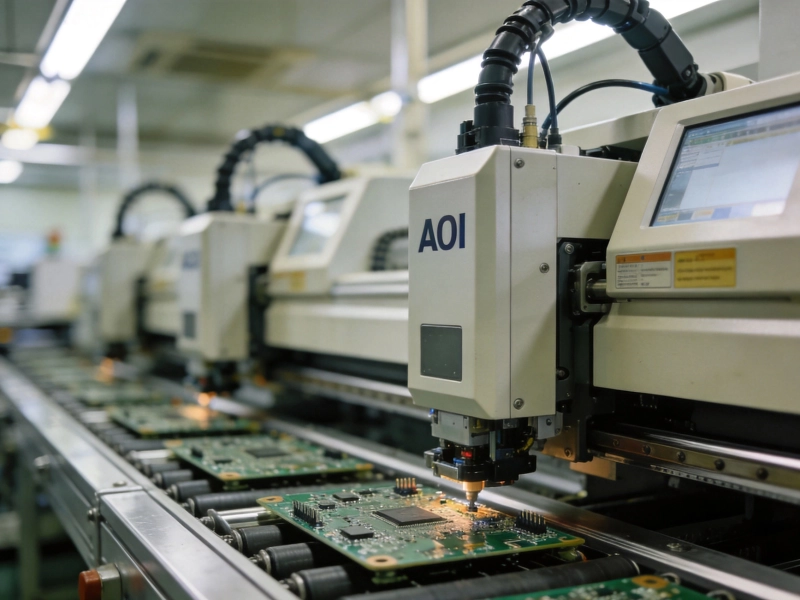
Quality Control 101: AOI, X-Ray, and Electrical Testing in PCB ProductionAugust/10/2026
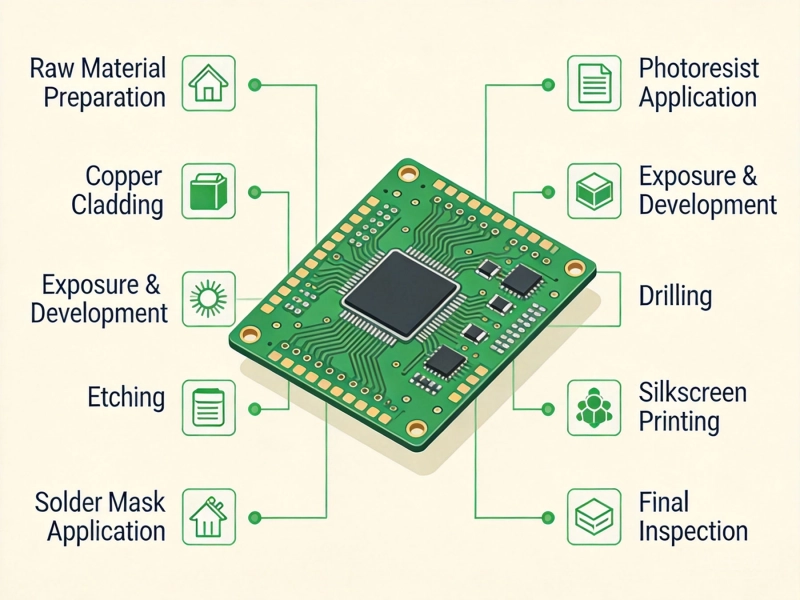
A Step-by-Step Walkthrough of the PCB Fabrication ProcessMay/21/2026
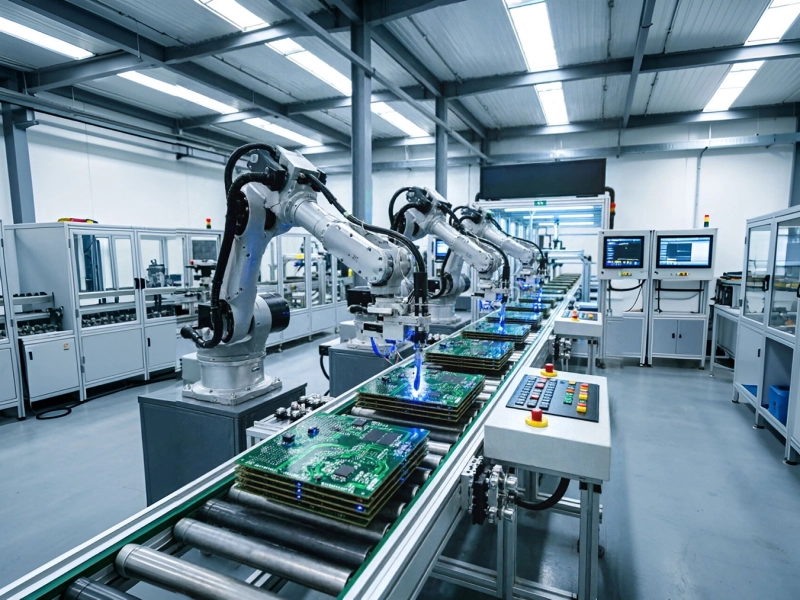
How Automation is Revolutionizing China's PCB SectorJune/03/2026

Etching Explained: How Circuit Patterns are Precisely Formed on Copper Clad LaminatesJuly/30/2026

Understanding Copper Plating: Ensuring Connectivity and Durability in PCBsJuly/09/2026
E-Commerce vs. Traditional Sales: How Buying PCB Services Has ChangedJuly/25/2026