Open Nav

For most of the electronics industry's history, procuring custom PCBs was a relationship-driven process. Engineers and procurement professionals called sales representatives, waited for quotes that arrived days later, negotiated pricing through back-and-forth emails, and relied on personal connections to expedite rush orders or resolve quality disputes. This model worked adequately when information was scarce and alternatives were limited. It no longer reflects how the modern engineering ecosystem operates.
The rise of e-commerce platforms, online marketplaces, and digitally connected manufacturing services has fundamentally reshaped the procurement landscape for Pcb Services. Engineers today can compare quotes from multiple manufacturers in minutes, access real-time production status updates, and place orders without ever speaking to a sales representative. This shift benefits buyers in most respects—faster quotes, greater transparency, and competitive pricing—while creating new challenges that require a different approach to supplier selection and relationship management.
Understanding how the procurement model has evolved, and recognizing the trade-offs between digital platforms and traditional sales relationships, helps buyers make better decisions about where and how to source their Pcb Services.
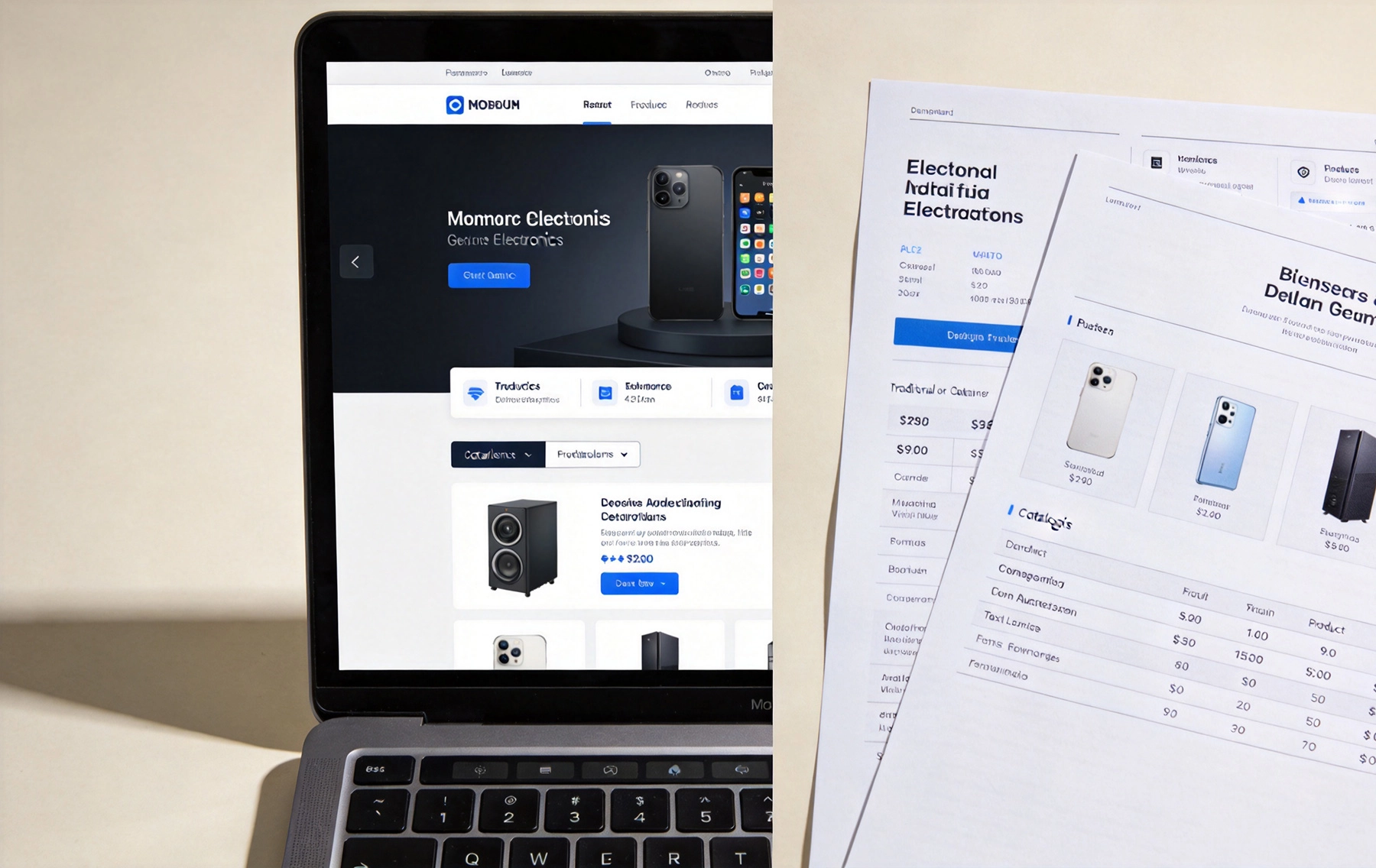
Traditional Pcb procurement was built on personal relationships. Sales engineers cultivated long-term connections with key customers, visiting facilities regularly, attending trade shows, and becoming trusted advisors who understood their clients' technical requirements, business pressures, and design preferences. Quoting was a consultative process where a knowledgeable representative would review design files, offer engineering suggestions, and propose solutions tailored to the customer's specific situation.
This model had genuine strengths. A good sales engineer could catch design issues before they reached production, recommend manufacturing approaches that balanced cost and quality, and serve as an advocate within their organization when customers needed special treatment on pricing, lead times, or rework requests. The relationship provided accountability—both parties had reputational stakes in the success of the partnership.
However, the traditional model also carried significant inefficiencies. Quotes took days or even weeks to arrive, making Rapid Prototyping difficult. Pricing varied widely between customers for identical or similar work, creating opacity that benefited skilled negotiators over those who lacked the time or expertise to bargain effectively. Geographic constraints limited competition—customers often worked with the nearest capable manufacturer simply because distance made communication impractical, even when better options existed elsewhere.
For large enterprises with dedicated procurement departments and established supplier relationships, these limitations were manageable. For smaller companies, startups, and independent engineers, the traditional model created barriers that made quality Pcb Manufacturing inaccessible or unaffordable.
Online PCB platforms emerged in the early 2000s and have matured dramatically over the past two decades. Today's leading PCB e-commerce services allow customers to upload design files, receive instant quotes based on automated manufacturing analysis, place orders with a few clicks, and track production status through web dashboards. This capability has transformed procurement from a multi-day, relationship-dependent process into a self-service transaction that takes minutes.
Instant quoting algorithms analyze Gerber Files against manufacturing rules to assess producibility, calculate material requirements, and estimate production time. The automated system generates pricing instantly, eliminating the wait that defined traditional procurement. Customers can adjust parameters—board quantity, copper weight, surface finish, material type—and see price impacts immediately, enabling true cost-of-options analysis that was previously impossible.
Transparency is perhaps the most significant advantage of digital procurement. Platform pricing is typically visible and consistent across all customers, removing the information asymmetry that benefited skilled negotiators under traditional models. Engineering teams can compare multiple manufacturers' pricing and lead times side-by-side, making informed decisions based on objective data rather than relationship impressions.
Digital platforms also democratize access to Pcb Manufacturing. An independent hardware designer in a small city can access the same Manufacturing Capabilities as a Fortune 500 company's procurement department, at comparable pricing. This access has been instrumental in enabling the global proliferation of hardware startups and maker communities over the past fifteen years.
Online PCB platforms are most effective for standardized, well-defined orders. Quick-turn Prototype boards, production runs with established designs, and projects with clear specifications benefit most from the speed and predictability of digital procurement.
Standard Pcb Fabrication—multi-layer boards with standard materials, surface finishes, and tolerances—represents the sweet spot for e-commerce platforms. The automated quoting engine handles these configurations efficiently, and the manufacturing process is well-understood, making the platform's role primarily transactional. Customers upload files, pay, and receive boards, with minimal engineering interaction required.
Quick-turn services have particularly benefited from e-commerce disruption. When an engineering team needs Prototype boards in 24 or 48 hours, the frictionless ordering process of digital platforms eliminates delays that would be unacceptable in a relationship-driven model. Many platforms now offer same-day production options that were simply impossible under traditional procurement timelines.
Small to medium production runs also favor digital platforms. The automated quoting and order management systems handle these volumes efficiently, and the competitive pricing that results from platform-wide efficiency comparison provides genuine value. Customers benefit from the platform's collective purchasing power without needing to negotiate individually.
Despite the clear advantages of digital procurement for routine orders, traditional sales relationships retain significant value for complex, high-stakes, or strategically important projects. The judgment, expertise, and accountability that experienced sales engineers provide cannot be fully replicated by automated systems.
Highly complex PCB designs—those involving advanced substrates, unusual stackups, tight impedance tolerances, or novel manufacturing requirements—often benefit from direct engineering engagement that traditional sales models provide. A skilled applications engineer who reviews your design files can identify issues that automated Dfm tools miss, recommend manufacturing approaches you had not considered, and flag risks that would otherwise surface only during production.
Supply Chain challenges represent another area where traditional relationships excel. When component shortages strike, a sales representative with established relationships can often secure allocation for priority customers in ways that automated systems cannot match. During the 2020-2022 chip shortage, companies with strong manufacturer relationships consistently secured better supply access than those dependent entirely on transactional platforms.
Custom or non-standard requirements frequently require human negotiation that digital platforms struggle to handle. Atypical surface finishes, special testing protocols, unique packaging requirements, or custom quality documentation cannot always be priced or processed through automated systems. Traditional sales processes handle these exceptions more gracefully, with human judgment determining how to accommodate unusual requests.
The most sophisticated buyers have recognized that the choice between e-commerce platforms and traditional sales is not binary. The optimal procurement strategy typically involves both channels, each deployed for the types of orders where it excels.
Use digital platforms for standard, well-defined orders where speed, transparency, and competitive pricing are the primary concerns. Quick-turn prototypes, established production orders, and commodity Pcb Fabrication are natural fits for e-commerce channels. The automated quoting and order management systems handle these transactions more efficiently than any sales representative could, freeing human attention for situations that genuinely require it.
Maintain traditional relationships for complex projects, strategic supply arrangements, and situations where engineering consultation adds substantial value. When your design pushes manufacturing boundaries, when supply continuity is critical, or when you need a partner who understands your broader business context, the investment in a sales relationship pays dividends that transactional platforms cannot match.
The hybrid approach requires clear internal criteria for distinguishing between order types and routing them appropriately. Engineering teams should understand which channel to use when, and procurement policies should support both pathways without creating unnecessary friction. The goal is to capture the efficiency benefits of digital procurement for routine work while preserving access to human expertise for situations that require it.
Not all e-commerce PCB platforms are created equal. The proliferation of online PCB services means that quality, capability, and reliability vary enormously across providers. Due diligence matters, even for transactional orders where the perceived risk seems low.
Start by reviewing the platform's technical capabilities and limitations. What Minimum Trace Width and spacing can they produce reliably? What are their impedance tolerance capabilities? What substrate materials do they stock? The automated quoting system will indicate whether your design falls within their producibility envelope, but understanding their actual capabilities helps you interpret quote results and avoid surprises.
Quality certifications provide important signals about process discipline. ISO 9001 certification indicates a basic quality management system. IATF 16949 for automotive applications or AS9100 for aerospace signal more rigorous quality requirements. IPC-A-600 and IPC-6012 certifications for PCB fabrication, and Ipc-a-610 for assembly, indicate adherence to industry quality standards for acceptability criteria. Verify that certifications are current and that they apply to the specific processes your order requires.
Customer reviews and industry reputation offer insights that certifications cannot capture. Search for peer experiences with the platform, particularly regarding quality consistency, communication responsiveness, and problem resolution. A platform that consistently delivers acceptable boards with minimal drama may be preferable to one offering lower prices but inconsistent results.
Understand the platform's support model. When something goes wrong—and it will occasionally on any platform—how does support work? Is there a phone number, email address, or chat function? Who handles technical questions versus order status inquiries? Platforms that provide accessible, knowledgeable support transform occasional failures from crises into manageable corrections.
The trajectory of digital procurement points toward continued Automation that will extend beyond simple quoting into more complex engineering and support functions. Machine learning algorithms are increasingly capable of identifying design issues, recommending manufacturing optimizations, and predicting production outcomes with accuracy that rivals human engineers.
Automated Dfm analysis is already standard on most e-commerce platforms, catching common design errors before orders enter production. More sophisticated systems now incorporate AI models trained on production outcomes to predict yield, identify high-risk designs, and recommend modifications that improve manufacturability. As these systems mature, they will absorb an increasing share of the engineering consultation value that currently requires human interaction.
Inventory Management and Supply Chain optimization represent another frontier for Automation. Platforms with visibility into component availability, material stocks, and production capacity can optimize order routing, anticipate shortages, and provide more accurate delivery estimates than systems that handle these functions manually. AI-driven supply chain intelligence will increasingly differentiate premium platforms from basic transactional services.
The human element in PCB procurement will not disappear, but its role will continue to evolve. The routine transactions that currently dominate order volume will migrate fully to digital channels, while human expertise concentrates on complex problem-solving, strategic relationship management, and exception handling. This evolution benefits buyers by lowering transaction costs and improving consistency, while reserving human attention for situations where it genuinely adds disproportionate value.
The shift toward e-commerce in PCB procurement is neither complete nor universal, but its direction is clear. Engineers and procurement professionals who understand both the capabilities and limitations of digital platforms—and who maintain the relationship skills that traditional procurement developed—are best positioned to navigate the evolving landscape. The goal is not to choose between e-commerce and traditional sales, but to deploy each channel where it delivers the most value for your specific requirements.
Quality Control 101: AOI, X-Ray, and Electrical Testing in PCB ProductionAugust/10/2026
Solder Mask and Silkscreen: More Than Just Aesthetics in the PCB ProcessJuly/20/2026
How Automation is Revolutionizing China's PCB SectorJune/03/2026

The Chemistry of PCB Cleaning: Why Ionic Contamination MattersSeptember/04/2026
Is PCB Fabrication in China Still the Most Cost-Effective Option? A 2026 AnalysisJuly/27/2026
A Step-by-Step Walkthrough of the PCB Fabrication ProcessMay/21/2026

Understanding Copper Plating: Ensuring Connectivity and Durability in PCBsJuly/09/2026
Etching Explained: How Circuit Patterns are Precisely Formed on Copper Clad LaminatesJuly/30/2026