Open Nav

Startups building electronic products face intense pressure to minimize costs while maintaining quality. Custom printed circuit boards represent one of the largest line items in Electronics Manufacturing, and many founders instinctively look toward Chinese manufacturers to reduce expenses. The reality of importing PCBs from China involves navigating a complex landscape of supplier selection, quality verification, logistics, and regulatory compliance. Done correctly, Chinese Pcb Manufacturing delivers substantial cost advantages. Done poorly, the same decisions create delays, defective products, and development setbacks that far exceed any savings realized.
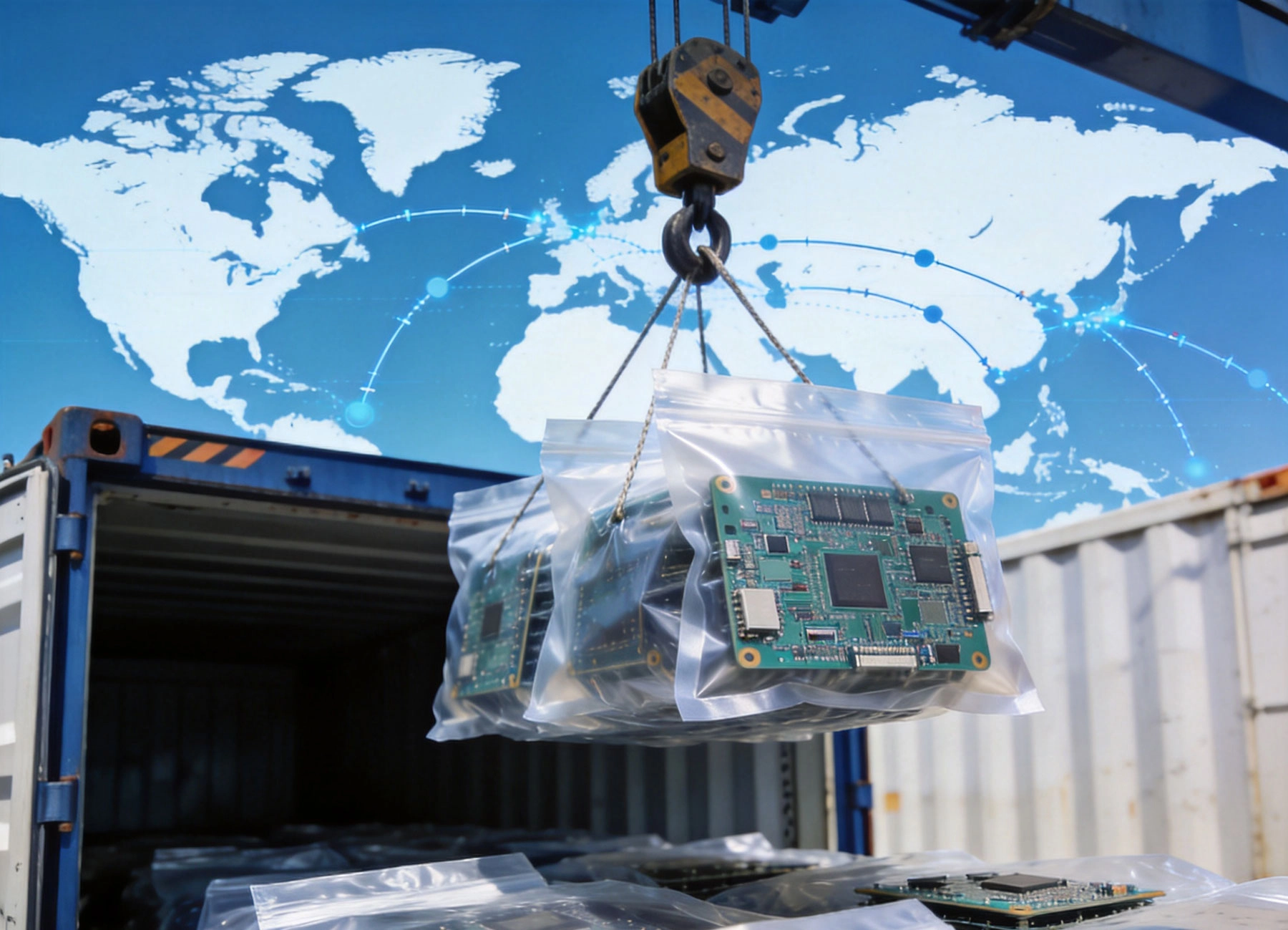
Understanding why China became the world's Pcb Manufacturing hub helps frame your sourcing decisions. The Pearl River Delta region—particularly Shenzhen and surrounding cities—developed vertically integrated ecosystems of PCB Fabrication, component suppliers, assembly houses, and supporting services over several decades. This concentration creates enormous efficiencies that no other region can match economically.
A Pcb Manufacturer in Shenzhen operates within hours of thousands of component distributors, specialty chemical suppliers, drilling services, and testing facilities. This ecosystem means shorter lead times despite the distance to Western markets. When you need expedited production or encounter unusual technical requirements, local availability of supporting services matters significantly.
Labor costs remain lower in China, but Automation increasingly drives manufacturing economics. Chinese facilities often run equipment comparable to Western factories at substantially lower operating costs. The combination of Automation and favorable labor rates creates genuine cost advantages that persist even accounting for shipping and logistics.
Chinese manufacturers span from small shops handling Prototype quantities to massive facilities producing millions of boards monthly. This range means you can find appropriate manufacturing partners regardless of your volume stage. Prototype runs of five boards and production runs of fifty thousand can often flow through the same supplier relationship as your product matures.
Supplier selection determines your experience more than any other factor. The difference between working with a responsive, technically capable manufacturer versus a disengaged supplier shapes every aspect of your program.
Multiple directories aggregate Chinese PCB manufacturers. Platforms like PCBShopper, MakerVerse, and Globalsources provide initial access to suppliers with varying levels of vetting. Chinese B2B platforms like Alibaba and Made-in-China host thousands of PCB suppliers ranging from legitimate manufacturers to trading companies merely intermediating orders.
Direct searching identifies manufacturers who don't advertise on Western platforms. Companies like JCX, King Brother, and LHD Circuit maintain websites targeting international customers directly. These direct relationships sometimes offer better pricing and communication than intermediary arrangements.
Request capability sheets specifying what manufacturing parameters each supplier handles. Important specifications include Minimum Trace Width and spacing, drill sizes, layer count capabilities, base materials available, surface finishes offered, and Impedance Control tolerances. Verify these capabilities match your design requirements before proceeding further.
Quality certifications indicate manufacturing maturity. ISO 9001 certification demonstrates basic quality management system implementation. Iatf 16949 targets automotive applications while AS9100 addresses aerospace. UL certification indicates safety testing for consumer and industrial products. None guarantees quality, but their absence warrants additional scrutiny.
Always order samples before committing to production orders. Request three to five boards from your shortlisted manufacturers using identical Gerber Files. Compare these samples side-by-side for quality of routing, surface finish consistency, Solder Mask registration, and documentation accompanying the shipment.
Sample evaluation reveals manufacturing attention to detail that capability sheets cannot capture. A manufacturer who produces clean, consistent samples typically maintains that quality in production. Sloppy samples suggest processes requiring closer supervision or additional quality controls.
Clear communication of requirements prevents misunderstandings that generate defective boards or unnecessary costs.
Your Gerber Files communicate geometry, but manufacturing success requires additional specification. Material selection—FR-4, Rogers, Polyimide, flex materials—affects both cost and performance. Indicate required laminate types if your design has impedance or thermal requirements beyond standard FR-4.
Surface finish options include Hasl (lead-based and lead-free), Enig (electroless nickel immersion gold), Osp (organic Solderability preservative), and Immersion Silver. Each offers trade-offs in shelf life, Solderability, flatness, and cost. Discuss these options with your manufacturer to select appropriate finishes for your assembly process and product requirements.
Specify acceptance criteria for your boards. Ipc Standards provide industry-accepted quality benchmarks—IPC-A-600 for bare board acceptability defines three classes of acceptance criteria. Class 3 for demanding applications requires tighter tolerances and fewer allowable defects than Class 2 for standard commercial products.
Include explicit requirements for Electrical Testing. Most manufacturers test completed boards for opens and shorts using Flying Probe or bed-of-nails fixtures. Specify whether you require 100% testing or sampling protocols, and clarify how detected defects will be handled.
Getting boards from Chinese factories to your door requires coordinating multiple logistics steps, each with associated costs and potential complications.
Ocean freight remains the dominant mode for PCB imports due to cost efficiency. Transit times from Chinese ports to US West Coast typically run 14-21 days, while East Coast arrival requires 28-35 days. Full container loads offer lowest per-unit costs but require sufficient volume to fill containers efficiently.
Air freight costs substantially more but delivers within days rather than weeks. This option suits urgent prototype needs or production emergencies where delay costs exceed shipping premiums. Express carriers like FedEx and DHL offer convenient door-to-door service with built-in customs clearance.
Importing PCBs into the US and EU triggers customs procedures and potentially tariff liability. The US imposes tariffs on Chinese goods under Section 301 lists, with PCB-related items frequently subject to 25% additional duties on top of standard import duties. Check current tariff schedules before calculating landed costs.
European Union tariffs on PCBs from China vary by product classification but generally run between 3-4% for most standard circuit boards. VAT applies at your national rate upon import. Consult with customs brokers or import attorneys to establish correct tariff classifications and duty rates for your specific products.
The USMCA agreement offers potential relief if your PCBs contain sufficient North American content. However, most Chinese-manufactured PCBs won't qualify due to origin requirements. The De Minimis threshold in the US allows duty-free imports under $800 per day for express shipments, providing relief for small prototype quantities.
Customs brokers manage import compliance, tariff classification, and duty payment on your behalf. For ongoing import programs, establishing relationships with experienced brokers delivers value beyond mere paperwork handling. They identify tariff optimization opportunities and flag regulatory changes affecting your imports.
Many logistics providers offer bundled services including freight forwarding and customs brokerage. These one-stop solutions simplify vendor management at some cost premium. As volumes increase, separating these functions sometimes yields cost savings and greater control.
Ensuring PCB quality requires proactive measures throughout your engagement rather than hoping for good outcomes.
Develop incoming inspection procedures that verify critical characteristics without exhaustive testing. Visual inspection catches obvious defects—scratches, delamination, poor Solder Mask coverage. Dimensional verification using calipers or microscopes confirms critical measurements. Flying Probe testing verifies electrical connectivity for samples from each shipment.
Create defect classification schemes distinguishing critical defects requiring rejection from minor defects acceptable under your quality standards. Overly strict incoming inspection creates waste; insufficient inspection allows defective boards into assembly where rework costs multiply.
For critical products, consider traveling to China to audit manufacturing facilities directly. Audits evaluate process controls, equipment maintenance, employee training, and quality documentation practices. The investment in travel frequently pays for itself through improved quality outcomes and stronger supplier relationships.
Virtual audits using video conferencing and live factory video provide partial visibility without travel expenses. Request video tours of relevant production areas and observe process execution in real-time. Document findings and follow up on identified concerns.
Distance and time zones create real communication challenges. Successful programs address these proactively rather than accepting communication friction as inevitable.
Identify primary contacts at your manufacturer and agree on communication channels. WeChat or WeChat Work provides convenient messaging with built-in translation, though data privacy concerns exist for sensitive communications. Email offers better documentation for formal communications while instant messaging suits rapid questions.
Overlap working hours by scheduling meetings early or late in your day to catch Chinese business hours. Asynchronous communication—clear written requests with detailed documentation—reduces dependency on real-time availability and improves response quality.
Chinese manufacturers often optimistically estimate delivery dates. Build buffer time into your project schedules accounting for potential delays. Common causes include material shortages, equipment downtime, quality rejections requiring rework, and holiday periods when Chinese factories operate with reduced staffing.
Express concerns early when timelines appear at risk. Manufacturers sometimes delay reporting problems hoping situations resolve, leading to surprises when delays become unavoidable. Regular check-ins and proactive inquiry about potential issues surfaces problems earlier when more options exist for mitigation.
Design files represent valuable intellectual property requiring protection throughout your manufacturer relationship.
Legitimate manufacturers recognize IP protection as essential to their business reputation and continued access to demanding customers. However, risks exist—employees might misappropriate designs, and some bad actors view IP theft as a business model. Assess risks based on your design's competitive sensitivity and unique characteristics.
Designs representing significant competitive advantage warrant stronger protections than incremental improvements to commodity products. A novel product concept might justify extensive protection measures while minor variants of existing approaches face lower theft risk.
Use Non-Disclosure Agreements with meaningful enforcement provisions. Chinese courts increasingly enforce NDAs, particularly for foreign companies with legitimate claims. Consult with attorneys experienced in Chinese IP law to draft appropriate agreements.
Consider technical protection measures. Panelizing designs to obscure overall product architecture reduces intelligence value of individual files. Some companies provide manufacturing files with embedded watermarks that identify specific customers if leaked designs appear elsewhere.
Register intellectual property in China proactively. Chinese trademark and patent registration provides stronger enforcement rights than relying on foreign registrations alone. The process requires local counsel but establishes defensible positions in Chinese jurisdiction.
International transactions introduce payment complexity that domestic purchases don't create.
Common payment arrangements include T/T (telegraphic transfer) in advance, T/T with partial payment upfront and balance before shipping, and letter of credit for larger transactions. New relationships typically require substantial upfront payment or full prepayment. Established relationships may qualify for open account terms with net-30 or net-60 payment schedules.
Beware of payment terms that seem unusually favorable—scammers sometimes offer attractive terms to establish trust before exploiting payment flexibility for fraudulent purposes. Verify manufacturer credentials independently rather than accepting claims at face value.
CNY/USD and CNY/EUR exchange rates fluctuate continuously. Large orders spanning weeks of production might see meaningful currency movement affecting actual costs. Consider hedging strategies for significant purchases if your financial position supports the administrative complexity.
Many manufacturers quote prices in USD or EUR rather than CNY, effectively transferring currency risk to buyers. Others adjust prices based on currency movements. Understand how exchange rate changes affect your pricing and build contingency budgets for currency volatility.
Despite China's cost advantages, domestic manufacturing warrants consideration in specific circumstances.
Complex boards with unusual requirements—high-frequency materials, embedded components, specialty finishes—sometimes suit domestic manufacturers better. Lower shipping volumes and proximity advantages may outweigh cost premiums for technically demanding applications where close collaboration with manufacturers provides value.
Products requiring frequent design changes or rapid iteration benefit from domestic proximity. The ability to visit manufacturers, review prototypes personally, and iterate quickly matters more than unit costs when development velocity drives competitive positioning.
Importing custom PCBs from China offers genuine cost advantages for startups building electronic products. Realizing these benefits while avoiding common pitfalls requires thoughtful supplier selection, clear specification, proactive quality management, and systematic logistics coordination.
Start with thorough supplier evaluation—request samples, verify capabilities, and establish relationships before placing production orders. Invest in communication infrastructure that bridges time zones and cultural differences. Build quality verification processes that catch issues before they disrupt assembly.
The effort pays dividends beyond cost savings. Strong manufacturing partnerships provide technical consultation, capacity flexibility, and continuity that support Product Development over multiple iterations and into production scale-up. Treat manufacturer relationships as strategic partnerships rather than transactional vendor arrangements.
Your product success ultimately depends on reliable, quality PCBs delivered consistently. The sourcing strategy supporting that outcome matters less than the outcome itself. Chinese Manufacturing delivers excellent results when approached with appropriate rigor. Start your evaluation, learn the process, and build relationships that serve your product roadmap for years to come.
Essential Tips for Your First Custom PCB OrderJune/02/2026
The Role of DFM (Design for Manufacturability) in Custom Board SuccessSeptember/02/2026
How to Choose the Right PCB Fabrication Manufacturer for Your StartupOctober/14/2026

Rigid-Flex and Flexible PCBs: Unlocking New Possibilities with Custom DesignsJuly/17/2026

Common Pitfalls in Custom PCB Fabrication and How to Avoid ThemAugust/07/2026

Environmental Standards in China: How PCB Factories are Going GreenSeptember/11/2026
Exploring Special Materials in Custom PCB FabricationMay/21/2026
Understanding Lead Times: What to Expect When Ordering from Chinese PCB MillsAugust/06/2026