Open Nav

Every year, thousands of engineering teams and procurement managers choose Chinese PCB manufacturers because the quoted prices are dramatically lower than what they would pay for equivalent quality from domestic or European suppliers. The numbers are compelling. A 4-layer board that costs $150 per square meter in North America might be quoted at $30 from a Chinese fab. The savings are real, and they are significant. But many buyers discover, often only after the first production run, that the quoted price is only a starting point. Tooling fees, minimum order surcharges, panel upsizing requirements, inspection upgrades, freight and logistics costs, import duties, and a dozen other line items quietly inflate the final invoice until the actual landed cost is far closer to Western pricing than the initial quote suggested. These hidden costs are not always the result of deceptive pricing practices. Many of them are legitimate charges for legitimate services that buyers simply did not know to ask about during the quotation process. Understanding what those costs are, why they exist, and how to account for them before signing a purchase order is essential for anyone who wants to buy PCBs from China without unpleasant surprises.
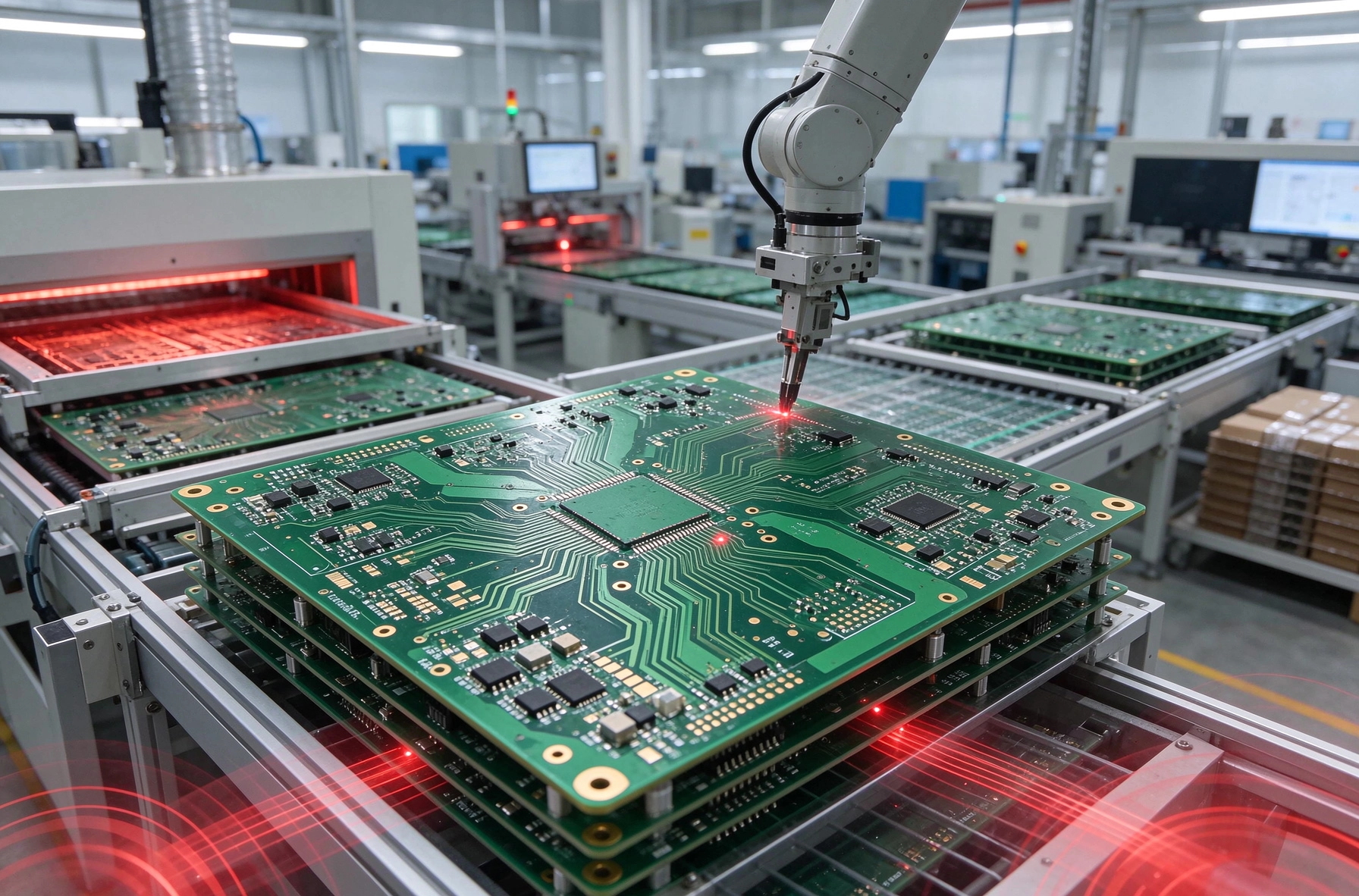
The quoted unit price from a Chinese Pcb Manufacturer is an incomplete picture of what the boards will actually cost by the time they arrive at your warehouse ready for assembly. The landed cost includes the quoted price plus every additional expense that occurs between the manufacturer and your door: tooling and setup charges, panelization fees, testing surcharges, Express Shipping premiums, customs duties, brokerage fees, inland freight, and any quality-related charges that were added after the initial quote. Experienced buyers use a landed cost calculator to estimate the true cost before comparing Chinese pricing to domestic alternatives. First-time buyers often rely on the unit price alone, which is why they are frequently surprised when the invoice arrives.
The gap between quoted price and landed cost varies widely depending on the complexity of the board, the order quantity, and the specific terms negotiated with the supplier. For simple, high-volume boards, the gap may be relatively small because the unit price benefits from the economies of scale that make high-volume Chinese Manufacturing so competitive. For complex, low-volume boards, the gap can be enormous because many of the hidden costs are fixed charges that get amortized across very few units, dramatically inflating the per-board cost. A board quoted at $25 each might actually cost $85 each when all hidden costs are included, which may not be competitive with a domestic quick-turn supplier at all.
Understanding the true cost structure also matters for setting internal expectations and making correct make-versus-buy decisions. If the engineering team budgeted for boards at $25 each based on the initial quote, discovering the actual cost is $85 each creates a budget overrun that could have been avoided with better upfront analysis. The time to understand the full cost structure is before the purchase order is placed, not after the boards have been manufactured and shipped.
Every Pcb Production run requires setup work that the manufacturer must perform before the first board can be produced. This setup includes loading the customer artwork into their CAM system, performing design rule checks, configuring the etching and plating lines for the specific board parameters, setting up the drilling program for the drill file, and calibrating the lamination and pressing cycles. These setup activities consume machine time, engineering labor, and consumables regardless of whether the order is for one panel or one thousand panels.
Most Chinese manufacturers charge a tooling fee or engineering fee to recover the cost of this setup work. The fee is typically quoted as a fixed charge per production order, not per board, which means it gets amortized differently depending on the order quantity. A $200 tooling fee on an order of 100 boards adds $2 per board to the cost. The same $200 fee on an order of 10 boards adds $20 per board, fundamentally changing the economics of small orders. Buyers who compare quotes only on a per-board basis without accounting for tooling fees often make incorrect supplier selections for low-volume orders.
Some manufacturers waive tooling fees for orders above a certain quantity threshold, using the waived fee as an incentive to push buyers toward higher-volume orders that are more profitable for the fab. Others charge tooling fees on every order regardless of quantity. Understanding the tooling policy is important for comparing quotes accurately, because a supplier who charges $100 in tooling on a 50-board order may actually be more expensive than a supplier who charges $200 tooling on a 200-board order even if the per-board quoted price is lower.
Chinese PCB manufacturers operate highly optimized production lines that are configured for specific panel sizes and batch sizes. Running a production order that is smaller than the minimum economic batch size forces the manufacturer to absorb inefficiencies that reduce their profitability on that order. To compensate, many manufacturers impose minimum order quantity surcharges, also called small order fees or low-volume surcharges, on orders below a specified threshold.
The MOQ threshold varies by manufacturer and by board complexity. A fab that quotes aggressively on high-volume orders may have an MOQ of 50 square meters or 500 boards for standard boards, but 10 square meters for complex Multilayer Boards. An order below the MOQ threshold triggers a surcharge that can range from 20% to 100% of the quoted unit price. A board quoted at $30 per panel might cost $45 per panel if the order falls below the MOQ threshold, without any change in the actual manufacturing process or material content.
The MOQ policy also interacts with panel utilization in ways that buyers often do not anticipate. If the manufacturer produces boards on a standard panel size and the order quantity does not fill the panel completely, the buyer may be charged for the entire panel even if only a portion of it contains their boards. This panel utilization surcharge can add significant cost to small orders, particularly for non-standard board sizes that do not tile efficiently on the manufacturer's standard panel.
Chinese manufacturers typically produce PCBs in panels containing multiple individual boards, then depanelize them before shipment. The panelization layout, including the arrangement of boards on the panel, the width of the routing or V-score separation between boards, and the placement of tooling holes and fiducial marks, must be configured for each unique board design. This panelization work is separate from and in addition to the basic tooling fee.
If the customer provides a panelized design file, the manufacturer reviews it for manufacturing compatibility and may charge an engineering fee to validate the panelization. If the customer requests standard panelization using the manufacturer's default panel size and array configuration, the manufacturer may offer this as a standard service, but the resulting panel utilization may not be optimal for the customer's assembly process. A board that fits 4-up on the manufacturer's standard panel might fit 6-up on a custom panel, reducing the per-board panel cost by 33% but requiring a custom panelization setup fee that may or may not be worth the savings.
V-score panelization versus mouse-bite or routed panelization has cost implications that vary by manufacturer. Some fabs prefer V-score because it is faster and less expensive to produce. Others prefer routed panels because they reduce the risk of stress-related cracking in sensitive components during depanelization. The choice of depanelization method may be dictated by the board design, but where it is flexible, the cost difference should be understood before specifying a preference.
Basic Electrical Testing, where each board is checked for opens and shorts using a Flying Probe or bed-of-nails fixture, is often included in the standard quoted price from Chinese manufacturers. However, more comprehensive testing and inspection services are typically charged as add-ons that must be explicitly requested and are not included in the base price.
Automated Optical Inspection, which uses cameras to inspect each board for defects like scratches, pits, missing Solder Mask, and dimensional errors, is frequently quoted as an optional upgrade. The Aoi upgrade fee is typically charged per panel and can add $3 to $10 per panel depending on the board complexity and the inspection criteria specified. For high-reliability applications like medical or automotive, Aoi Inspection may be required by the end-customer or by the applicable quality standard, in which case the buyer must request it even if the base quote does not include it.
Impedance testing, which measures the actual impedance of controlled-impedance traces to verify they meet the specified tolerance, is another common add-on that buyers often overlook until they receive the boards and discover the impedance was not tested. The impedance test requires time-domain reflectometry equipment, specific test coupons on the panel, and engineering time to interpret the results. Chinese manufacturers quote impedance testing as a surcharge that varies with the number of impedance-controlled nets on the board. For boards with multiple impedance-controlled signals, the cumulative test cost can be significant.
X-ray Inspection for buried or blind via quality, microsection analysis for plating thickness verification, and ITAR or AS9100 quality documentation packages are all additional-cost items that may be required for certain applications but are not included in standard quotes. Buyers who need these services must specify them explicitly during the RFQ process and verify that the quoted price includes the level of testing and documentation required by their quality plan.
The cost of getting finished boards from a Chinese factory to a domestic warehouse is a significant component of the landed cost that many buyers underestimate or ignore entirely during the quotation comparison process. Shipping costs vary dramatically depending on the shipping method, the weight and volume of the shipment, and the urgency of delivery.
Sea freight is the least expensive option and is suitable for large, non-urgent orders where the lead time of four to six weeks from China to the destination port is acceptable. Sea freight rates are quoted per cubic meter or per container and have historically ranged from a few hundred dollars for LCL shipments to several thousand dollars for full container loads. However, ocean freight rates are highly volatile and have experienced dramatic swings in recent years due to port congestion, container shortages, and shipping lane disruptions. A buyer who quotes ocean freight at $500 for a shipment may face rates of $2,000 or more if they book the shipment during a period of tight capacity.
Air freight is the fastest option with transit times of three to seven days, but costs 5 to 10 times more than sea freight per kilogram. Air freight becomes cost-justified for urgent re-orders when line down situations require boards within days, or for lightweight high-value shipments where the absolute freight cost is manageable. The air freight option should be evaluated against the cost of having production halted while waiting for sea freight, which for high-volume production lines can be measured in thousands of dollars per day.
Express courier services like DHL, FedEx, and UPS offer door-to-door delivery with built-in customs clearance for small shipments. These services are convenient and reliable for prototypes and low-volume orders but become prohibitively expensive for larger shipments due to dimensional weight pricing that penalizes bulky packages. For Prototype quantities of a few boards, express courier may be the most cost-effective option when the value of fast delivery is included in the calculation.
Imported PCBs are subject to customs duties and import taxes in most countries, which add directly to the landed cost. The duty rate depends on the tariff classification of the product, the country of origin, and any applicable trade agreements or preference programs that may reduce the standard rate.
PCBs are classified under HTS code 8534.00 in the United States, with a standard duty rate of approximately 3.9% for most finished boards. However, the duty rate can be higher for boards with specific features like embedded components, or lower for boards from countries with which the US has free trade agreements. Chinese-origin boards do not currently benefit from most US free trade agreement preference programs due to the tariffs imposed under Section 301, which adds an additional 25% ad valorem duty on top of the standard rate for many electronics products of Chinese origin.
Value-added tax, or VAT, is charged by China on exports and is typically included in the quoted price from the manufacturer. However, buyers in some countries can claim a refund of Chinese VAT on exported goods, which effectively reduces the cost of the boards by the VAT amount. Understanding the VAT recovery process and factoring VAT refunds into the landed cost calculation ensures that the true cost comparison is accurate.
Brokerage and customs clearance fees are charged by the freight forwarder or customs broker who handles the import documentation. These fees cover the cost of preparing and submitting customs entries, paying duties on the importer's behalf, and coordinating the release of the shipment from customs. Brokerage fees typically range from $50 to $200 per shipment depending on the complexity of the documentation and the broker's fee schedule. For shipments that require specialized documentation like CTPAT compliance or AES filing, the brokerage fees may be higher.
Most Chinese PCB manufacturers quote prices in US dollars, but their costs are incurred in Chinese yuan. When the exchange rate between USD and CNY shifts significantly, the manufacturer's effective dollar pricing changes even if the underlying yuan cost has not changed. During periods of significant currency volatility, buyers may find that the price they negotiated six months ago no longer reflects the manufacturer's actual cost structure, and price adjustments may be requested on renewal orders.
Payment terms also carry risk that affects the true cost of the purchase. Many Chinese manufacturers require payment in advance or payment via letter of credit, which means the buyer bears the currency risk from the time payment is made until the boards are received and inspected. If the exchange rate moves against the buyer during that period, the effective cost of the boards increases. buyers who pay in advance for a 30-day production run and 30-day shipping period may be exposed to 60 days of currency risk on a significant portion of the order value.
Payment methods also carry fees that add to the effective cost. Wire transfer fees from the buyer's bank to the manufacturer's Chinese bank can range from $25 to $50 per transfer and may be charged by both the originating and receiving banks. PayPal and other third-party payment services charge a percentage fee on each transaction that adds to the cost. Using a bank wire transfer is typically the lowest-fee option for large orders, but requires more administrative setup and longer processing time than card or PayPal payments.
No manufacturing process is perfect, and every production run will have some boards that do not meet the quality requirements. The cost of identifying and dispositioning non-conforming boards is a legitimate hidden cost that should be factored into the landed cost calculation, particularly for buyers who are new to working with a particular supplier and do not yet know their defect rate.
Incoming inspection at the buyer's facility reveals the percentage of boards that are defective or out of specification. For a buyer with a good relationship with their supplier and a low defect rate, the cost of dealing with defective boards is limited to the time and materials needed to sort them and request replacement or credit. For a buyer who receives a high-defect shipment, the cost can include production line downtime, expedited replacement orders, and the engineering time to investigate the failure modes and work with the supplier on corrective action.
Rework costs, when a defective board can be repaired and returned to service, are typically the responsibility of the buyer unless the defect is clearly attributable to the manufacturer's error. Reworking a board may involve re-soldering, touch-up, or replacement of defective components, all of which carry labor and material costs. If the defect rate is high enough, the rework cost per good board can be significant.
Respins, when an entire production run must be repeated because the first run had systematic defects that affected too many boards to rework individually, are the most costly hidden cost scenario. A respin requires paying for a second production run, second shipping, and second customs clearance, potentially doubling the effective cost of the boards. Preventing respins requires clear specification of requirements, careful design review before production, and early engagement with the manufacturer to identify potential manufacturing risks before tooling is committed.
Working with manufacturers in a different time zone and language creates communication overhead that has a real cost in engineering time and project delay. Every question about the design, every clarification of a specification, and every problem resolution requires back-and-forth communication that takes longer when it crosses time zones and language barriers.
Engineering review comments from the manufacturer, which identify design features that may be difficult to manufacture or that do not meet the manufacturer's Design Rules, require engineering time to review, understand, and respond to. If the engineering team is not available to respond quickly due to the time zone difference, the review cycle extends and delays the production start date. A two-day review cycle in a domestic supplier relationship might become a five-day cycle with a Chinese manufacturer, adding three days to the project timeline that may or may not be acceptable.
Specification changes after production has started are particularly costly because the manufacturer must stop the production run, adjust the tooling, and restart. Change order fees from Chinese manufacturers typically range from $50 to $200 per change, plus the cost of any scrap generated by the partial run before the change was implemented. Buyers who submit unclear or incomplete specifications and then try to correct them after production has begun face change order fees that can significantly inflate the final invoice.
The true value of Sourcing Pcbs From China becomes clearer when total cost of ownership is evaluated over multiple production runs rather than a single order. The fixed costs of tooling, setup, panelization, and logistics are amortized more favorably across higher volumes, which means that the per-board landed cost typically decreases with each successive order from the same supplier as the buyer learns the process and the supplier learns the customer's requirements.
Building a long-term relationship with a Chinese Pcb Manufacturer reduces many of the hidden costs over time. A supplier who has produced a specific board design multiple times becomes more efficient at each iteration, reducing the engineering review time, optimizing the panelization, and anticipating common issues before they cause defects or delays. The tooling fee that seemed significant on the first order becomes irrelevant after it has been amortized across twenty subsequent orders of the same board.
However, the long-term cost reduction only materializes if the initial orders establish a good working relationship and clear communication patterns. Orders that are placed without adequate engineering review, without clear specification of quality requirements, or without building personal relationships with the supplier's engineering and quality contacts tend to have persistent hidden costs across all orders because the underlying communication problems never get resolved.
The PCB industry in China offers genuine cost advantages for buyers who understand how the pricing works and plan accordingly. The quoted unit price is a real number that reflects the underlying manufacturing cost advantage of Chinese production facilities. But the quoted price is not the complete picture. Tooling fees, MOQ surcharges, testing upgrades, shipping, duties, and communication overhead combine to create a landed cost that may be closer to Western pricing than the initial quote suggests, particularly for low-volume or complex boards.
The solution is not to avoid Chinese manufacturers, which remain highly competitive for many applications, but to engage with them with eyes open. Ask about every fee category during the RFQ process. Request a detailed cost breakdown that separates the base unit price from the fixed charges and the optional add-ons. Calculate the landed cost using realistic shipping rates, duty rates, and exchange rates before making a supplier selection decision. And build the relationship gradually, starting with a Prototype order that exposes the hidden costs on a small scale before committing to high-volume production where those costs multiply.
Contact us to discuss your requirements and explore how our Pcb Production services provide transparent pricing that accounts for all cost factors from the initial quote through final delivery.
8-Layer vs. 16-Layer: Deciding on the Right Stack-up for Your Multilayer BoardJune/27/2026

PCB Fabrication China for the Automotive Industry: Trends in 2026November/02/2026
How to Specify Tolerances and Stack-ups for High-Precision Custom PCBsJuly/28/2026

The Role of PCB Production China in the IoT RevolutionNovember/25/2026

The Rise of Smart Factories: How Automation is Revolutionizing China's PCB SectorJune/16/2026
Thermal Management Strategies for Dense Multilayer PCB DesignsJuly/31/2026
What to Expect When Sourcing PCB Manufacturing Services from AsiaOctober/19/2026
Etching Explained: How Circuit Patterns are Precisely Formed on Copper Clad LaminatesJuly/30/2026