Open Nav

China has long been the global leader in printed circuit board manufacturing, and 2026 is seeing this dominance extend further into the automotive sector as the global transition to electric vehicles accelerates. Automotive PCBs have vastly different requirements than consumer or industrial electronics, needing to withstand extreme temperatures, vibration, and humidity while delivering consistent performance over decades of service. Chinese PCB manufacturers are investing heavily in capacity, technology, and quality systems to meet these demanding requirements, positioning themselves as critical suppliers to both domestic and global automotive brands.
The automotive industry's rapid shift toward electrification, advanced driver assistance systems, and connected car technology is driving exponential growth in demand for high-performance PCBs. Traditional internal combustion engine vehicles contain an average of $300 worth of PCBs, while modern electric vehicles can contain $1,500 or more in PCB content across battery management systems, powertrain controllers, ADAS sensors, and infotainment systems. This demand surge is reshaping the Chinese PCB Fabrication landscape, with 2026 bringing several key trends that are defining how automotive PCBs are designed, manufactured, and supplied.
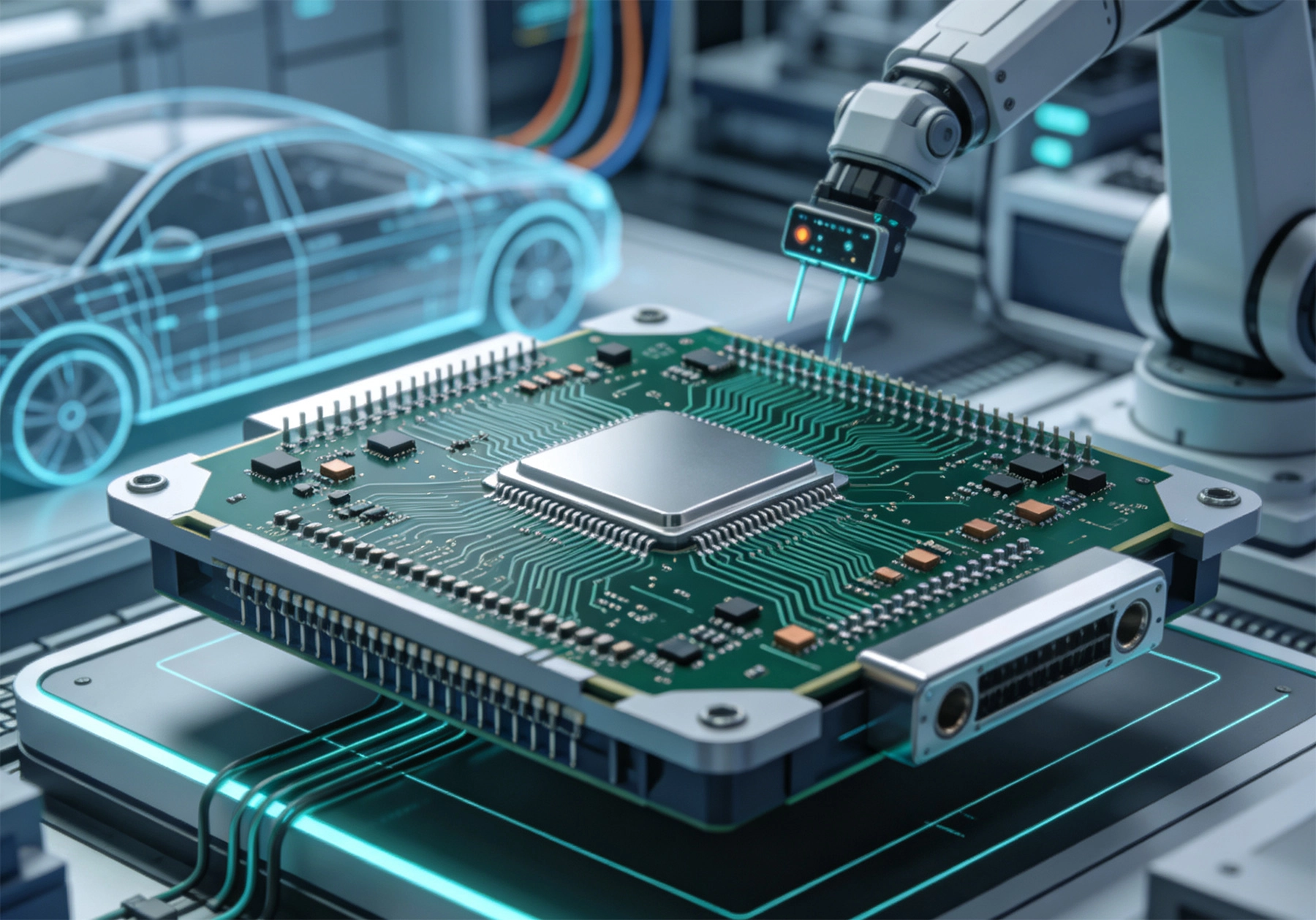
The single biggest trend shaping Chinese automotive PCB Fabrication in 2026 is the explosive growth in demand for specialized PCB types optimized for electric vehicle applications. EVs require multiple categories of PCBs that are not used in traditional vehicles, and Chinese manufacturers are scaling up production capacity for these types faster than any other region in the world.
Heavy copper PCBs with 4oz to 6oz copper weight are in particularly high demand for battery management systems and powertrain applications that carry high currents. Chinese fabs that previously focused on standard consumer PCBs are upgrading their equipment and processes to support heavy copper fabrication, with many now offering 2oz to 6oz copper as standard automotive offerings. This capacity expansion has helped reduce global lead times for heavy copper automotive PCBs from 12 weeks to 4 weeks or less for standard designs.
High-density Interconnect PCBs are also seeing massive demand growth for ADAS and infotainment systems. Modern autonomous driving systems require HDI boards with multiple layers, Microvias, and fine line geometries to support the high-speed data transmission between sensors, processors, and actuation systems. Chinese HDI specialists are expanding automotive-qualified production lines to meet this demand, with Any-layer Hdi now available from multiple qualified manufacturers for automotive applications.
Metal core PCBs and ceramic substrate PCBs are growing in use for Power Electronics and LED lighting applications, where Thermal Management is critical. Chinese manufacturers have developed specialized lamination and plating processes for these materials that balance performance with cost, making them accessible for mass-market EV models that previously would have been too expensive to use these premium substrate types.
In 2026, Iatf 16949 quality management system certification is no longer a differentiator for Chinese automotive PCB manufacturers—it is a baseline requirement for doing business with any major automotive brand, domestic or international. This represents a significant shift from just five years ago, when many smaller Chinese fabs could serve low-tier automotive suppliers without full certification.
Iatf 16949 certification requires manufacturers to implement rigorous Quality Control processes, full traceability of all materials and processes, and continuous improvement systems focused on defect reduction. Chinese manufacturers are investing heavily in these systems, with many reporting that certification costs and ongoing compliance efforts represent their largest operational expense increase in 2026. The payoff is access to the global automotive Supply Chain, where certified manufacturers can command premium pricing and long-term supply contracts.
Traceability requirements are becoming particularly stringent, with automotive customers requiring full visibility into every step of the fabrication process for each individual board. Manufacturers must track material lot numbers, production equipment settings, operator records, and test results for every PCB produced, with records stored for a minimum of 15 years to support potential recall investigations. Chinese manufacturers are implementing digital tracking systems and unique board identification technologies to meet these requirements efficiently at scale.
Zero-defect quality targets are becoming standard for high-risk automotive applications like BMS and ADAS systems. Manufacturers are implementing 100% inspection using automated optical inspection, X-ray Inspection, and Electrical Testing for these applications, with defect rates measured in parts per million rather than percentages. This level of Quality Control would have been economically unfeasible for most Chinese fabs just a few years ago, but process improvements and Automation have made it achievable while remaining cost-competitive.
2026 is seeing widespread adoption of advanced Pcb Materials across Chinese automotive fabrication lines, as manufacturers adapt to the more demanding operating conditions required by modern vehicles. These materials improve reliability, extend service life, and enable higher performance than standard FR4 substrates, while still remaining cost-effective for mass production.
High-Tg FR4 materials with glass transition temperatures of 170°C or higher are now standard for most automotive PCB applications, replacing the 135°C Tg materials that were common just a few years ago. High-Tg materials better withstand the thermal cycling experienced in automotive environments, reducing the risk of delamination, trace cracking, and via failure over the 10 to 15 year service life expected for automotive electronics. Chinese material suppliers have expanded domestic production of high-Tg laminates significantly, reducing reliance on imported materials and lowering costs for manufacturers.
Low-loss dielectric materials are being adopted for high-speed ADAS and V2X communication systems, where Signal Integrity at gigahertz frequencies is critical. These materials have lower dissipation factors and more stable dielectric constants across temperature ranges, ensuring reliable high-speed data transmission even in harsh automotive environments. Chinese manufacturers have developed expertise in processing these materials, which require tighter process controls than standard FR4, making them available at lower cost than comparable products from manufacturers in other regions.
Flame-retardant and halogen-free materials are becoming mandatory for most automotive applications, driven by both regulatory requirements and customer demand for more sustainable products. Chinese PCB manufacturers are transitioning their entire automotive product lines to halogen-free materials, with many now offering these materials as standard without the price premium that previously applied. This transition supports the automotive industry's broader Sustainability goals and compliance with global environmental regulations.
A key trend in 2026 is the move toward integrated Turnkey Manufacturing services, where Chinese PCB manufacturers offer end-to-end services from bare board fabrication through full component assembly and Functional Testing. This one-stop model is increasingly preferred by automotive customers, as it reduces Supply Chain complexity, shortens lead times, and shifts quality accountability to a single supplier.
Many Chinese PCB manufacturers that previously focused exclusively on bare board fabrication are adding Surface Mount assembly lines, component sourcing capabilities, and Functional Testing services specifically for automotive customers. This integration allows customers to send a complete design package and receive fully tested, ready-to-install PCB assemblies, eliminating the need to coordinate between separate fabricators and assemblers. For automotive customers with tight development timelines, this can reduce time-to-market by 4 to 6 weeks for new product launches.
Component Supply Chain Management is becoming an increasingly important part of these turnkey offerings. Global semiconductor shortages in recent years have highlighted the risks of fragmented supply chains, and automotive customers are looking to their manufacturing partners to manage component sourcing, inventory, and obsolescence mitigation. Chinese manufacturers are investing in Component Procurement teams and long-term supplier relationships to ensure reliable component supply, even during market disruptions.
Functional testing and qualification services are also being integrated into manufacturing workflows, with many manufacturers now offering environmental testing, thermal cycling, vibration testing, and application-specific functional testing as part of their standard automotive services. This eliminates the need for customers to perform additional testing after receiving assemblies, further streamlining the production process and reducing overall costs.
2026 is a breakout year for Smart Factory implementation across Chinese automotive Pcb Fabrication facilities. Manufacturers are adopting digital technologies, Automation, and real-time data analytics to improve quality, increase efficiency, and meet the traceability requirements of automotive customers.
Automation of previously manual processes is accelerating, with automated material handling, robotic loading and unloading, and automated inspection systems becoming standard in modern automotive PCB fabs. Automation reduces human error, improves process consistency, and increases production capacity without proportional increases in labor costs. Chinese manufacturers are adopting automation faster than their counterparts in other regions, supported by government incentives for advanced manufacturing and a strong domestic robotics industry.
Real-time production monitoring systems provide full visibility into every stage of the manufacturing process, with data collected from every piece of production equipment. Manufacturers can track production progress, identify bottlenecks, and detect process deviations before they lead to defects. This data is also shared with automotive customers, who can track the progress of their orders in real time and access full quality records for every board produced.
Artificial intelligence and machine learning are being deployed for defect detection and process optimization. AI-powered inspection systems can identify subtle defects that human inspectors or traditional automated inspection systems would miss, reducing defect escape rates to near zero for critical applications. Machine learning algorithms also analyze production data to identify process improvements that increase yield and reduce manufacturing costs over time.
Sustainability is no longer a secondary consideration for Chinese automotive PCB manufacturers in 2026, as both regulatory requirements and customer demand push for lower carbon footprints and more environmentally friendly production processes.
Energy efficiency improvements are being implemented across all aspects of manufacturing, with many fabs upgrading to more energy-efficient production equipment, installing solar power generation capacity, and optimizing process parameters to reduce energy consumption. Some leading manufacturers have already achieved 30% to 40% reductions in energy use per unit of production compared to 2020 levels, with further reductions planned in line with China's national carbon neutrality goals.
Waste reduction and recycling programs are becoming standard, with manufacturers recycling nearly all etchant chemicals, copper scrap, and water used in production. Many fabs now achieve 95% or higher water recycling rates, and zero-liquid-discharge systems are becoming common in regions with strict water protection regulations. These waste reduction efforts not only reduce environmental impact but also lower production costs by reducing raw material consumption.
Low-carbon product certifications are becoming increasingly required by automotive customers, who are working to reduce the carbon footprint of their entire supply chain. Chinese manufacturers are investing in life cycle assessment capabilities to measure the carbon footprint of their products, with many now able to provide certified carbon footprint data for each PCB type produced. This data is used by automotive brands to calculate the total emissions of their vehicles and meet regulatory requirements for carbon labeling.
After years of supply chain disruptions from pandemics, geopolitical tensions, and component shortages, 2026 sees a strong trend toward supply chain resilience and localized material sourcing among Chinese automotive PCB manufacturers.
Domestic material supply chains have developed significantly, with Chinese material suppliers now producing nearly all types of PCB laminates, copper foils, and chemicals previously imported from other countries. This domestic supply chain reduces lead times, lowers logistics costs, and reduces exposure to international trade disruptions. Many manufacturers now source 80% or more of their production materials domestically, with plans to reach 95% local sourcing by the end of the decade.
Strategic Inventory Management practices are being implemented to buffer against supply fluctuations. Manufacturers maintain safety stock of critical materials and long lead time components, ensuring production can continue even if supply chains are temporarily disrupted. For automotive customers, this reduces the risk of production delays that could halt vehicle assembly lines, which carry extremely high costs per hour of downtime.
Regional production facilities are being established closer to major automotive manufacturing hubs, both within China and in other key automotive production regions. Many large Chinese PCB manufacturers are building production facilities in central and western China to be closer to the growing automotive manufacturing bases in those regions, reducing transportation times and costs. Some are also establishing overseas production facilities to serve regional markets and avoid trade barriers.
The Chinese automotive Pcb Fabrication landscape in 2026 is defined by rapid growth, technological advancement, and evolving customer requirements driven by the global transition to electric vehicles. Manufacturers are investing heavily in specialized production capabilities, quality systems, advanced materials, and Digital Transformation to meet the demanding requirements of the automotive industry, positioning China as the global leader in automotive Pcb Manufacturing for the foreseeable future.
These trends are delivering tangible benefits to automotive customers worldwide, including shorter lead times, lower costs, higher quality, and more resilient supply chains. As automotive technology continues to evolve, Chinese PCB manufacturers are well positioned to adapt to new requirements and support the development of next-generation electric, autonomous, and connected vehicles.
For automotive product teams, partnering with experienced Chinese PCB manufacturers who understand these trends and have invested in the required capabilities can provide a significant competitive advantage in terms of both cost and time-to-market. As the industry continues to evolve, these partnerships will become increasingly critical for delivering the high-performance, reliable electronics that modern vehicles depend on.
Contact us to discuss your requirements and explore how Chinese automotive PCB fabrication capabilities can support your Product Development and production needs.
8-Layer vs. 16-Layer: Deciding on the Right Stack-up for Your Multilayer BoardJune/27/2026
Hidden Costs in PCB Production China: What Most Buyers MissNovember/09/2026
Reliability Testing for Complex HDI Boards: Ensuring Long-Term PerformanceSeptember/30/2026
High-Frequency Materials: Assessing Capabilities for RF and Microwave PCBsJuly/23/2026
How to Reduce Costs in PCB Fabrication China Without Sacrificing QualityOctober/28/2026
Quality Control Standards in PCB Fabrication China: IPC Class 2 vs. Class 3October/29/2026
Surface Preparation: The Critical Steps Before Component AssemblySeptember/16/2026
Cost Drivers in HDI and Multilayer PCB Fabrication: What Engineers Need to KnowSeptember/26/2026