Open Nav

Receiving a PCB quote can feel like reading a document in a foreign language. Line items are full of technical abbreviations, pricing models vary between manufacturers, and the total at the bottom does not always reflect what you expected to pay. For engineers and procurement specialists who order PCBs regularly, learning to decode a quote is a practical skill that prevents budget surprises, enables meaningful vendor comparisons, and helps identify when a quote is hiding costs that should be negotiated or designed around.
A PCB quote is not simply a price list. It is a negotiation document that reflects the manufacturer's assessment of your design complexity, their current production capacity, and their margin expectations. Understanding what each section means, how the numbers are derived, and what assumptions are built into the pricing gives you the leverage to push back on unfavorable terms, request clarifications, and ultimately make better-informed purchasing decisions.
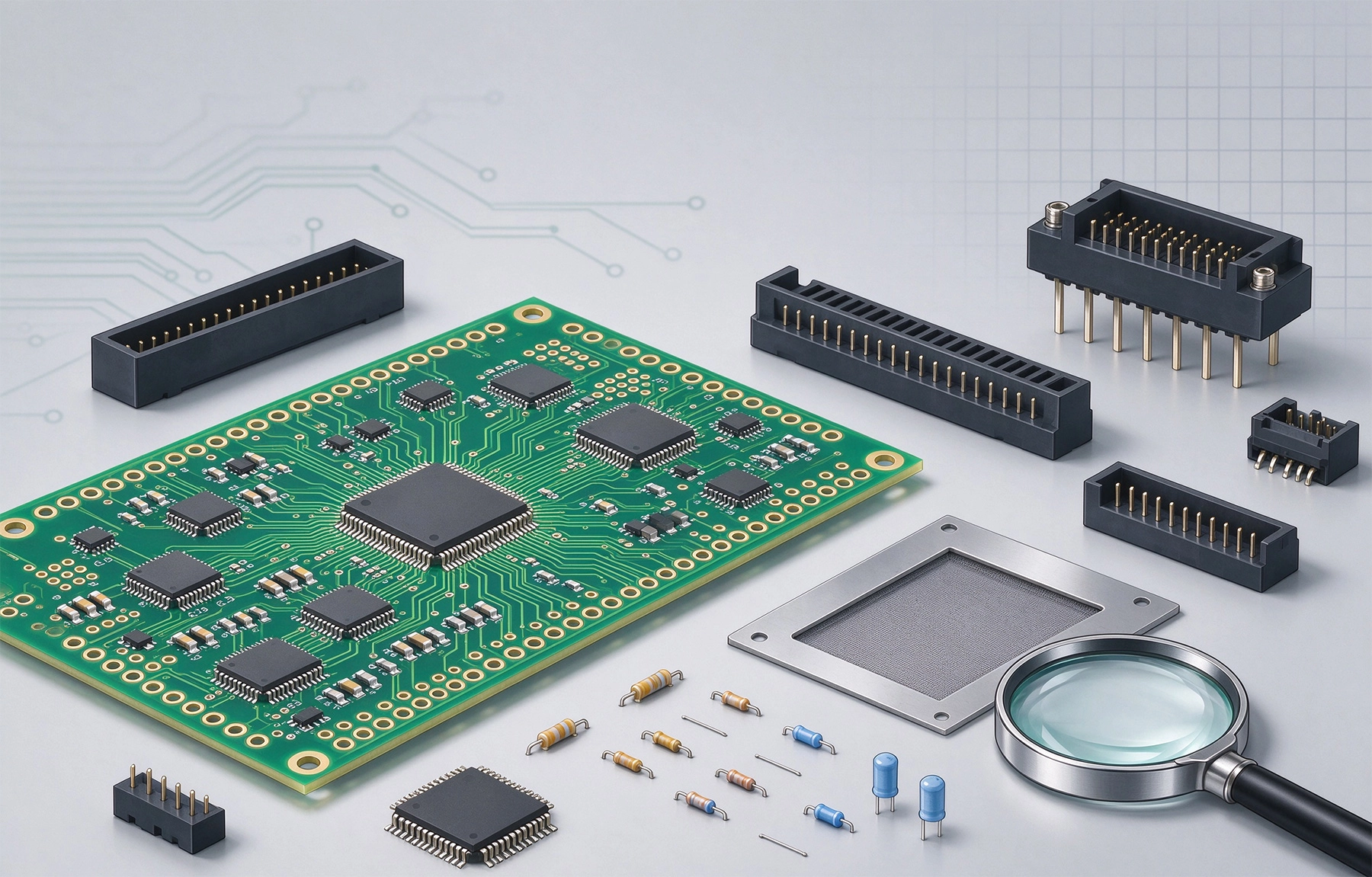
Most PCB Fabrication and assembly quotes follow a broadly similar structure regardless of the manufacturer. They begin with header information: company name, quote number, quote date, validity period, and the customer information to which the quote is addressed. This header section is often ignored, but it contains important details. The validity period is particularly critical. Quotes typically expire in 30 to 90 days, and prices are subject to change after that window closes. If your project timeline extends beyond the quote validity date, you should request a fresh quote or confirm that the pricing will be honored.
Below the header, the quote typically breaks into two main sections: fabrication costs and assembly costs. These may appear on the same quote or as separate documents depending on the manufacturer and whether you are purchasing board-only, assembly-only, or turnkey services that include both. Turnkey quotes, where one vendor handles fabrication and assembly, are convenient but can obscure the cost breakdown between the two services, which is useful information when you need to optimize one component independently.
The line item detail in each section usually follows a consistent pattern: a description of the service or feature, the quantity ordered, the unit price, and the extended total. Additional columns for setup fees, tooling fees, and engineering review fees may appear separately because these are not tied to per-unit quantities. Understanding why each line exists and how it relates to your design is the key to reading a quote effectively.
The fabrication portion of a PCB quote starts with base board pricing, which is typically expressed as a per-square-inch or per-panel cost. The area calculation is usually based on the panel size the manufacturer uses, not the individual board dimensions, which means a small board on a large panel may carry a disproportionate base cost. If you have multiple small boards, asking the manufacturer to panelize them on a common panel format can significantly reduce the per-board base cost.
Layer count is the single largest driver of fabrication pricing. A four-layer board costs substantially more than a two-layer board because each additional layer requires lamination, drilling, plating, and imaging steps. When reviewing a multi-layer quote, check that the layer count matches your design intent. A quote that specifies six layers for a design that actually requires four is either a mistake or an attempt to upsell. Conversely, if the design requires six layers, verify that the quote reflects that and not a lower count that will result in a change order later.
Board specifications in the quote include the laminate material, thickness, copper weight, Surface Finish, Solder Mask color, and Silkscreen requirements. Each of these has a cost impact. FR-4 is the baseline material; high-Tg variants, Rogers Laminates, or PTFE materials carry premiums that vary by material type and availability. Standard one-ounce copper is included in base pricing; two-ounce, three-ounce, or heavier copper weights are adders. Enig Surface Finish is common for fine-pitch components; Hasl (lead or lead-free) is generally less expensive but may not be suitable for your application. Silkscreen is typically included in one color; additional colors or white silkscreen on dark boards are extras.
Controlled Impedance is a common add-on in the fabrication quote. If your design includes impedance-controlled traces, the manufacturer needs to perform impedance testing on production samples, which adds a per-panel testing fee. Some quotes itemize impedance testing separately; others bundle it into a line item that is easy to miss. Confirm that impedance requirements are captured in the quote if your design includes them.
Setup fees appear on almost every PCB quote and are one of the least understood line items. A setup fee, also called a tooling fee or engineering fee, covers the fixed costs of preparing your job for production: creating the CAM files from your design data, verifying design data against Manufacturing Capabilities, generating the drill files and panelization artwork, and setting up the production equipment for your specific configuration. These costs are incurred once per production order regardless of quantity, which is why per-unit pricing drops so sharply as order quantity increases.
The size of the setup fee varies by manufacturer and by the complexity of the order. Simple two-layer boards have low setup fees because the verification and preparation process is straightforward. High-layer-count boards, boards with blind and Buried Vias, and boards with specialized materials have higher setup fees that reflect the additional engineering time required. A quote that shows an unusually high setup fee for what seems like a simple design may indicate that the manufacturer is flagging a design complexity you were not aware of.
Some manufacturers separate tooling charges from setup fees. Tooling refers to the physical tools required for production: drill files for the specific hole sizes in your design, routing files for any non-standard board outlines, and fixture costs for specialty processes like selective plating or edge connectors. Tooling charges are typically one-time costs for a new design and may be reduced or waived for repeat orders of the same design.
Engineering review fees cover the manufacturer's engineering team reviewing your design data for manufacturability and flagging any potential issues before production begins. This is a valuable service that catches problems before they become expensive manufacturing defects, but it is not always included in base pricing. Some manufacturers charge separately for engineering review; others bundle it into the setup fee. When comparing quotes, make sure you are comparing the same scope of included services.
Assembly quotes are typically structured around three main cost categories: the board cost (from the fabrication quote), the component cost, and the assembly labor cost. In a turnkey quote, all three appear together. In an assembly-only quote, the board cost is replaced by a line item for the bare boards you are supplying.
Component costs in a quote may be presented in different ways depending on the service model. In a turnkey service, the manufacturer sources components on your behalf and marks them up to cover procurement risk, handling, and inventory carrying costs. The component unit price in the quote may differ from the Digikey or Mouser price for the same part because it reflects these additional services and the risk premium the manufacturer applies for parts that may become unavailable or require re-sourcing. Some quotes break out component cost as a separate line item; others bury it in the assembly line items.
Assembly labor is usually quoted on a per-hour or per-side basis and is driven by the number of components, the component technology type, and the testing requirements. Surface Mount assembly is priced differently from through-hole assembly, and mixed-technology boards that include both carry pricing that reflects the additional process steps. Fine-pitch components like BGAs, QFNs, and 0201 passives require more precise placement and inspection and are priced accordingly. When reviewing assembly labor costs, check that the quote reflects the actual component count and technology mix of your design.
Testing fees in assembly quotes cover Functional Testing, in-circuit testing, or Boundary Scan testing that verifies the assembled board performs correctly. Some manufacturers include basic Functional Testing in their assembly pricing; others charge for it separately. If your product requires testing to confirm functionality, make sure the quote includes it and specifies what the test covers. A board that passes visual inspection but fails functional test is still a failure, and you do not want to discover that testing was optional after the boards come back from assembly.
PCB quotes often include pricing that varies with quantity, structured as quantity breakpoints with different unit prices at each level. This pricing model reflects the economics of manufacturing: the fixed setup cost is amortized across more units as quantity increases, reducing the per-unit cost at each breakpoint. Understanding how your quantity maps to the breakpoints in a quote is essential for accurate budget comparison.
A common source of confusion is the difference between the quoted quantity and the panelization quantity. If you order 100 boards and the manufacturer panels them at 10 per panel, you are running 10 panels. The setup fee is incurred once, but the per-panel manufacturing costs are incurred 10 times. Some quotes display pricing based on a quantity that differs from what you requested, which can be misleading if you do not notice the discrepancy. Always verify that the quantity in the quote matches your purchase order quantity.
Engineering Prototype quantities typically fall at the low end of the quantity spectrum and carry higher per-unit costs as a result. If your project will eventually move to production at higher volumes, it is worth asking the manufacturer how the Prototype pricing compares to production pricing for the same design. Some manufacturers offer prototype pricing programs with discounted setup fees or reduced per-unit costs that make it economical to run small batches while the design is still being finalized.
Every experienced PCB buyer has a story about a quote that seemed reasonable until the boards arrived and the invoice total was significantly higher. These discrepancies usually trace to hidden costs that were not prominently displayed in the original quote or were buried in fine print that was easy to overlook.
Expedite fees are a common source of surprise. If you need boards faster than the manufacturer's standard lead time, they will charge an expedite fee that can be substantial. Standard lead times vary by manufacturer and by the complexity of the order, but typical ranges are 5 to 10 business days for standard specifications and 2 to 3 weeks for complex multilayer or specialty material boards. Before assuming you can get boards in 48 hours, confirm that the manufacturer offers that lead time and what the expedite surcharge is.
Partial shipment fees apply when you request delivery of a large order in multiple shipments. Manufacturers may charge a fee for splitting a production run into multiple shipments because it adds handling and administrative overhead. If you need staged deliveries, ask about this charge upfront.
Minimum order fees apply when the order value falls below a minimum threshold that the manufacturer has set for profitability. This is most common with very small orders of simple boards, where the per-unit price in the quote may look reasonable but the total order value is below the manufacturer's minimum. The minimum order fee compensates for the fixed cost of processing an order that generates too little revenue to be profitable.
Conformal Coating, potting, and other post-assembly services are often quoted separately from the base assembly. If your application requires these services, make sure they are included in the quote and that the pricing reflects the specific coating or potting specification your design requires. Conformal Coating, in particular, has multiple material options with significantly different costs.
Getting quotes from at least three manufacturers is standard practice for any significant PCB purchase, but comparing those quotes meaningfully requires attention to the details. The lowest quote is not always the best choice if it reflects lower-quality materials, longer lead times, or fewer included services than the competing quotes.
Start by normalizing the quotes to the same scope. If one quote includes testing and another does not, add the estimated cost of testing to the lower quote to make an apples-to-apples comparison. If one quote includes engineering review and another does not, account for the cost of that service separately. The goal is to compare the total delivered cost for the same scope of work.
Then examine the material and process specifications in each quote to confirm they are equivalent. A quote that specifies Enig Surface Finish at a lower price than a competitor specifying the same finish is comparing apples to apples. But if one quote specifies Hasl and another specifies Enig, the prices are not comparable because the finishes are not equivalent in performance or cost. Any specification difference between quotes needs to be reconciled before the pricing comparison is meaningful.
Lead time matters in the comparison even when delivery date is not urgent. A quote with a lower unit price but a four-week lead time may cost more in total when you account for the inventory carrying cost of waiting, the risk of timeline slippage, or the opportunity cost of a delayed product launch. Factor the lead time into your evaluation framework alongside the price.
PCB quotes are negotiable, particularly for larger quantities or repeat orders. The key to effective negotiation is understanding the Cost Drivers well enough to identify where the manufacturer has margin and where they are genuinely constrained. Asking a manufacturer to explain a specific line item is not confrontational; it is how you build the knowledge needed to negotiate effectively.
When you receive a quote with line items you do not understand, ask for an explanation. A reputable manufacturer will be happy to walk through the quote and explain what each charge covers. If a manufacturer is unwilling to explain their pricing, that is a red flag regardless of whether their total price is competitive.
For repeat orders, ask about volume pricing programs or annual volume commitments that could reduce per-unit costs. Manufacturers value predictable demand and are often willing to offer better pricing in exchange for volume commitments that help them plan their production schedule. If your product roadmap includes multiple PCB assemblies over the next year, consolidating your purchases with one manufacturer who offers volume pricing may be more cost-effective than chasing the lowest price on each individual order.
If a quote comes in higher than expected, do not automatically accept it. Ask whether design changes could reduce the cost. Sometimes a simple change like increasing the board size to use a standard panel format, reducing the layer count, or switching to a less expensive Surface Finish brings the quote down significantly without affecting the functional performance of the board. The manufacturer may be able to suggest cost-reduction opportunities if you ask, particularly if they see your design data during the quote process.
Reading a PCB quote carefully is a skill that pays dividends across every board you order. By understanding what each line item means, how it relates to your design, and what assumptions are built into the pricing, you transform the quote from an opaque document into actionable information. This knowledge enables better design decisions, more accurate project budgeting, more effective vendor comparison, and stronger negotiation outcomes.
The fundamentals are straightforward: normalize quotes to the same scope before comparing prices, watch for hidden costs like expedite fees and minimum order charges, clarify any line items you do not understand, and remember that the lowest quote is not always the best value when material specifications and included services differ. Invest the time to read quotes thoroughly, and you will consistently make better purchasing decisions that keep your projects on budget and on schedule.
Contact us to discuss your requirements.

Why Cheap PCB Fabrication and Assembly Can Cost You More in the Long RunNovember/20/2026

Managing Cost and Quality in Quick Turn PCBsJune/04/2026
SMT vs THT PCB Assembly in China: Which Technology is Right for Your Project?June/10/2026
PCB Fabrication and Assembly: A Step-by-Step Guide for BeginnersOctober/15/2026

Challenges in Manufacturing High Aspect Ratio Multilayer BoardsSeptember/07/2026

Prototyping vs. Production Assembly: Different Approaches for Different StagesSeptember/08/2026

The Importance of BOM Accuracy in the PCB Assembly ProcessJuly/13/2026

Common Defects in PCB Assembly and How Manufacturers Prevent ThemSeptember/18/2026