
Turnkey assembly represents the ultimate convenience in Electronics Manufacturing—a complete solution where you hand off your design files and receive finished, tested products ready for market. This comprehensive approach eliminates the complexity of coordinating multiple vendors, managing supply chains, and overseeing various manufacturing processes. Instead, you partner with a single assembly provider who handles everything from PCB Fabrication to component sourcing, assembly, testing, and final packaging. For companies focused on product innovation rather than manufacturing logistics, turnkey assembly offers a streamlined path from concept to finished goods.
However, successful turnkey projects require careful preparation, clear communication, and understanding of the handoff process. This guide walks you through everything you need to know about turnkey assembly, from initial project preparation to receiving your finished products, helping you achieve smooth, successful collaboration with your assembly partner.
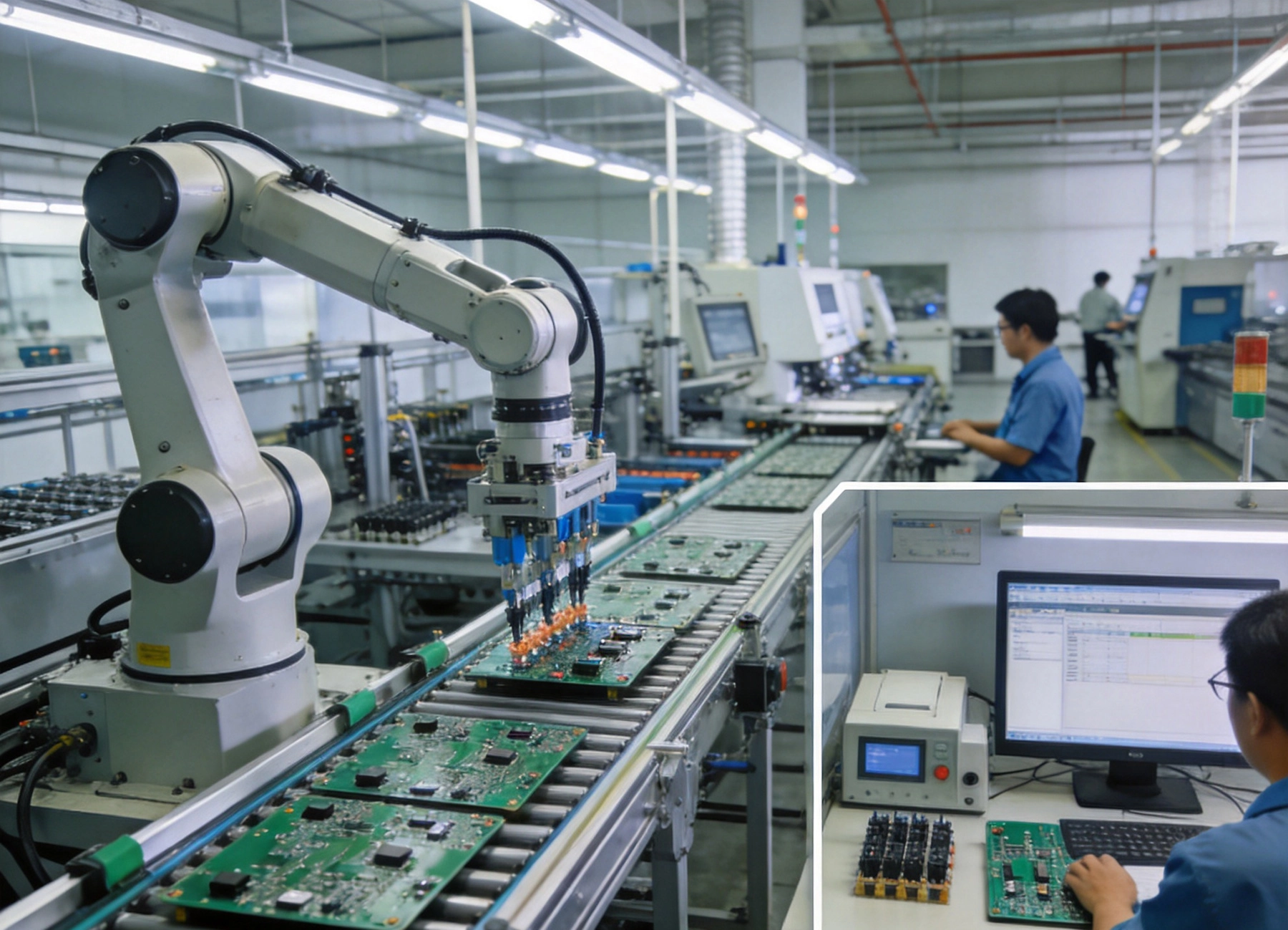
Turnkey assembly is a comprehensive Electronics Manufacturing service where a single provider manages the entire production process from start to finish. Unlike consignment assembly, where you supply components and the assembler only provides labor and equipment, turnkey services encompass all aspects of production. Your assembly partner sources components, fabricates PCBs, performs assembly operations, conducts testing, and delivers finished products according to your specifications.
The term "turnkey" reflects the concept that you receive products ready to use—like turning a key to start a car. There's no additional work required on your part beyond initial design provision and final approval. This approach contrasts with fragmented manufacturing where you might work separately with PCB fabricators, component distributors, assembly houses, and testing laboratories, each handling different aspects of production.
Turnkey assembly offers numerous advantages that make it attractive for companies of all sizes:
With turnkey assembly, you have one responsible party for the entire project. If problems arise—whether component shortages, assembly defects, or quality issues—your assembly partner coordinates resolution rather than you managing multiple vendors. This simplified accountability reduces coordination overhead and eliminates finger-pointing between different suppliers when issues occur.
Component sourcing represents one of the most challenging aspects of electronics manufacturing, with long lead times, counterfeit risks, and availability fluctuations. Turnkey providers maintain established Supply Chain relationships, Inventory Management systems, and sourcing expertise that most individual companies cannot match. They handle Component Procurement, Inventory Management, and availability tracking, freeing you to focus on Product Development rather than Supply Chain logistics.
Turnkey assemblers often achieve better pricing on components and PCBs through volume purchasing, established supplier relationships, and bulk inventory management. They can suggest cost-reducing alternatives—substituting equivalent components, optimizing PCB specifications, or adjusting assembly processes—that might not be obvious to individual designers. These cost optimization opportunities can significantly reduce overall production costs, sometimes offsetting the service premiums associated with turnkey pricing.
Coordinating multiple manufacturing vendors typically extends project timelines due to sequential processing, shipping delays between vendors, and communication overhead. Turnkey assembly streamlines this process by handling all operations in a coordinated manner, often reducing total production time by 20-40% compared to managing vendors separately. Faster turnaround means quicker product launches and earlier revenue generation.
Turnkey providers integrate Quality Control throughout the entire production process rather than adding it as a separate step. From incoming component inspection to in-process monitoring and final testing, Quality Assurance becomes an integral part of manufacturing rather than an afterthought. This integrated approach often results in higher overall quality and fewer defects reaching customers.
Managing a single relationship rather than multiple vendors dramatically reduces project management complexity. You communicate design requirements, specifications, and changes to one partner who handles internal coordination across all production stages. This simplification reduces administrative overhead, minimizes communication errors, and allows your team to focus on core competencies rather than manufacturing coordination.
Successful turnkey projects begin with thorough preparation before engaging an assembly partner:
Prepare comprehensive design documentation that eliminates ambiguity and questions during manufacturing. Essential documents include:
Before handoff, assess component availability for your design. Check lead times, minimum order quantities, and lifecycle status for critical components. Identify any long-lead-time or obsolete components that might cause production delays. Your turnkey partner can help with this assessment and suggest alternatives for problematic components, but doing preliminary research helps set realistic expectations and enables proactive problem-solving.
Clearly define your production quantities and timeline requirements. Specify Prototype quantities, pilot run volumes, and anticipated production volumes. Communicate required delivery dates and any schedule constraints. Understanding your volume requirements helps your assembly partner plan appropriately, optimize sourcing strategies, and provide accurate pricing and lead time estimates.
Document any specific quality requirements, industry standards, or certifications your products must meet. Specify IPC class requirements (Class 1, 2, or 3), testing standards, special inspection criteria, or regulatory compliance requirements (CE, UL, FCC, etc.). Clear quality specifications prevent misunderstandings and ensure finished products meet your expectations.
Establish clear budget parameters for your turnkey project. Communicate target pricing, cost constraints, and any trade-offs you're willing to consider. While you may not have exact cost figures, providing budget ranges helps your assembly partner suggest appropriate approaches—component selections, PCB specifications, assembly processes—that align with your financial objectives.
Choosing the right assembly partner significantly impacts project success:
Evaluate potential partners against your specific requirements:
Assess potential partners' experience with similar projects:
Evaluate their component sourcing and supply chain capabilities:
Assess their communication approach and project management capabilities:
Understand their pricing structure and business terms:
Understanding the typical turnkey assembly process helps set appropriate expectations:
After providing your design documentation, the assembly partner analyzes requirements and provides a detailed quotation. This quote typically includes:
Review the quote carefully, ask questions about any unclear items, and negotiate terms if necessary. Once you accept the quote, you'll typically provide a purchase order and any required deposit to initiate the project.
Before production begins, your assembly partner conducts an engineering review of your design files. This Design For Manufacturability (Dfm) analysis identifies potential manufacturing issues and suggests improvements. Common Dfm considerations include:
Work through the DFM feedback with your partner, deciding which recommendations to implement. Some suggestions may require design modifications that you'll need to approve before proceeding.
Your assembly partner sources all required components based on your approved BOM. This process involves:
During this phase, your partner may contact you about component availability issues, suggesting alternatives or discussing timeline adjustments. Stay responsive to these communications to prevent delays.
While components are being sourced, your partner fabricates the PCBs according to your Gerber Files. This process typically takes 3-10 days depending on complexity and specifications. The fabrication process includes:
Completed PCBs undergo inspection and testing before being released for assembly operations.
With components and PCBs available, assembly operations begin:
Throughout assembly, Quality Control measures monitor process parameters and identify any defects for rework or repair.
After assembly, products undergo testing and programming:
Testing identifies any defective units for rework or scrap, ensuring only functional products proceed to final packaging.
Tested products receive final packaging and preparation for shipment:
Finished products arrive ready for use, with no additional assembly or testing required on your part.
Follow these best practices to ensure smooth turnkey assembly projects:
Initiate turnkey discussions early in your Product Development process. Early engagement allows your assembly partner to provide DFM feedback when design changes are still easy to make. Thorough planning prevents last-minute scrambles and helps ensure realistic timelines and expectations.
Establish clear communication channels with your assembly partner. Define how often you expect status updates, who your primary contacts are, and how to handle urgent communications. Respond promptly to questions and requests for decisions—delays in your responses often translate directly to production delays.
Recognize that component availability changes constantly. Be willing to consider equivalent alternatives when primary components become unavailable. Your assembly partner's component expertise can identify suitable substitutes that maintain product functionality while improving availability or reducing costs.
Turnkey assembly works best as a partnership rather than a transaction. Invest time in building relationships with your assembly provider, understanding their capabilities and processes, and helping them understand your products and requirements. Long-term relationships yield better pricing, priority service, and deeper technical support.
First articles and pilot runs rarely proceed perfectly. Build time and budget into your plans for at least one iteration of design refinement based on initial production results. Use early production runs as learning opportunities to optimize designs and processes before full-scale production.
Maintain thorough documentation throughout the project. Keep records of all communications, design changes, approvals, and test results. This documentation proves invaluable for troubleshooting, future projects, and maintaining consistency across production runs.
When possible, visit your assembly partner's facility to see their operations firsthand. Meeting the team, observing processes, and understanding their capabilities builds trust and facilitates better collaboration. Site visits also help you verify that their actual capabilities match their claims.
Anticipate and prepare for common turnkey assembly challenges:
Challenge: Critical components become unavailable or have extended lead times.
Solution: Work with your assembly partner early to identify potential availability issues. Be proactive about approving alternative components. Consider buffer stock for long-lead-time items if you anticipate ongoing production needs.
Challenge: Design changes become necessary after production has started, causing delays and additional costs.
Solution: Invest in thorough Dfm Review and Prototype testing before committing to full production. Minimize design changes by validating designs thoroughly through simulation and prototyping. When changes are unavoidable, work closely with your partner to understand cost and schedule impacts before approving modifications.
Challenge: Initial production runs yield quality issues or defects above acceptable levels.
Solution: Establish clear quality specifications and acceptance criteria before production begins. Require first article inspection and approval before proceeding with full production. Work collaboratively with your partner to identify root causes and implement corrective actions rather than assigning blame.
Challenge: Misunderstandings or lack of communication lead to incorrect products or delays.
Solution: Establish clear communication protocols at project start. Document all requirements and changes in writing. Schedule regular status meetings or calls to discuss progress and address issues promptly.
Challenge: Final project costs exceed initial quotes due to unforeseen complications or changes.
Solution: Understand what's included in quotes and what might cause additional charges. Build contingency budgets for unexpected costs. Approve any changes that affect costs in writing before implementation to maintain visibility into total project costs.
Evaluate your turnkey assembly partner's performance using these metrics:
Turnkey assembly offers a powerful solution for companies seeking to streamline electronics manufacturing and focus on core competencies rather than production logistics. By partnering with a capable assembly provider, you gain access to expertise, equipment, and supply chain relationships that would be costly to develop internally. The result is faster time-to-market, potentially lower overall costs, and simplified project management—all while receiving high-quality finished products ready for your customers.
Successful turnkey projects require thorough preparation, careful partner selection, clear communication, and realistic expectations. Invest time in understanding the process, preparing comprehensive documentation, and building strong partnerships with your assembly provider. The effort pays dividends through smoother production, higher quality, and better business outcomes.
As your products evolve and production volumes grow, your turnkey partner can scale with you, providing increasingly sophisticated services and support. By viewing turnkey assembly as a strategic partnership rather than a transactional service, you build a foundation for long-term success in bringing innovative electronic products to market efficiently and reliably.
In turnkey assembly, the assembly provider handles all aspects of production including PCB fabrication, component sourcing, assembly, and testing. You provide design files and receive finished products. In consignment assembly, you supply the components and possibly PCBs, while the assembly provider only performs labor and equipment operations. Turnkey offers greater convenience and Supply Chain Management, while consignment may offer cost advantages if you have existing component inventory or strong supplier relationships.
Turnkey assembly costs vary widely based on PCB complexity, component costs, assembly requirements, and volume. As a rough guideline, expect turnkey services to cost 15-30% more than the sum of individual component and PCB costs to cover the assembly provider's services, overhead, and profit margin. However, turnkey providers often achieve better component pricing that can offset some of this premium. Request detailed quotes that break down costs for accurate comparison.
Turnkey lead times typically range from 2-6 weeks depending on component availability, PCB complexity, and assembly requirements. Simple boards with readily available components might complete in 2-3 weeks, while complex assemblies with long-lead-time components can take 4-6 weeks or longer. Quick-turn services can reduce these times significantly for additional cost. Work with your assembly partner early to understand realistic lead times for your specific project.
Reputable turnkey assemblers routinely handle confidential designs and have established processes for protecting intellectual property. However, it's prudent to implement appropriate protections including non-disclosure agreements (NDAs), clear ownership terms for your designs and tooling, and limited access to sensitive information. Choose partners with established reputations and appropriate certifications for handling confidential information.
Yes, many turnkey assemblers support both prototype and production volumes. Prototype runs help validate designs and processes before committing to full production. Some assemblers specialize in quick-turn prototyping, while others focus on high-volume production. Many offer capabilities across the volume spectrum. When selecting a partner, ensure they can handle your anticipated volume requirements, both current and future, to avoid needing to switch providers as your product scales.

Prototyping vs. Production Assembly: Different Approaches for Different StagesSeptember/08/2026

Challenges in Manufacturing High Aspect Ratio Multilayer BoardsSeptember/07/2026
PCB Fabrication and Assembly: A Step-by-Step Guide for BeginnersOctober/15/2026
SMT vs THT PCB Assembly in China: Which Technology is Right for Your Project?June/10/2026
How Chinese Manufacturers Ensure Precision in the SMT PCB Assembly ProcessJune/03/2026

The Importance of BOM Accuracy in the PCB Assembly ProcessJuly/13/2026
The Benefits of Combining PCB Fabrication and AssemblyMay/22/2026

Common Defects in PCB Assembly and How Manufacturers Prevent ThemSeptember/18/2026