Open Nav

China remains the world's largest Pcb Production base, accounting for roughly 54%–56% of global output in 2024, and the industry is still expanding fast in 2026. If you are sourcing boards for prototyping, industrial electronics, AI servers, automotive modules, or consumer products, understanding how PCB Fabrication China works today is no longer just a cost-saving tactic. It has become a core part of hardware Supply Chain strategy. This guide explains the current landscape, technology capabilities, supplier selection criteria, lead times, quality checks, and risks you should watch before placing orders.
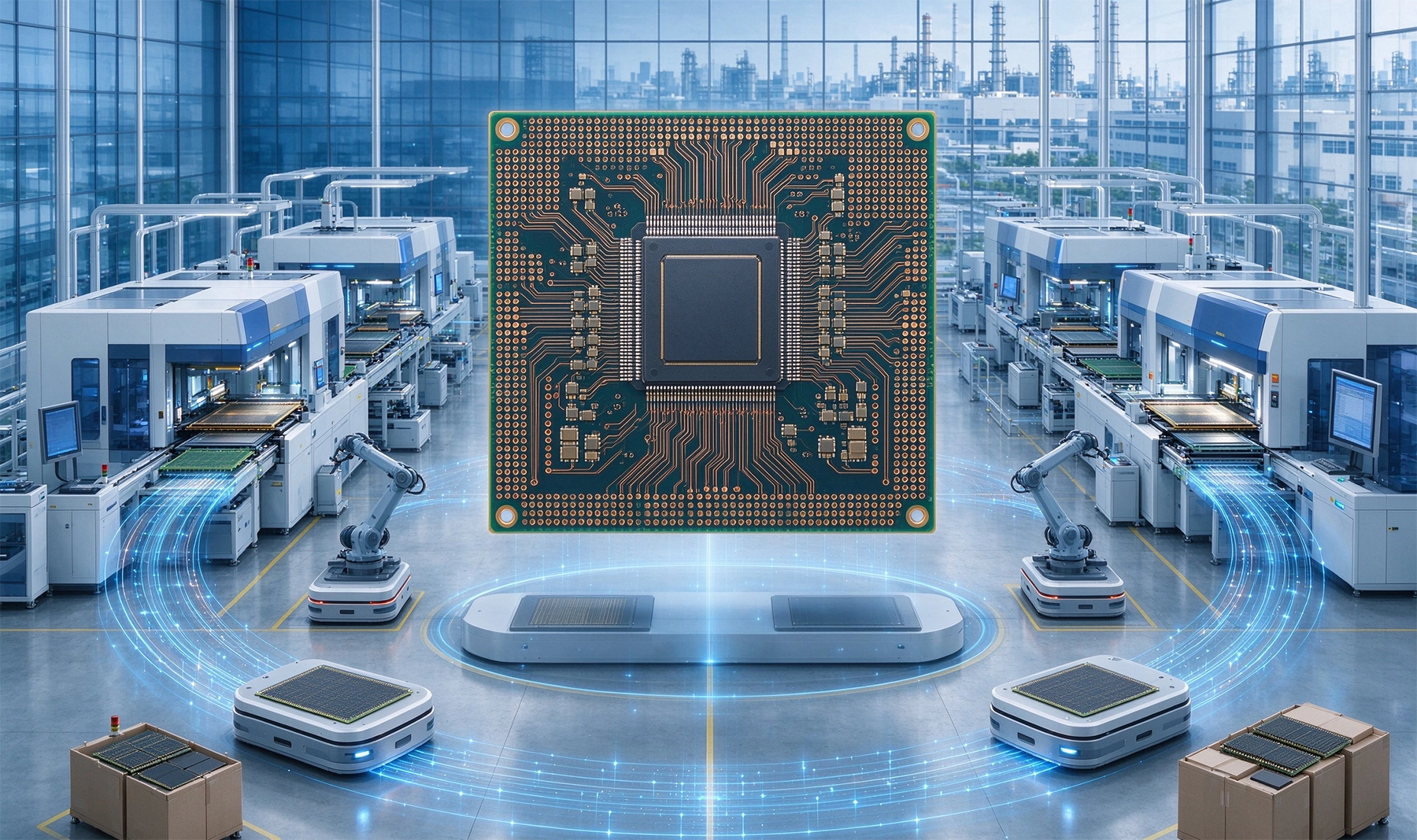
China’s PCB ecosystem is unusually complete. You can find suppliers for quick-turn prototypes, high-mix low-volume production, and large-scale automotive or server-grade boards. The country also has strong upstream support, including copper foil, glass fiber, resin, laminates, dry film, and chemical suppliers. This makes coordination between design, fabrication, and assembly faster than in many other regions.
In 2026, global PCB demand is being reshaped by AI servers, high-speed networking, automotive electronics, and Advanced Packaging. Chinese manufacturers are responding with heavy investment in high-layer boards, HDI, IC substrates, and high-frequency materials. At the same time, many factories are expanding into Southeast Asia, especially Thailand and Vietnam, to serve overseas customers and reduce trade-related risks.
For buyers, this means two things. First, China still offers one of the best combinations of capability, speed, and price. Second, not every factory can handle advanced requirements. You must match your product needs with the right supplier tier.
Modern Chinese PCB fabs cover a wide range of processes. For simple products, 1–4 layer FR-4 boards remain affordable and widely available. For more demanding applications, many factories now support 6–32 layer boards, HDI, blind/Buried Vias, Controlled Impedance, and high-Tg materials.
FR-4 is still the mainstream material for consumer electronics, industrial control, IoT devices, and power modules. Typical capabilities in 2026 include:
These numbers vary by factory, so always request a current capability sheet before finalizing Design Rules.
HDI boards are widely used in smartphones, wearables, automotive cameras, and high-performance computing. Advanced Chinese suppliers can produce 4–10阶 HDI and any-layer HDI boards. For AI servers and high-speed modules, MSAP/mSAP processes are becoming more important because they enable finer traces and better Impedance Control.
IC substrates remain more difficult. They require tighter tolerances, advanced materials, and stricter reliability testing. Only a limited group of manufacturers in China have mature capability here, but domestic progress has been accelerating.
For 5G, radar, high-speed backplanes, and AI networking equipment, low-loss materials such as Panasonic Megtron, Rogers, and domestic high-speed laminates are increasingly used. Heavy copper boards are common in Power Electronics, EV chargers, energy storage, and motor controllers. If your design involves high current, ask the factory about copper thickness limits, etching compensation, and thermal relief design early.
Choosing a supplier is not only about unit price. The biggest mistakes happen when buyers compare quotes without comparing process capability, quality systems, and communication quality.
Look for ISO 9001, ISO 14001, Iatf 16949 for automotive, UL certification, and IPC Class 2 or Class 3 capability. Ask whether the factory performs impedance testing, microsection analysis, thermal stress testing, and ion contamination testing. A supplier that can share test reports usually has more mature Quality Control.
Good factories will review your Gerber Files and raise Dfm questions before production. They should clarify stackup, impedance targets, surface finish, via filling, Solder Mask color, and special testing requirements. If a supplier never asks technical questions, that can be a warning sign.
Lead times depend heavily on layer count, complexity, and whether assembly is included. Typical bare-board fabrication lead times in China are:
MOQ for bare boards is often around 5 panels, but this depends on board size and panel utilization. If you also need PCBA, add another 5–15 working days for Smt Assembly, and more time if components have long lead times.
Pricing is influenced by copper price, laminate availability, surface finish, layer count, Impedance Control, and testing requirements. In 2026, high-end Pcb Capacity remains tight in some segments, especially for AI-related high-layer and HDI products. Standard boards are still competitive, but buyers should expect more variation in lead time and material cost than in previous years.
Quality Control is where low-cost sourcing can fail if not managed properly. Do not assume all factories interpret Ipc Standards the same way. You should define inspection requirements before production starts.
For automotive, medical, or high-reliability products, ask for process traceability. This includes lot numbers for laminates, plating records, impedance test data, and final QA reports. It costs slightly more, but it prevents expensive field failures later.
PCB Fabrication in China offers strong advantages, but there are real risks. Tariff and trade policy changes can affect total landed cost. Intellectual Property Protection should be handled through NDAs, controlled file sharing, and trusted supplier relationships. Supply Chain concentration is another concern; some buyers now use a dual-source strategy with one factory in mainland China and another in Southeast Asia.
Language and time-zone differences also matter. Misunderstandings about impedance tolerance, via filling, or surface finish can cause rework. Always write requirements clearly in the fabrication drawing. Do not rely only on verbal confirmation.
If you are preparing a new order, follow this simple workflow:
When done correctly, PCB Fabrication China can give you fast iteration, mature process support, and competitive manufacturing cost. The key is treating the supplier as a technical partner, not just a price quote generator.
China’s PCB industry in 2026 is more capable and more segmented than ever. Simple boards remain easy to source, while advanced products require careful supplier qualification. Whether you need quick-turn prototypes, high-layer server boards, HDI modules, or automotive-grade PCBs, the right partner should offer clear engineering feedback, reliable quality data, and stable delivery.
If you are entering this market for the first time, start small. Validate one supplier with a prototype run, check their documentation quality, and then scale up. The cheapest quote is rarely the best choice when your product depends on long-term reliability.
Yes, especially for prototypes, mid-volume production, and complex Multilayer Boards. However, high-end capacity is tighter in 2026, so lead times and material costs may vary.
Standard 2–4 layer boards usually take 5–10 working days. HDI, high-layer, or special-material boards may take 10–20 working days or more.
Yes. Many leading Chinese manufacturers now produce high-layer boards, HDI, and high-speed PCBs for AI servers, networking equipment, and automotive electronics.
Send Gerber files, drill files, netlist if available, stackup requirements, impedance targets, surface finish, solder mask color, and any special testing notes.
Use clear fabrication drawings, request Dfm Review, confirm IPC class, ask for test reports, and run prototype validation before mass production.
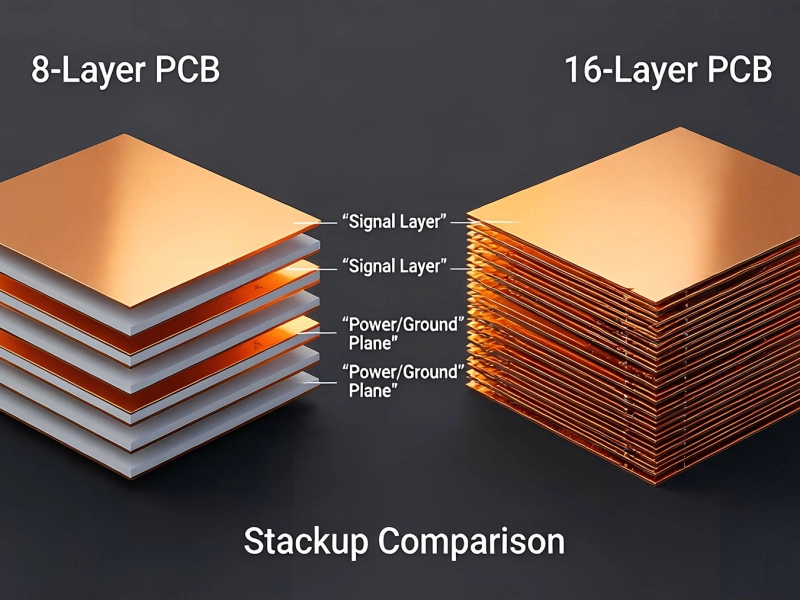
8-Layer vs. 16-Layer: Deciding on the Right Stack-up for Your Multilayer BoardJune/08/2026
The Benefits of Combining PCB Fabrication and AssemblyMay/22/2026
Minimum Trace and Space: How Far Has PCB Technology Advanced?July/01/2026
The Importance of BOM Accuracy in the PCB Assembly ProcessJuly/13/2026
SMT vs THT PCB Assembly in China: Which Technology is Right for Your Project?June/10/2026
Emergency PCB Runs: Strategies for Getting Boards Fast Without Sacrificing ReliabilityJuly/08/2026
Testing Services: From Flying Probe to Functional Testing (FCT)August/15/2026
Understanding Copper Plating: Ensuring Connectivity and Durability in PCBsJuly/09/2026